

How Muslims Treated Christians — Historical Sources on Islamic Protection, Religious Freedom, and Rescue from Byzantine Persecution
Muslims rescued Christians from inter-religious and Byzantine persecution, and this is not an Islamic claim alone — it is attested by the Christians themselves in their own chronicles. After the Chalcedon controversy, the Eastern and Western Church fought for centuries. Deprived of freedom and peace, Syriac Christian writers writing in the seventh century proclaimed God had placed victory in Muslim hands specifically to remove Byzantine and Persian oppression. The following is a compiled presentation of those primary and secondary sources.
Christians Who Proclaimed Muslim Rule as Divine Deliverance
The following image presents the opening source material establishing the historical context of Byzantine persecution of non-Chalcedonian Christians and the arrival of the Muslim Arabs.
John Bar Pankaye, a Syriac Christian writing in 680 CE, proclaimed in his work Rīš Mellē — Book XIV that God had put victory onto Muslim hands, removing Byzantine and Persian oppression. His testimony is preserved in Sebastian Brock‘s Studies in Syriac Christianity (Britain: Variorum, 1992), p. 57.
The following image presents the relevant passage from Brock’s Studies in Syriac Christianity showing Bar Pankaye’s account.
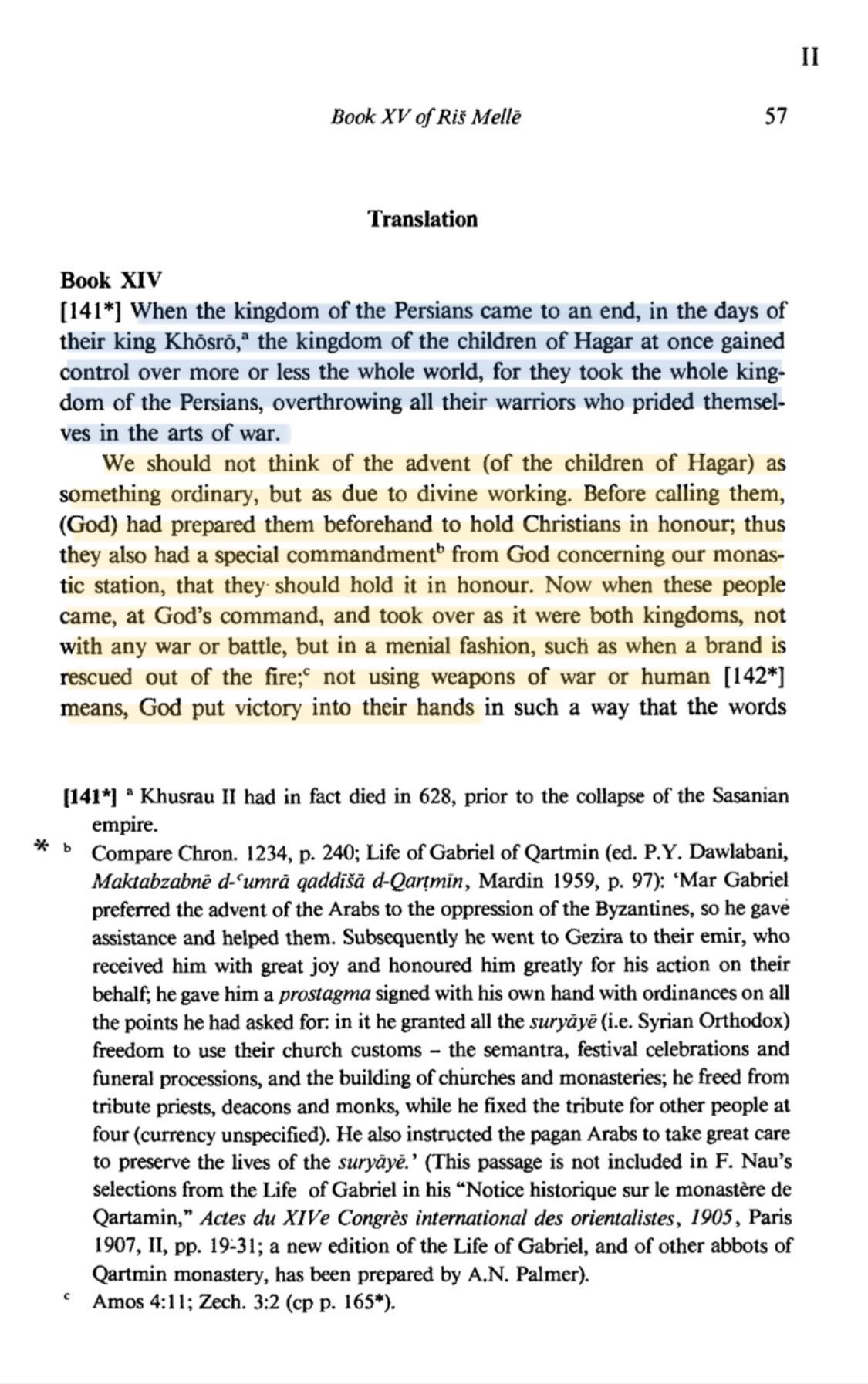
The following image presents the continuation of Bar Pankaye’s testimony.
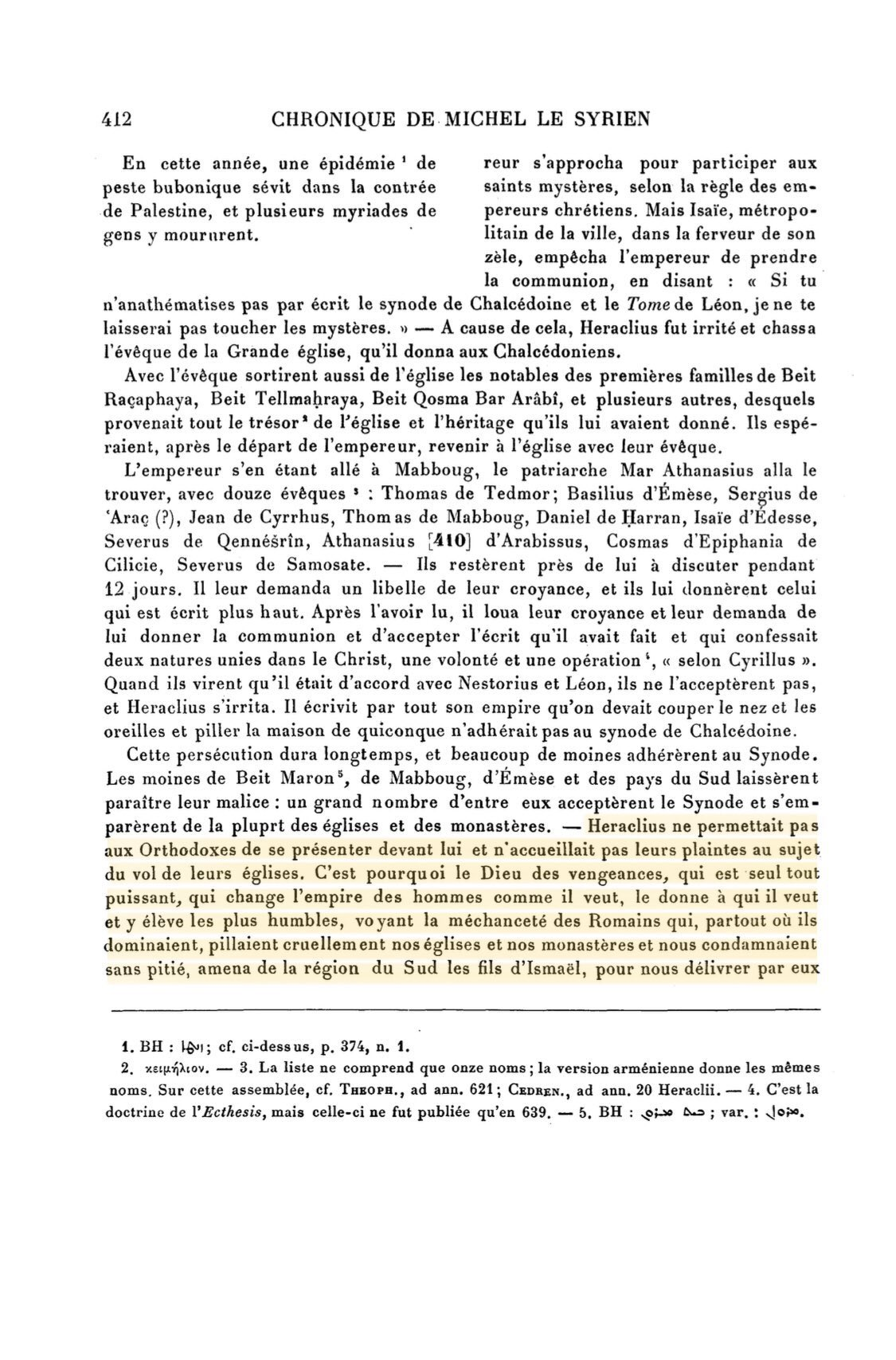
The twelfth-century Jacobite Patriarch Michael the Elder shares the same sentiment. In Book XI, Chapter 3 of his chronicle — as translated by Jean-Baptiste Chabot in Chronique de Michel le Syrien, vol. 2 (Paris: E. Leroux, 1901, pp. 412–413) — Michael recounts how the oppressive treatment of Orthodox Christians by the Byzantine Romans, including the plundering of their churches and monasteries and their merciless condemnation, prompted God to act. According to Michael, God in His justice and power sent the Arab Muslims from the south to deliver the Christians from the cruelty of the Romans. This reflects Michael’s view that the Muslim conquest provided relief to his community from Byzantine persecution and was seen as a fulfillment of divine will.
The Treaty of Umar with Jabril of Qartmin — Religious Freedoms Granted
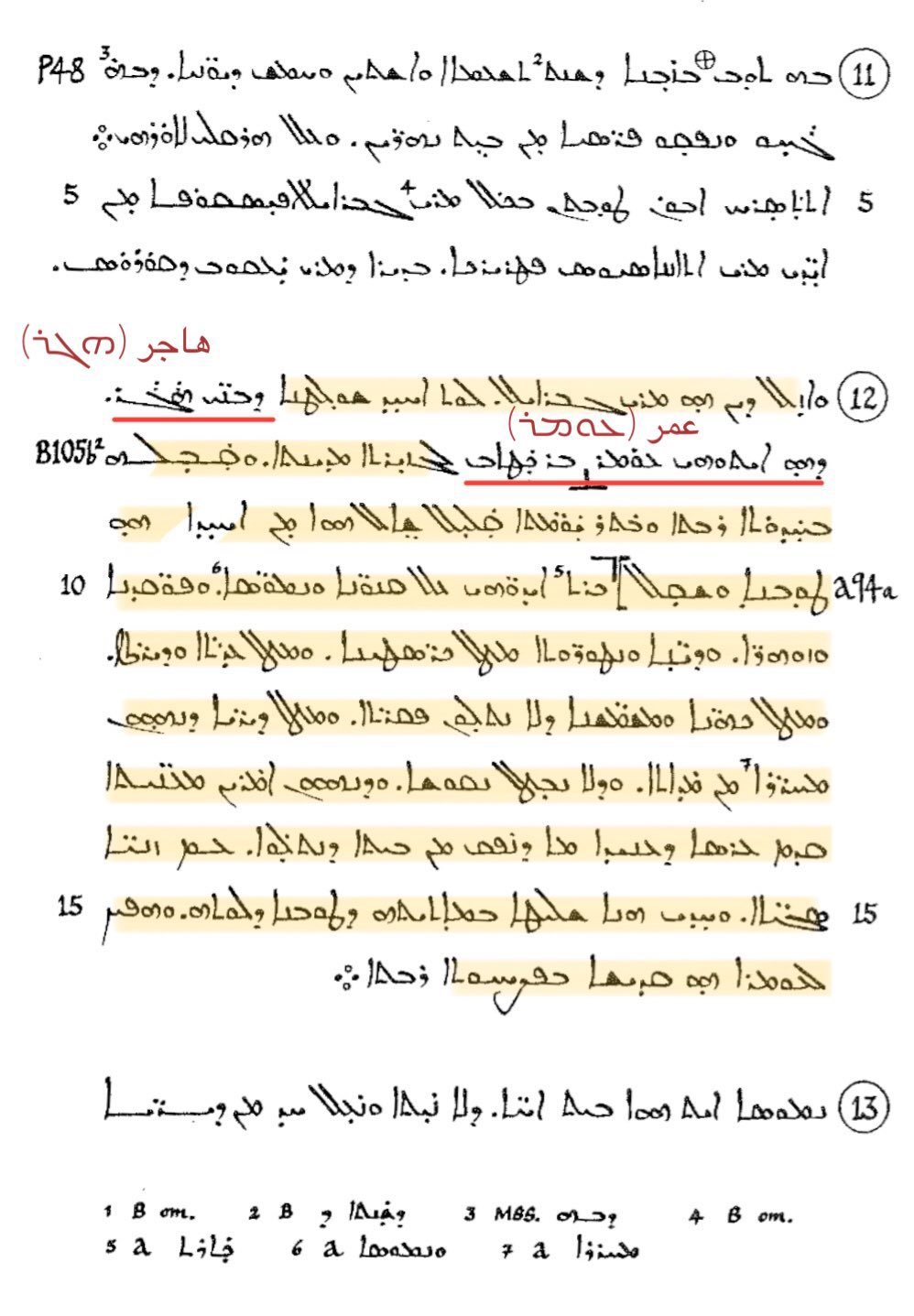
After a few conquests, the seventh-century Eastern Orthodox bishop Jabril of Qartmin sought out Umar ibn al-Khattab in 639 CE to establish a treaty. Following a warm welcome, Umar had exempted churchmen from taxation, provided protection of the monasteries, and permitted the practice of Christian customs. Hearing this, Jabril went back full of joy.
These events are agreed upon by numerous Orientalists including Brock, Hoyland, and Palmer, as well as Syriac Orthodox historian Filoxenos Yuhanna Dawlabani.
The following image presents source material from the Orientalist scholarly record corroborating the treaty between Jabril and Umar.
The following image presents the continuation of the relevant Orientalist source material.

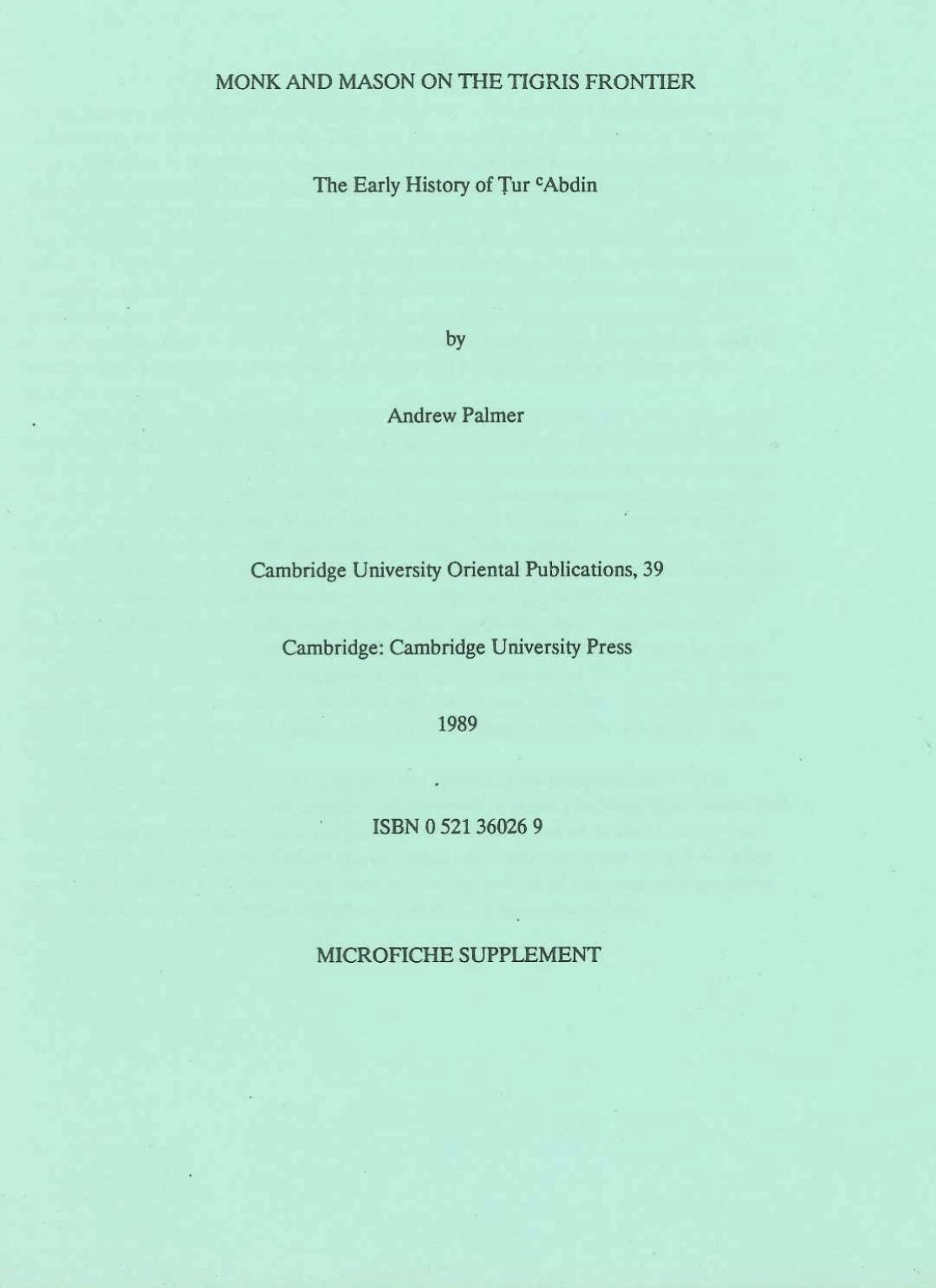
Andrew Palmer in “A Critical Edition and Annotated Translation of the Qartmin Trilogy: Being the Lives of Samuel of Eštin, Simeon of Qartmin, and Gabriel of Beth Qustan,” in Monk and Mason on the Tigris Frontier, Microfiche Supplement (Cambridge: Cambridge University Press, 1989), p. LXII, documents that according to the sources, Muslims under the leadership of figures like Umar treated Christian groups with fairness and mercy during their interactions.
The following image presents Palmer’s source material on the fair treatment of Christians under early Islamic rule.
The following image presents the continuation of Palmer’s relevant passage.
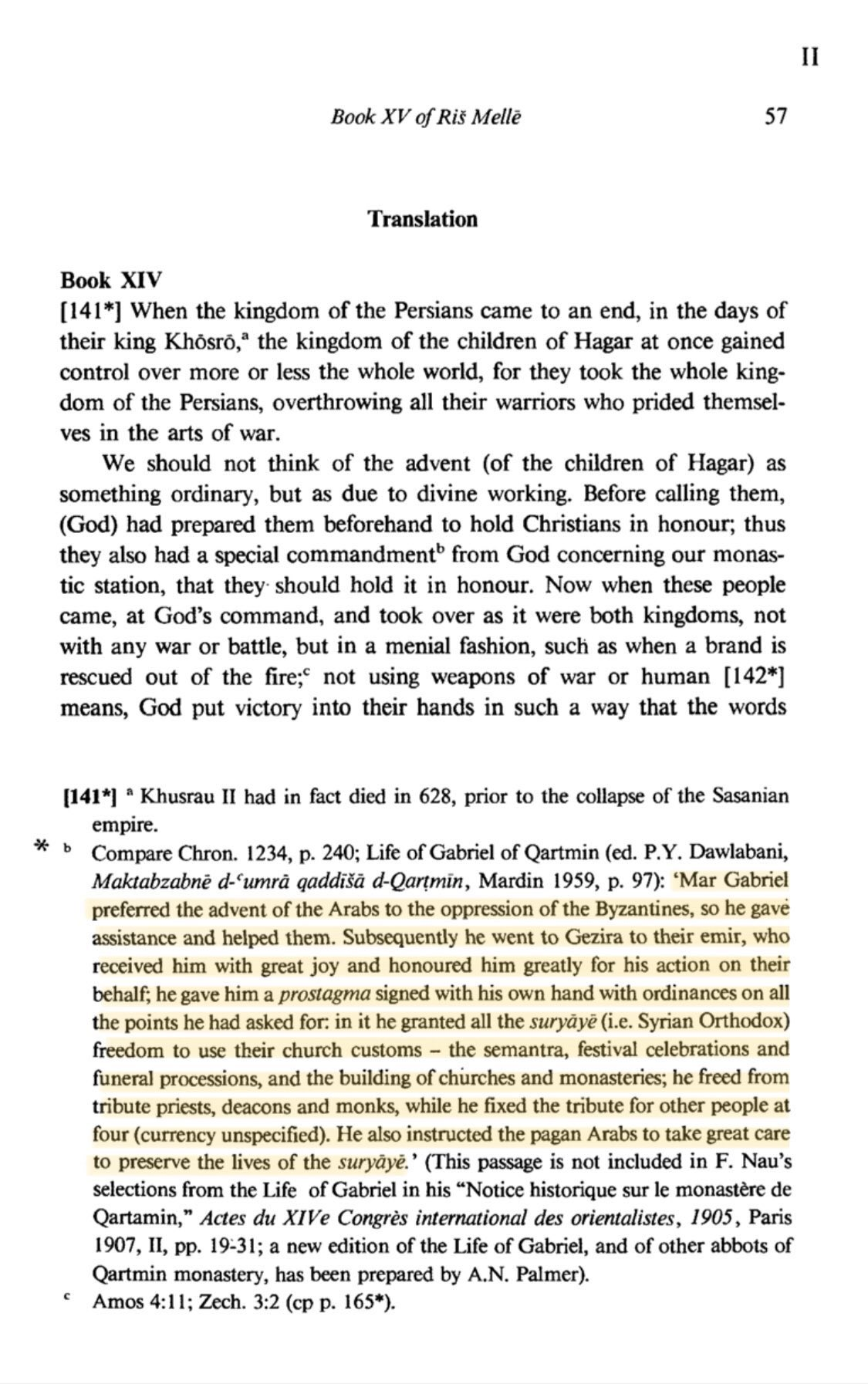
In Studies in Syriac Christianity (p. 57), Sebastian Brock shows how Mar Gabriel’s cooperation with the Arabs led to religious freedoms, tax exemptions for clergy, and protection for Syrian Orthodox Christians, reflecting the inclusive policies of early Islamic rule.
The following image presents the relevant passage from Brock’s Studies in Syriac Christianity on this point.
Robert G. Hoyland in Seeing Islam as Others Saw It (1997, p. 123) mentions that Mar Gabriel likely negotiated with an Arab general for tax exemptions for monks and priests, showing the practical agreements made under early Islamic rule.
The following image presents the first relevant passage from Hoyland’s Seeing Islam as Others Saw It.
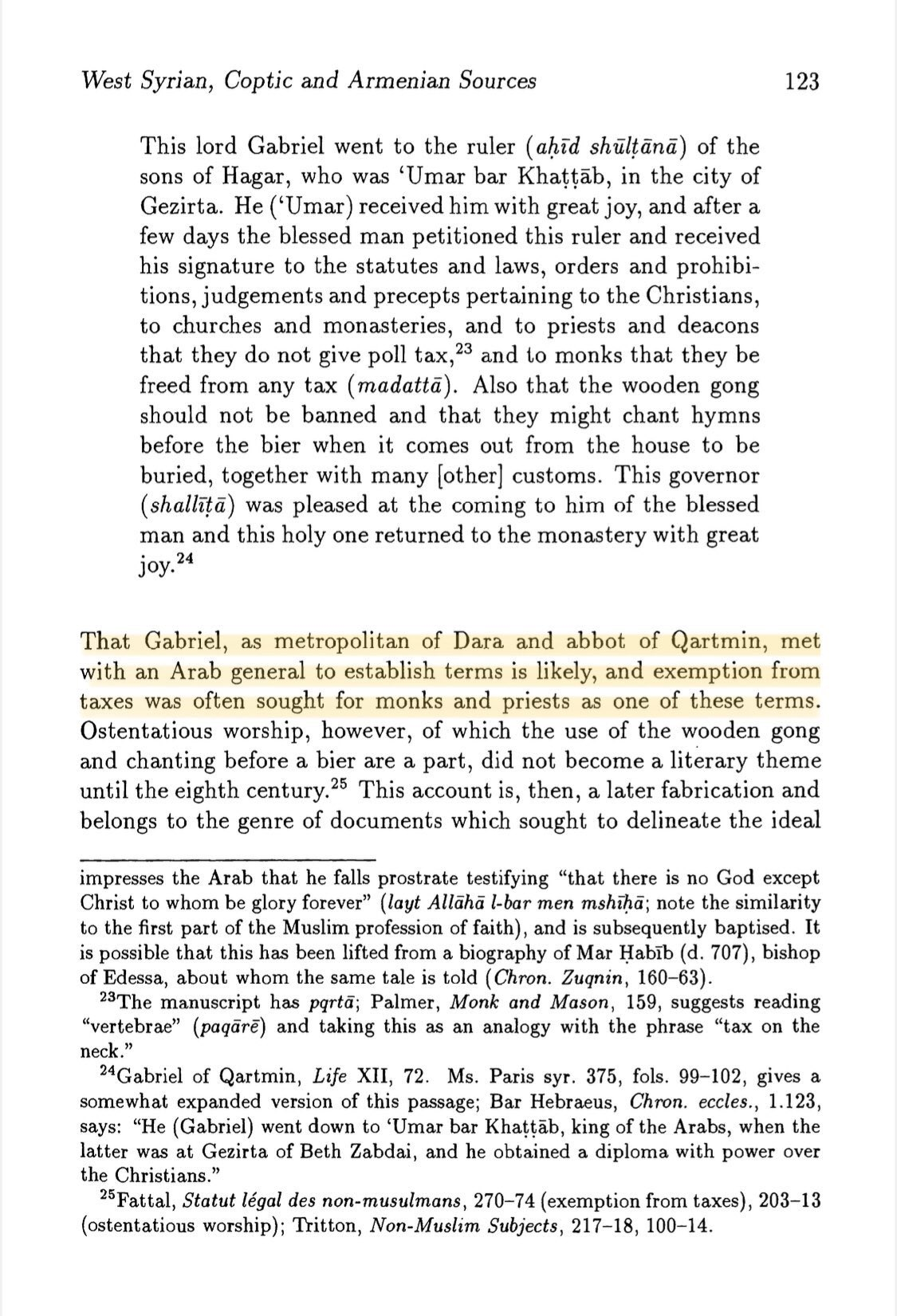
The following image presents the continuation of Hoyland’s account.

Andrew Palmer in Monk and Mason on the Tigris Frontier (1990, p. 158) notes that Gabriel, as metropolitan of Dara, likely negotiated a treaty with the Arab conquerors in 639 during Caliph Umar’s reign, securing the rights and obligations of his Christian community.
The following image presents the first relevant passage from Palmer’s Monk and Mason on the Tigris Frontier.
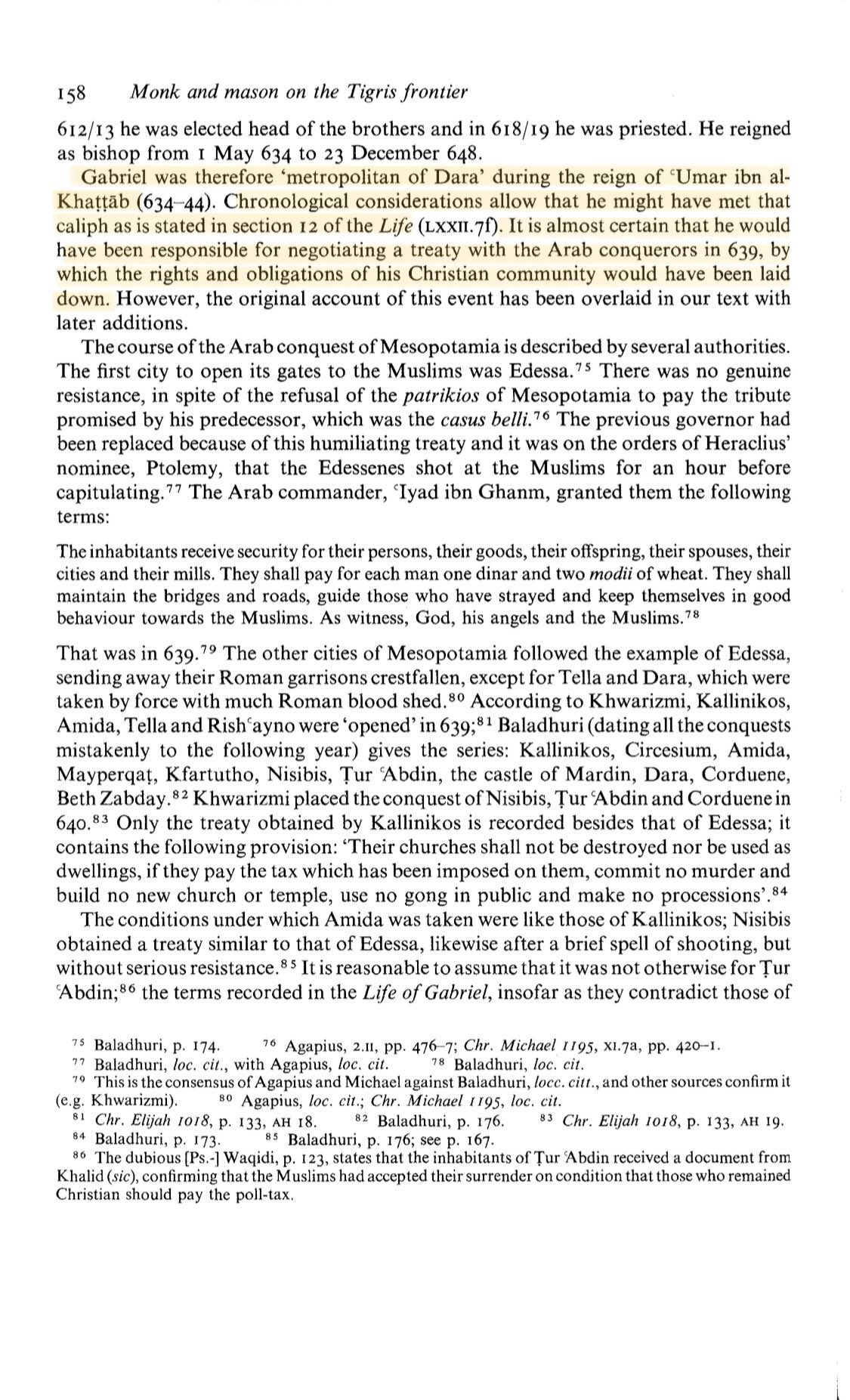
The following image presents the continuation of Palmer’s account of Gabriel’s treaty.
The Monastery of Mar Gabriel’s own record recounts that during persecution by Chalcedonian bishops, Mar Gabriel welcomed the Arabs with kindness and assistance. His actions earned him respect and honor from the regional ruler, who treated him with high esteem.
The following image presents the first passage from the Monastery of Mar Gabriel’s historical record.
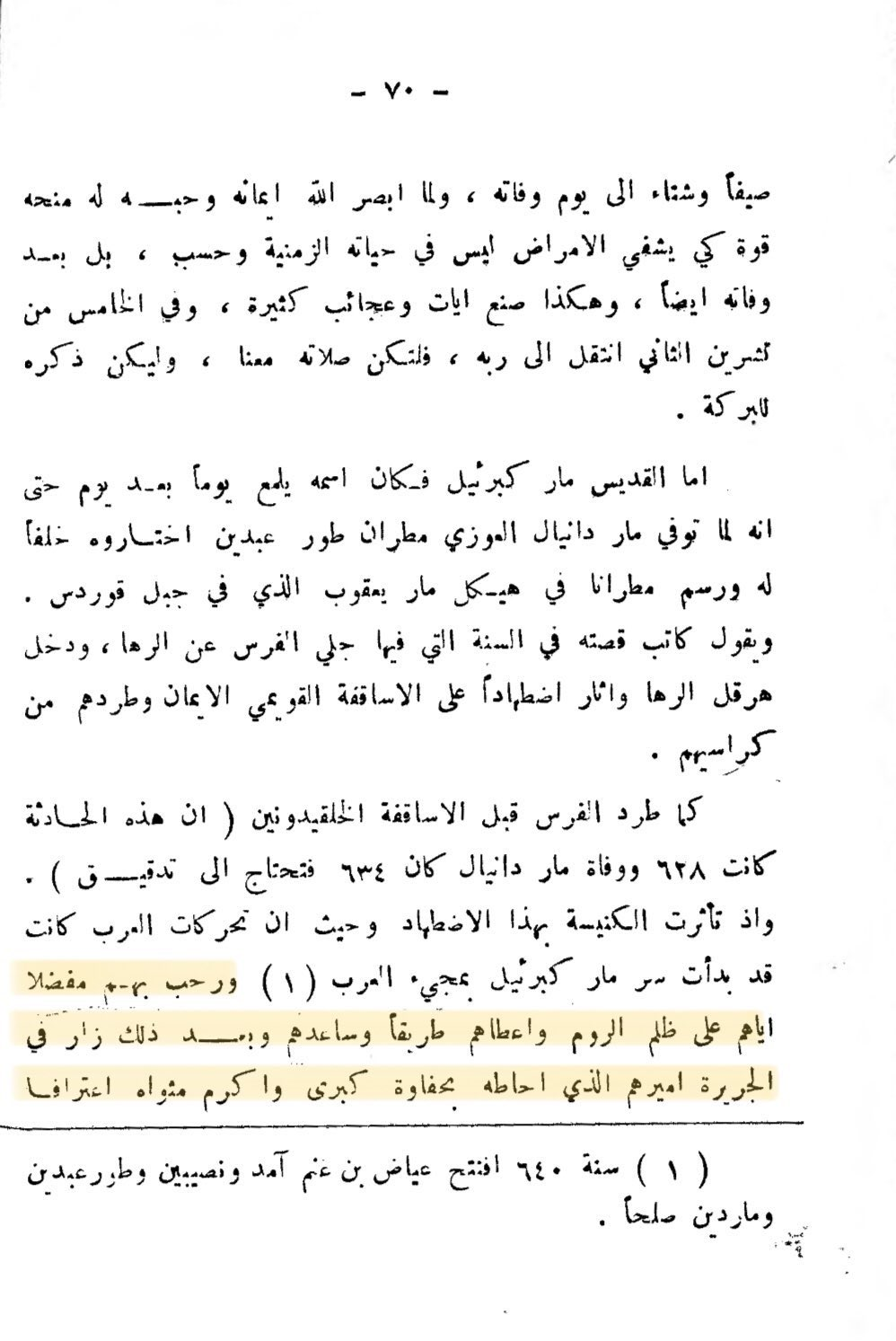
The following image presents the continuation of the Monastery of Mar Gabriel’s record.
The Justice and Peace of Muawiya’s Reign — Attested by a Christian
The aforementioned tolerance under Muslim rule is further corroborated by Bar Pankaye, who speaks on Muawiya ibn Abi Sufyan‘s control over the two major kingdoms. He established so much justice and peace, that none could have conceived of it.
The following image presents Bar Pankaye’s testimony on Muawiya’s reign from Rīš Mellē — Book XV, as preserved in Brock’s Studies in Syriac Christianity, p. 61.
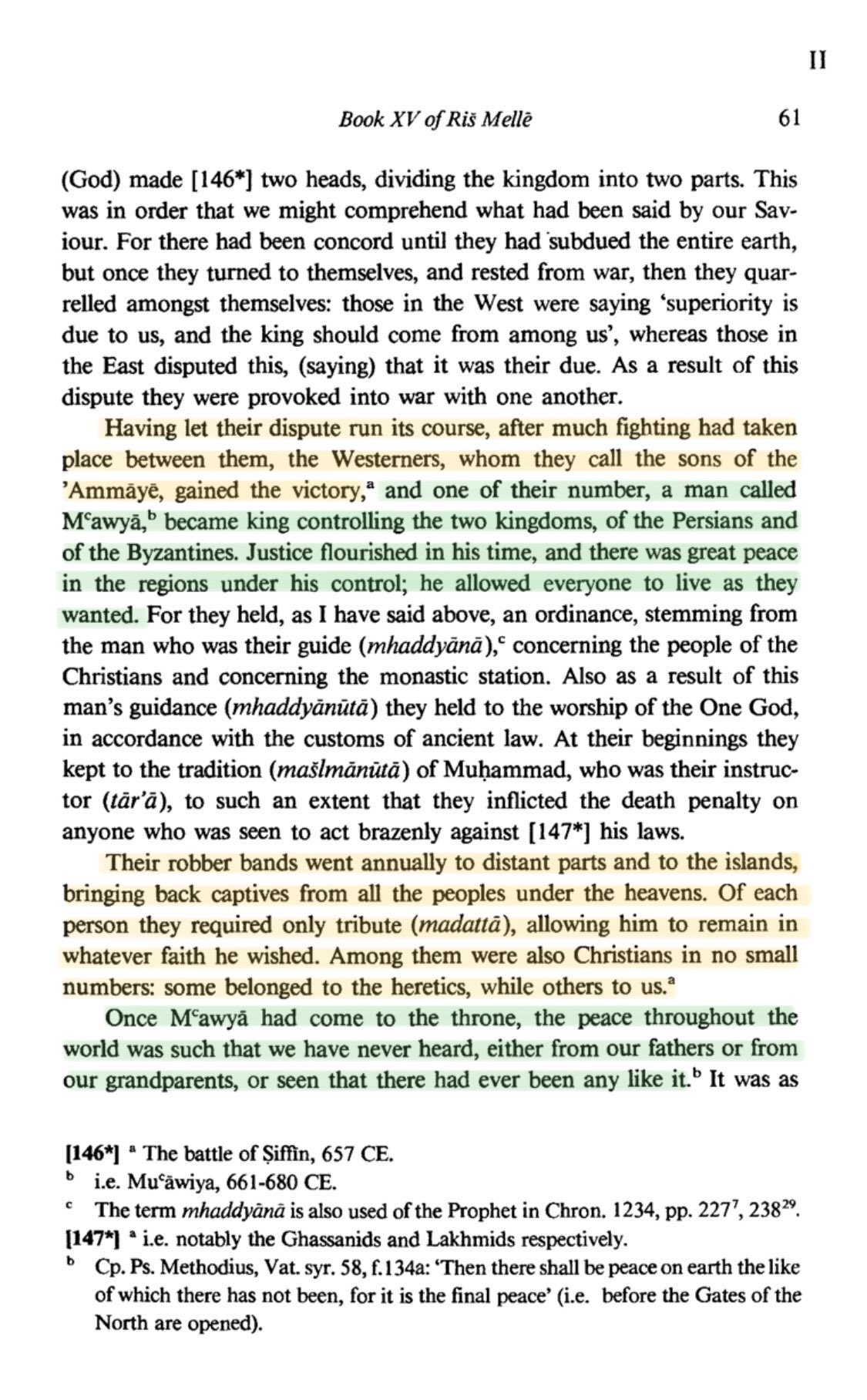
John Bar Pankaye describes the reign of Muawiya as a time of justice and unparalleled peace. He permitted people to live freely according to their faith, requiring only tribute in return. Even during Arab military campaigns, captives were taken, but religious diversity — including Christians of various sects — was preserved under his rule. This era of peace was noted as unprecedented by contemporary observers.
A seventh-century Syriac Christian writing in 680 CE described the Muslim ruler Muawiya’s governance as a peace so complete that none could have conceived of it — and this testimony comes not from a Muslim source but from a Christian chronicle.
The historical record attests consistently that early Muslim rulers treated Christians fairly, offering them protection, religious freedoms, and respect. The non-Chalcedonian Syriac Christians — persecuted for centuries by Byzantine Orthodox authorities who plundered their churches and monasteries — welcomed the Arab Muslim conquest as divine deliverance. John Bar Pankaye writing in 680 CE, Michael the Elder writing in the twelfth century, and the records of the Monastery of Mar Gabriel all confirm this. The practical arrangements were equally documented by Western Orientalists: Brock, Hoyland, and Palmer all record the treaty between Jabril of Qartmin and Umar ibn al-Khattab in 639 CE, which secured tax exemptions for clergy and protection for monasteries. The mutual cooperation between these religious communities under early Islamic rule ensured their rights, safety, and freedom to practice their faiths in peace.