Implicit Views of Traditional Scholars
Introduction
→This thread examines how Hindu scholars, from past have implicitly supported the idea of a flat Earth through their interpretations of scripture. The aim is to shed light on these views and contrast them with established scientific understanding.
__
Many Hindu scholars, while interpreting the Puranic cosmological model, implicitly accepted the idea of a flat Earth. Though they rarely stated it directly, their descriptions and explanations align closely with flat-earth concepts. In this section, we will explore using ISCON’s founder Śrīla Prabhupāda as an example, why these scholars avoided explicit claims and how their interpretations reveal an underlying acceptance of a flat-earth worldview.
__
During a Morning Walk in Mayapura on March 18, 1976, Śrīla Prabhupāda engaged in a conversation with his devotees. One of the topics discussed was the shape of the earth, and it is worth noting that Śrīla Prabhupāda occasionally provided contradictory responses to questions he directly answered Earth planet should be illustrated as an island (dvīpa), symbolizing its disc-shaped nature akin to a plate, instead of a ball.
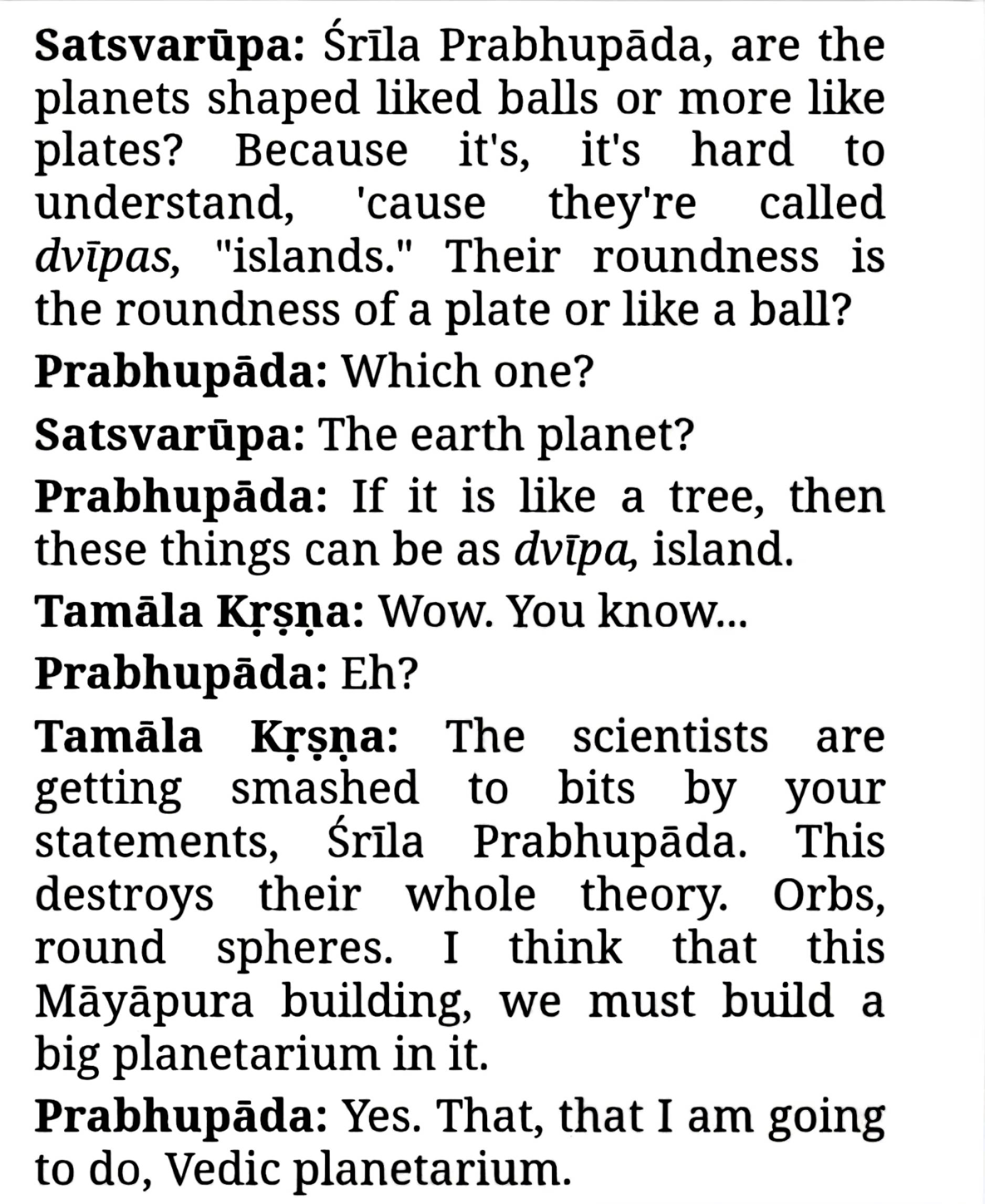
***(Morning Walk, March 18, 1976, Mayapur) ***
__
In response to a question posed by Tamāla Krsna Goswami, Śrīla Prabhupāda emphasized that the shape of the Earth, whether round or flat, should be determined based on the version of Śrīmad-Bhāgavatam, not influenced by the constantly changing theories of Western astronomy. Prabhupāda firmly rejected the theories proposed by Western astronomers, highlighting their biased and nonsensical nature. He pointed out that these theories have been inconsistent, initially claiming that the Earth is flat and later asserting that it is round, further questioning the credibility of their claims.
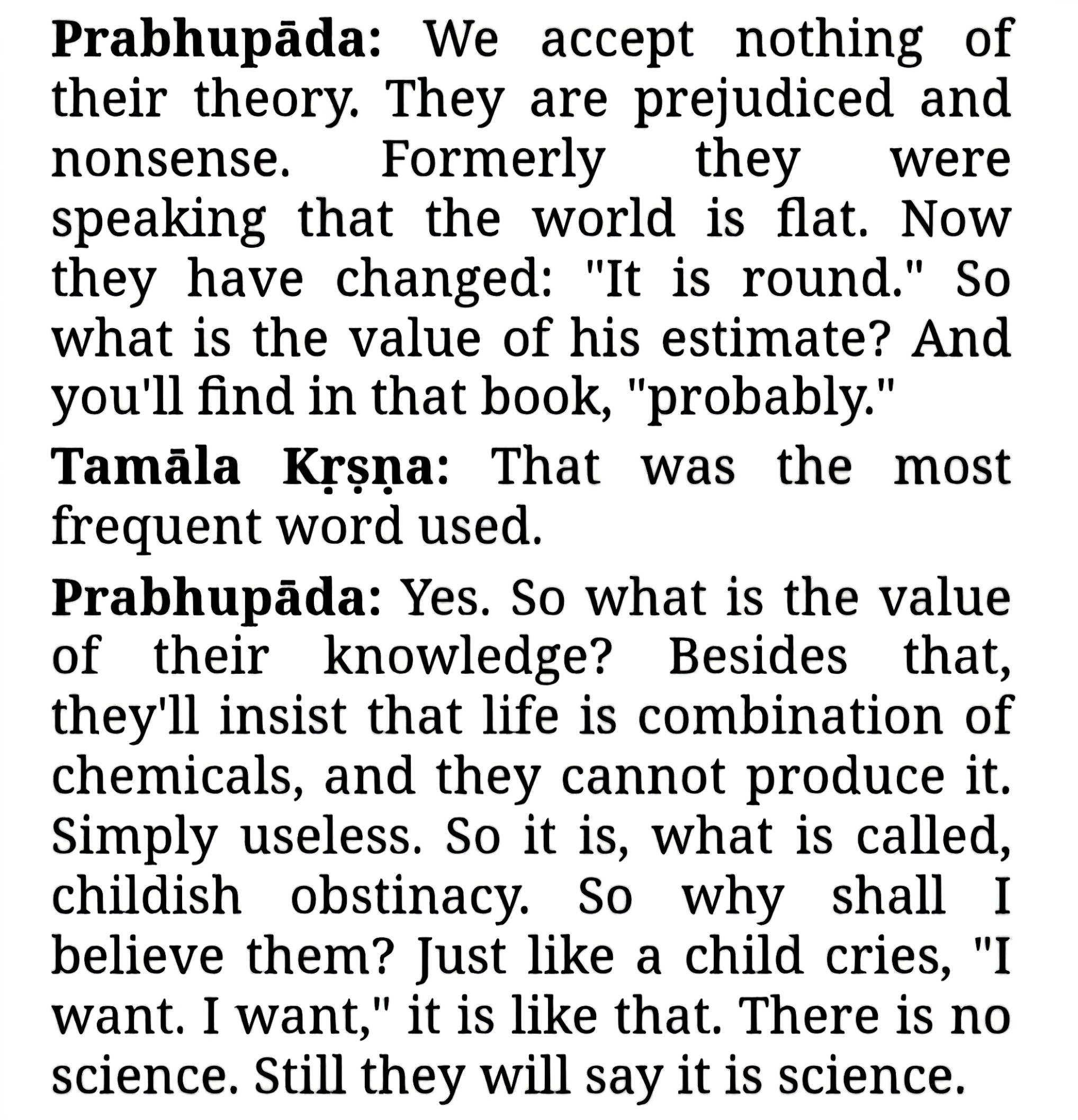
(Discussion about Bhū-mandala, July 3, 1977, Vrndāvana)
__
In other instance when Tamāla Krsna inquired about the Earth’s shape, Śrīla Prabhupāda did not provide a definitive answer regarding whether it is flat or round like a ball. Instead, he observed that materialists occasionally claim it is flat, but then alter their stance and assert that it is round. Śrīla Prabhupāda suggests that we should disregard their conjectures and instead present the perspective of the Śrīmad-Bhāgavatam.
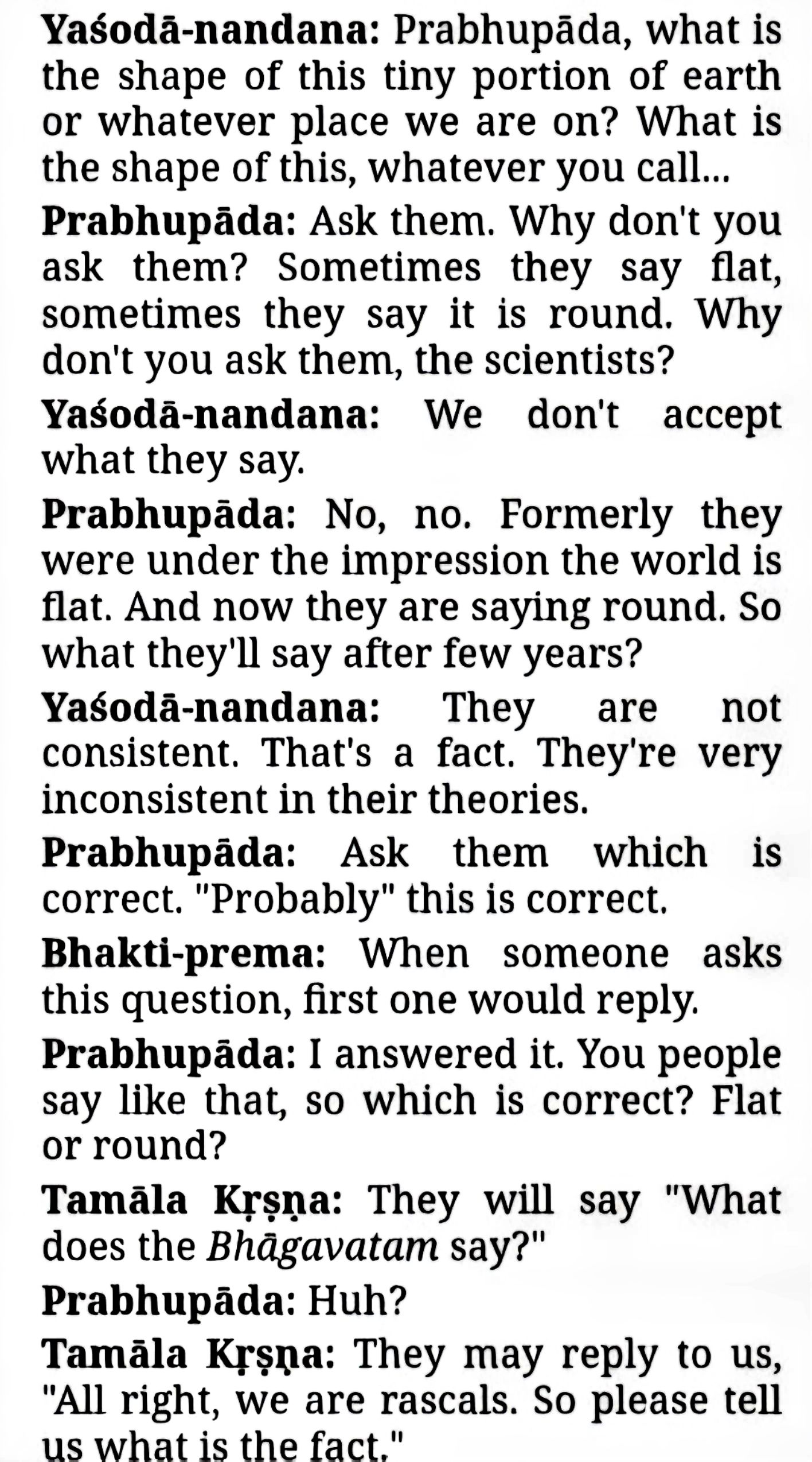
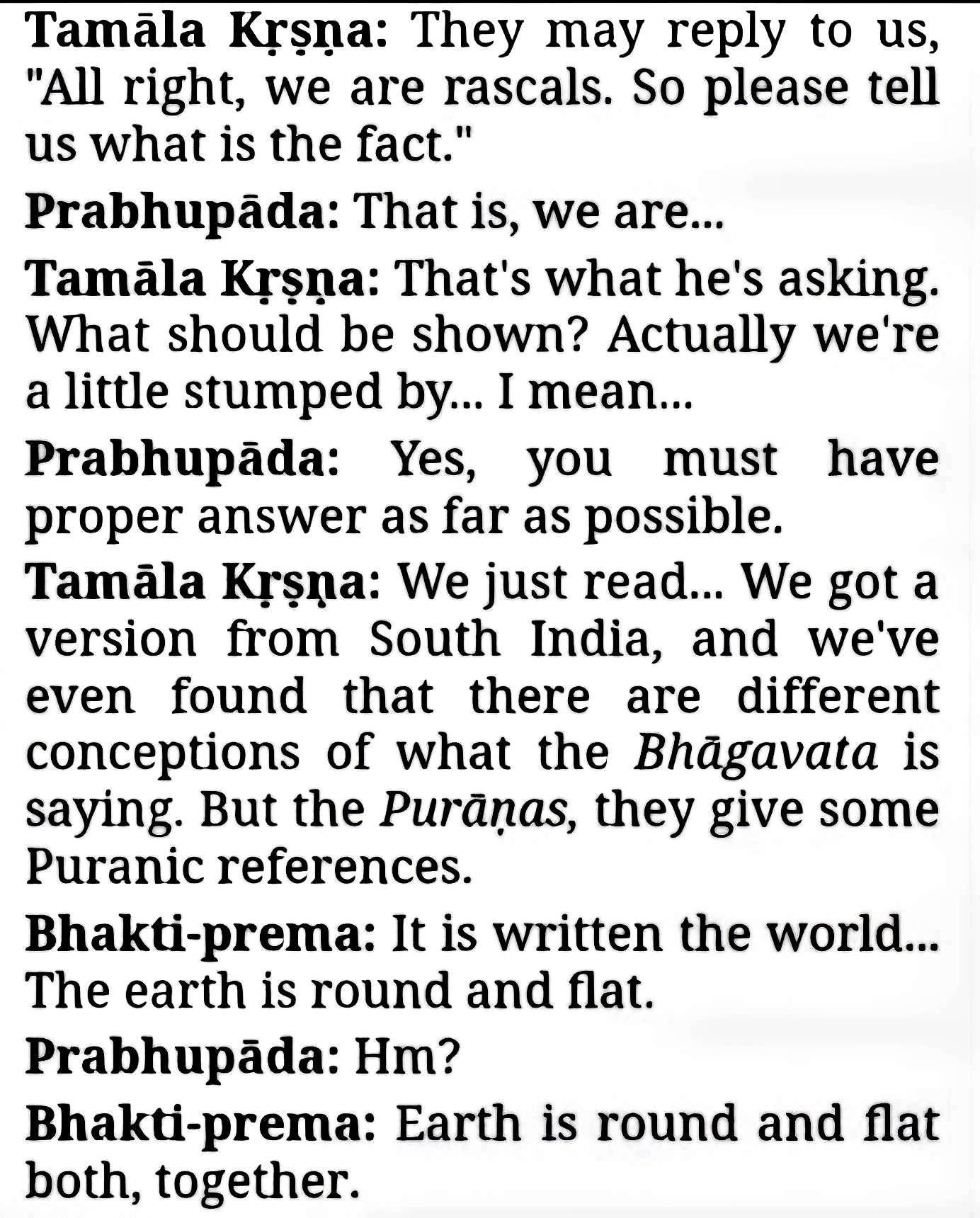
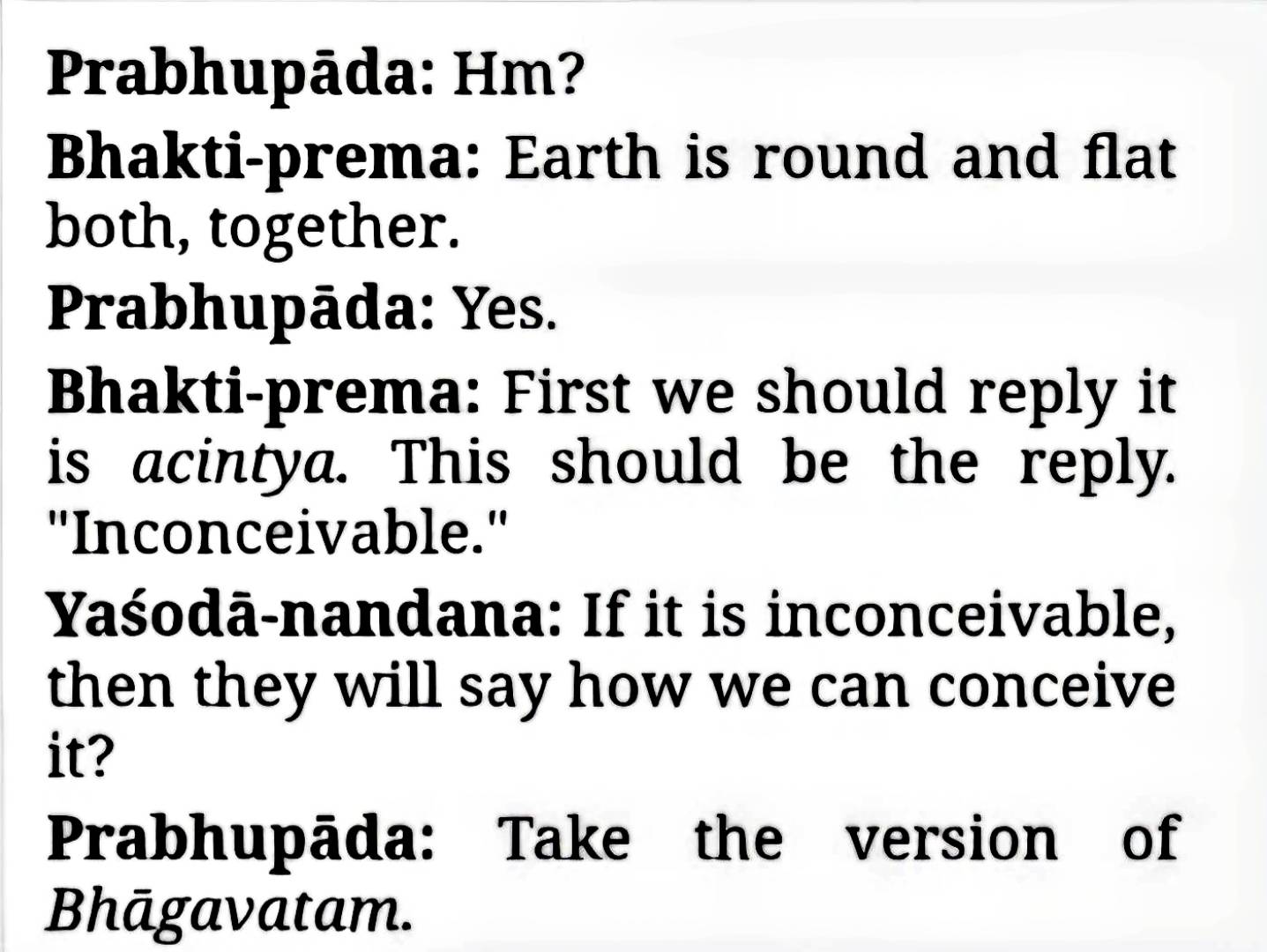
(Discussions about Bhū-mandala, July 5, 1977, Vrndāvana)
You wonder why it was difficult to clearly mentioned their position wheather earth is flat or round?
Because the challenge arose when attempting to determine definitively whether the Earth is flat or round, as there was a divergence in opinion among Western academics. While one side adamantly declared the Earth to be spherical, the other side grappled with internal inconsistencies regarding its shape.
You can read the complete conversation from the mentioned source: https://prabhupadabooks.com/conversations/1976 /mar/morning_walk/mayapura/march/18/1976
{Embed}
https://prabhupadabooks.com/conversations/1976
1976 Conversations
__
Due to the implicit references to a flat Earth in Puranic cosmology, even reformers within the Hindu tradition took notice. Swami Dayanand Saraswati, a prominent 19th-century scholar and founder of the Arya Samaj, strongly criticized the Puranic descriptions of the Earth. He went so far as to say that those who follow the Puranas are “enemies of geography,” highlighting the tension between scriptural cosmology and observable science.
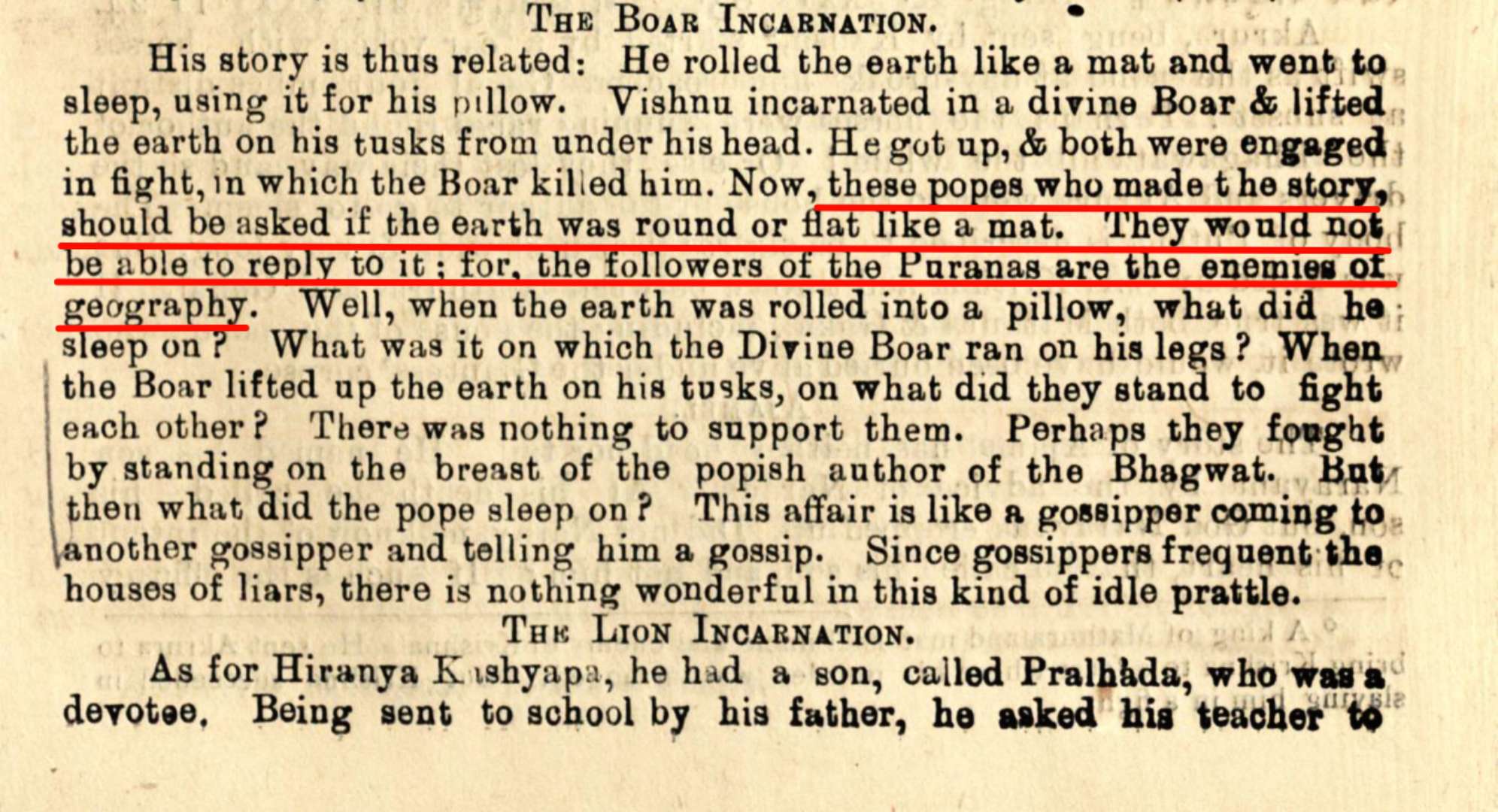
(Satyarth Prakash chapter 11)
__
Swami Karpatri, like some other traditionalist scholars, rejected modern scientific findings and instead clung to Puranic cosmology as literal truth. His distrust of empirical methods led him to promote outdated and unverifiable notions, dismissing science as unreliable simply because it challenged scriptural dogma.
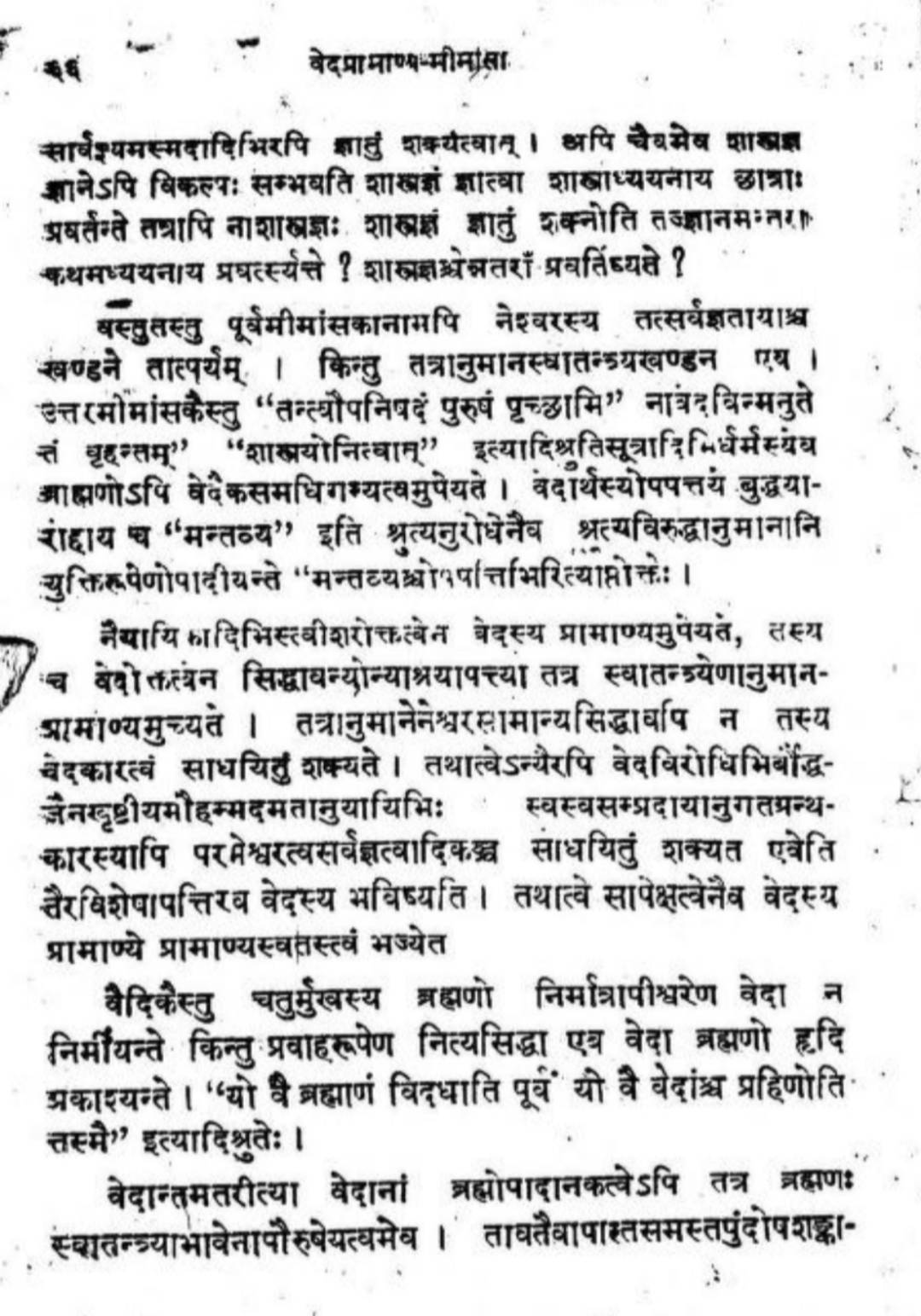
(Veda Pramanya Mimansa)
__
During that period (circa 500 BCE – 500 CE), many scholars—both Indian and Western—were deeply engaged in exploring and determining the true shape of the Earth. Due to this many modern scholars acknowledged several flaws in Puranic cosmology and began discarding or reinterpreting those elements to align with contemporary understanding and preserve intellectual credibility.
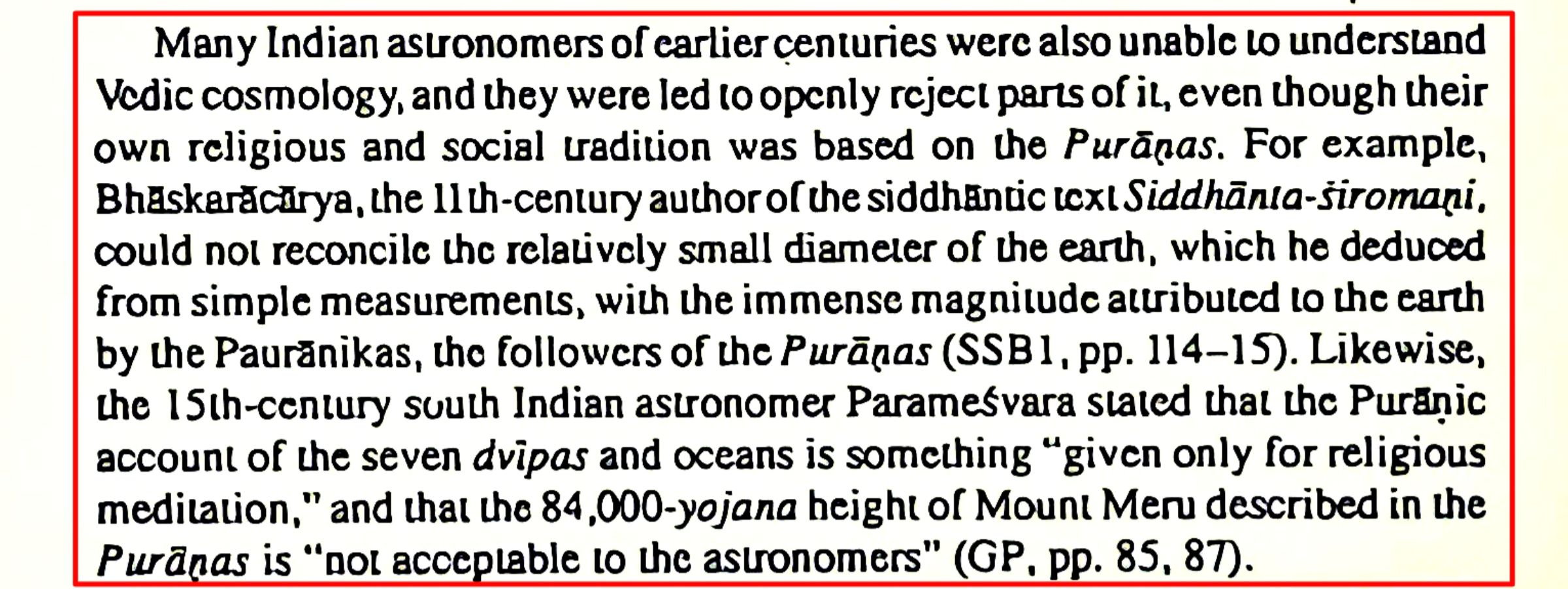
(Vedic Cosmography And Astronomy by Sadaputa Dasa [Dr. Richard L Thompson] )
After examining various scriptural references, scholarly commentaries, and historical positions, it becomes clear that the ancient Hindu depiction of the Earth—as presented in many Puranic texts—was that of a flat, disc-shaped plane. Despite later reinterpretations and apologetics, the original cosmological model promoted in these texts reflects a worldview fundamentally different from the scientific understanding of a spherical Earth.
Source:-
{Embed}
https://archive.org/details/satyarthprakashl00dayauoft/page/n364/mode/1up
An English translation of the Satyarth Prakash; literally, Expose o…
xvi, 564 p. :
- Vedic Cosmography And Astronomy: https://archive.org/details/vedic-cosmography-and-astronomy-richard-l-thompson/page/3/mode/1up
{Embed}
https://archive.org/details/vedic-cosmography-and-astronomy-richard-l-thompson/page/3/mode/1up
Vedic Cosmography And Astronomy Richard L Thompson : Richard L Thom…
‘Vedic Cosmography and Astronomy - Richard L Thompson’
Kufrcleaner Library 📚 - 『🔞』flat-earth-in-hinduism - Implicit Views of Traditional Scholars [1378268965373214730].txt_Files\vedic-cosmography-and-astronomy-richard-l—efc57b6717545867