

John 9:35 Son of Man or Son of God — How One Word Change Turned a Prophecy Verse into a Divinity Claim
The Verse Under Study
The disputed word is in verse 35. The question Jesus asks the blind man is either:
- “Do you believe in the Son of GodGreek: θεου (theou) — “of God.” Written in manuscripts in the sacred abbreviation (Nomina Sacra) form.?” — as in the Van Dyke / KJV tradition
- “Do you believe in the Son of ManGreek: ανθρωπου (anthropou) — “of man/humanity.” The reading of Papyrus 66, Papyrus 75, Sinaiticus, Vaticanus, Bezae, Washingtonianus, and all critical editions.?” — as in the oldest manuscripts and all modern critical translations
The difference is not a matter of translation preference. It is a matter of which Greek word appears in the manuscripts. If the text says “Son of Man,” the blind man’s prostration is before a prophet — not a god. The entire theological argument built by Christian scholars on this passage collapses.
Why Christians Considered This Text Important
Father Matta El Meskeen
— Explanation of the Gospel of John, Part 1, p. 601, Monastery of Saint Macarius Press, Wadi El Natrun
Father Matta El Meskeen declares explicitly that the blind man’s prostration was not because Jesus was a prophet but because he was the Son of God — and that this title, in his view, indicates the divinity of Christ.
Pope Shenouda III
— Theology of Christ, Pope Shenouda III, p. 19, Anba Royes Press, Cairo
Pope Shenouda used this word as the basis for his argument that Christ is the Son of God in a unique, divine sense — and that the blind man’s prostration was on the basis of this divinity.
Arabic and English Translations That Read Son of Man
The overwhelming majority of Arabic translations — and all modern critical English translations — render the word as “Son of Man,” not “Son of God.”
Common Arabic Translation:
“And Jesus heard that they had cast him out, and when he met him he said to him, ‘Do you believe in the Son of Man?’”
Jesuit Monastic Translation (The New Testament, p. 320, Dar El Mashreq, Beirut):
“And Jesus heard that they had cast him out. And he found him and said to him, ‘Do you believe in the Son of Man?’”
Catholic Arabic Translation: agrees with the Jesuit in translating with “man.”
Pauline Translation (The New Testament, p. 444, Pauline Library Publications):
“And Jesus heard that they had cast him out. And he found him and said to him, ‘Do you believe in the Son of Man?’”
Simplified Arabic Translation (The New Testament, p. 1125, World Center for Bible Translation):
“And Jesus heard that they had cast the man out. And he found him and said to him, ‘Do you believe in the Son of Man?’”
Translation of the Holy Bible (The New Testament, p. 121, Bible Society, Lebanon) — rendered with an even more explicit translation:
“And Jesus heard that they had cast him out. And he found him, and said to him, ‘Do you believe in him who became flesh?’”
Every one of these translations deletes the word “God” and replaces it with “Man.” The reason is that the oldest and most reliable manuscripts available to the translators do not say “God” — they say “man.”
The Greek Words — Man vs. God
To understand the manuscript evidence clearly, it helps to see the visual difference between the two Greek words.
The word for “man” in Greek is ανθρωπου. In printed form:
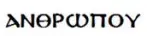
And as it appears in the manuscripts in uncial (uppercase) script:

Its pronunciation is “anthropou” — the root of the English word “anthropology”:

And its appearance in manuscripts:

The word for “God” in Greek is θεου (theou). In printed form it looks like this:

In the manuscripts, θεου is written in a sacred abbreviation known as Nomina SacraNomina Sacra (Latin: sacred names) — a scribal convention in early Greek Christian manuscripts of abbreviating certain sacred words such as God (ΘΣ for θεός), Lord (ΚΣ for κύριος), Jesus (ΙΣ for Ἰησοῦς), and Christ (ΧΣ for Χριστός) with a horizontal line above the abbreviation. — a horizontal line over the abbreviated form:

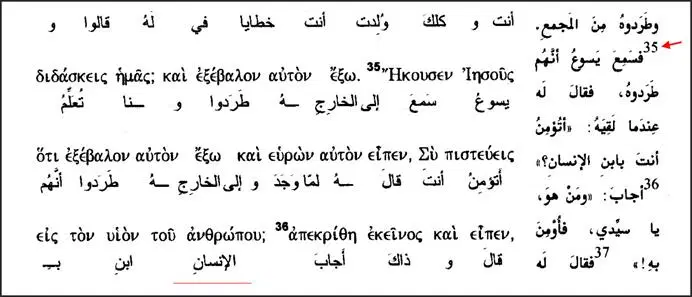
The interlinear Greek-Arabic New Testament (Greek-Arabic Between the Lines, by Paul Al-Feghali, Antoine Awkar, Nimatallah Al-Khoury, and Youssef Fakhry, p. 491, Antonine University edition) shows the text clearly:
The Oldest Manuscripts All Read Son of Man
Papyrus 66 (𝔓66) — Late 2nd Century
Papyrus 66 dates to approximately 200 CE and is one of the oldest papyri of the Gospel of John in existence.
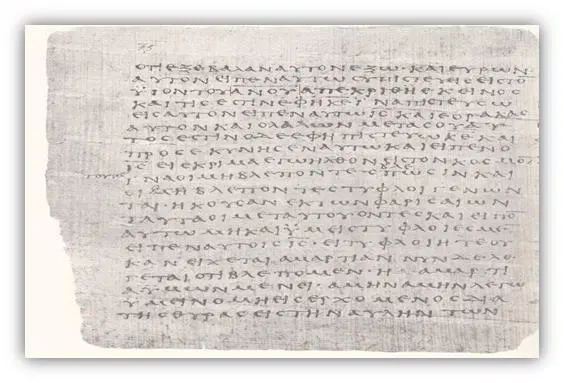
This ancient papyrus dating to around 200 CE contains the abbreviated word for “man” — confirming that the correct reading is “Son of Man” and not “Son of God.”
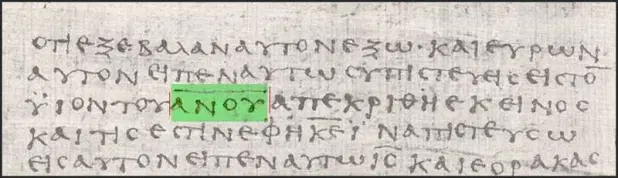
The abbreviated form visible in the papyrus:

Papyrus 75 (𝔓75) — Late 2nd / Early 3rd Century
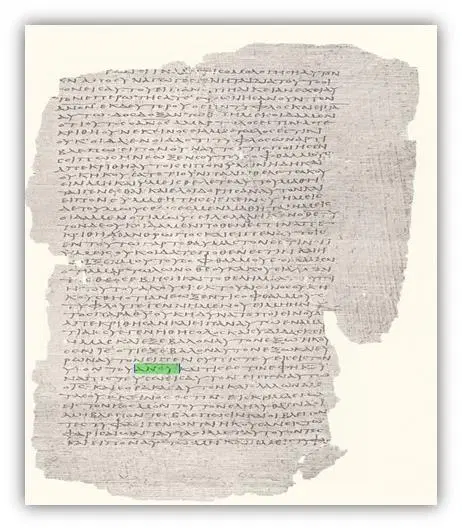
Papyrus 75 also contains the word for “man” — a second papyrus witness from the earliest period of manuscript transmission confirming the “Son of Man” reading.

Codex Sinaiticus (4th Century) — Symbol א
The Sinaiticus is considered by textual critics to be the most important manuscript of the New Testament.
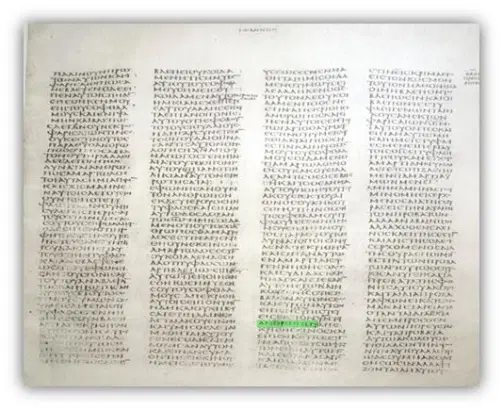
The Sinaiticus website provides a complete English translation of the manuscript, stating:
“35 Jesus heard that they had cast him out, and he found him and said: Dost thou believe on the Son of man?”
Tischendorf’s handwritten copy of the Sinaiticus manuscript — made directly from the original — also supports this:

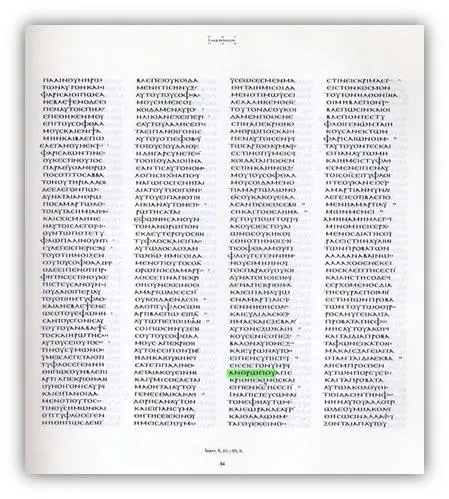
Codex Vaticanus (4th Century) — Symbol B
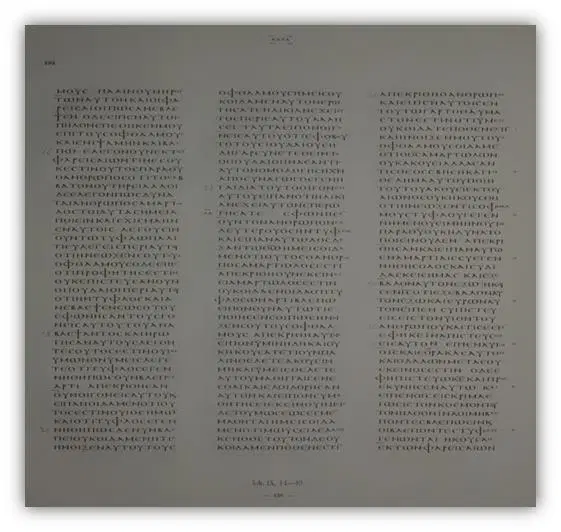
The Vatican manuscript contains the word for “man” — not “God.”
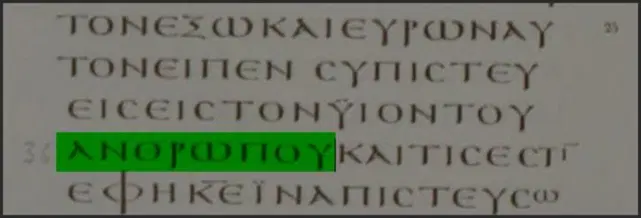
Codex Bezae (5th Century) — Symbol D

The Beza manuscript testifies to the translation of the word as “man.”
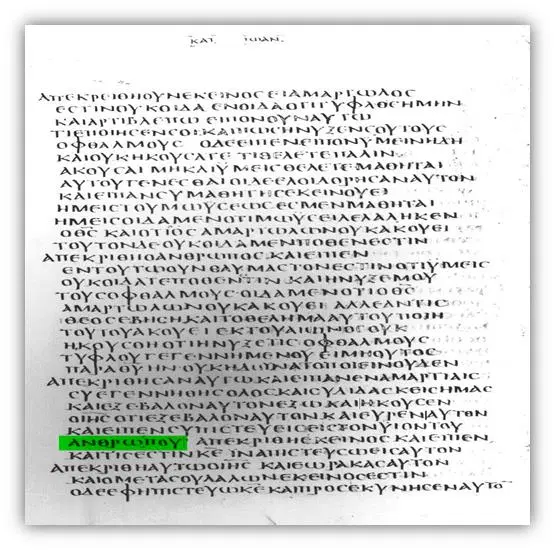
The Beza manuscript confirmation of “man”:

Codex Washingtonianus (5th–6th Century) — Symbol W
The Washington manuscript contains the abbreviated form of “man” — “the human being.” This is the last of the major 4th–5th century witnesses, and it agrees with all the others.
Where the Distortion Began — The Alexandrian Codex
The distortion of the text from “Son of Man” to “Son of God” first appears in the Alexandrian Codex from the fifth century.
Codex Alexandrinus (5th Century) — Symbol A
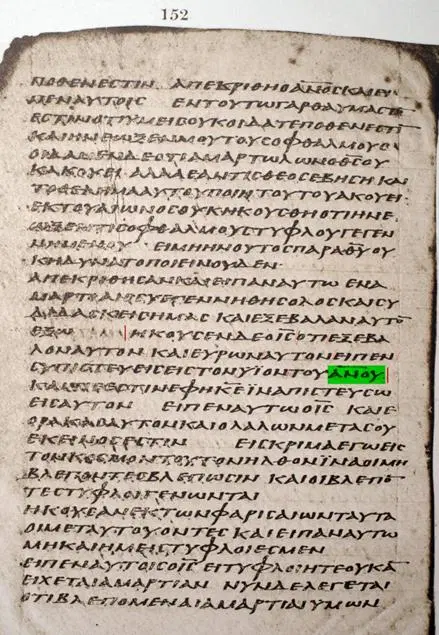
The Alexandrian manuscript contains the sacred abbreviation for “God” — θεου in Nomina Sacra form.
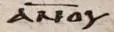
This is where the tahrifArabic: تحريف — scribal alteration of the biblical text. In this case the substitution of “God” for “Man” transformed a prophecy verse into a divinity claim. began in the manuscript tradition. From the Alexandrian Codex onward, the word “God” propagated into later manuscripts and eventually into the Textus Receptus — the basis of the KJV and Van Dyke translations.
There is no textual justification for the change. All manuscripts before the Alexandrian — the two papyri, Sinaiticus, Vaticanus, Bezae, and Washingtonianus — read “Son of Man.” The motive scholars have identified is the same one seen across many New Testament textual alterations: scribes felt free to change and tamper with the manuscripts, and in this case the change served to strengthen a Christological claim.
What the Critical Editions Decided
The editors of the Greek New Testament (4th Revised Edition, p. 718) state:
{A} ανθρωπου — “man” is the original reading of the manuscript.
The grade {A} is the highest level of critical confidence — meaning the committee is fully certain that “Son of Man” is the original text.
The Nestle-Aland 27th edition reads:
εὑρὼν αὐτὸν εἶπεν · σὺ πιστεύεις εἰς τὸν υἱὸν τοῦ ἀνθρώπου.
Translation: “Having found him, he said: Do you believe in the Son of Man?”
Father Abdul-Masih Basit Abu Al-Khair records the rule of textual criticism applied here:
Based on this rule — which Abu Al-Khair himself transmits from the scholars — the scholars have chosen the reading “Son of Man.” The oldest manuscripts, the best papyri, and the most important 4th-century codices all support it unanimously.
Notes on the Story — Theological Observations
Several observations from within the Gospel narrative itself confirm that the blind man understood Jesus as a prophet, not a god.
The blind man’s own testimony (John 9:17):
“I see that he is a prophet.”
The blind man describes Jesus to his neighbors (John 9:11):
“A man, Jesus, made clay and anointed my eyes, and I saw.”
He calls Jesus “a man” — not God, not the Son of God.
The blind man’s theological reasoning (John 9:31–33):
“And we know that God does not listen to sinners. But if anyone fears God and does His will, He listens to him.”
This is the blind man’s own explanation of the miracle: God answered Jesus’ prayer because Jesus feared God and did His will. This is the theology of prophethood — not divinity.
Jesus himself before performing the miracle (John 9:4):
“I must do the works of him who sent me.”
Jesus attributes the miracle to the One who sent him — not to himself. This is consistent with the Quranic understanding of Jesus as a prophet performing miracles by God’s permission.
John 11:42 — Jesus on the relationship between himself and the Father:
“And I know that you always hear me.”
Jesus prays to God and God responds. This is the relationship of a servant and prophet to his Lord — not of one God to another.
Matthew Henry’s commentary on the blind man’s courage:
The blind man was not timid or confused. He spoke with full conviction — and his conviction was that Jesus was a prophet who performed a miracle by God’s power.
Son of God Does Not Imply Divinity
Even if one were to accept the “Son of God” reading as original — which the manuscripts do not support — the title itself does not imply unique divinity in the biblical context.
Consider who else is called “son of God” or “sons of God” in the Bible:

- Adam: “Adam, son of God.” — Luke 3:38
- Solomon: “I have chosen him to be my son, and I will be his father.” — 1 Chronicles 17:13
- The children of Israel: “The sons of God came to present themselves before the Lord.” — Job 1:6
- Peacemakers: “Blessed are the peacemakers, for they will be called children of God.” — Matthew 5:9
- All believers: “Children of God: that is, those who believe in His name.” — John 1:12
If “Son of God” implied divinity, then Adam, Solomon, the children of Israel, all peacemakers, and all believers would be divine. The title clearly does not carry that meaning in the biblical context.
Furthermore, the Bible itself contradicts the divinity implied by the title:
Conclusion
The theological argument built by Pope Shenouda and Father Matta El Meskeen on this passage — that the blind man prostrated before Christ as the Son of God and that this proves his divinity — collapses entirely on two grounds: first, the oldest manuscripts do not say “Son of God” at all; and second, even if they did, the title “Son of God” does not imply unique divinity anywhere else in the Bible.
The blind man himself called Jesus a prophet, described him as “a man named Jesus,” and reasoned about the miracle in the language of prophethood. His testimony — as an eyewitness who experienced the miracle directly — is more reliable than the theological constructions of people who never saw Jesus at all.
سُبْحَانَ الَّذِي لَمْ يَتَّخِذْ وَلَدًا وَلَمْ يَكُن لَّهُ شَرِيكٌ فِي الْمُلْكِ وَلَمْ يَكُن لَّهُ وَلِيٌّ مِّنَ الذُّلِّ وَكَبِّرْهُ تَكْبِيرًا
وَآخِرُ دَعْوَانَا أَنِ الْحَمْدُ لِلَّهِ رَبِّ الْعَالَمِينَ
...ristian-defense-refuted|Nazareth, Netzer, and Matthew 2:23: The Failed Christian Defense Refuted]]