Krishna
There are numerous instances that depict Krishna engaging in lust-driven actions, which reflect morally questionable human behavior rather than attributes traditionally associated with divinity. In this section, we examine Krishna’s portrayal of lust as described in Chapter 15 of the Krishna Janam Khand of the Brahma Vaivarta Purana.
Through the sequence of incidents presented in this chapter, it is necessary to interpret the narrative contextually, connecting each episode to the next in order to understand the portrayal of Krishna’s lust-oriented behavior. The chapter begins with a detailed physical description of Radha’s body, which establishes the sensual framework of the narrative. This is followed by Radha’s expressed desire for union with Krishna, further intensifying the erotic tone. Subsequently, Krishna’s request for Radha’s chewed betel—an act she refuses—serves as a symbolic moment reflecting intimacy and desire. The narrative then progresses to what is described as a struggle or “battle” centered on sexual pleasure. Finally, the chapter concludes with a striking contrast: after his union with Radha, Krishna returns home and drinks milk from his mother Yashoda’s breast, juxtaposing erotic conduct with maternal dependence and thereby complicating the moral and divine interpretation of his character.
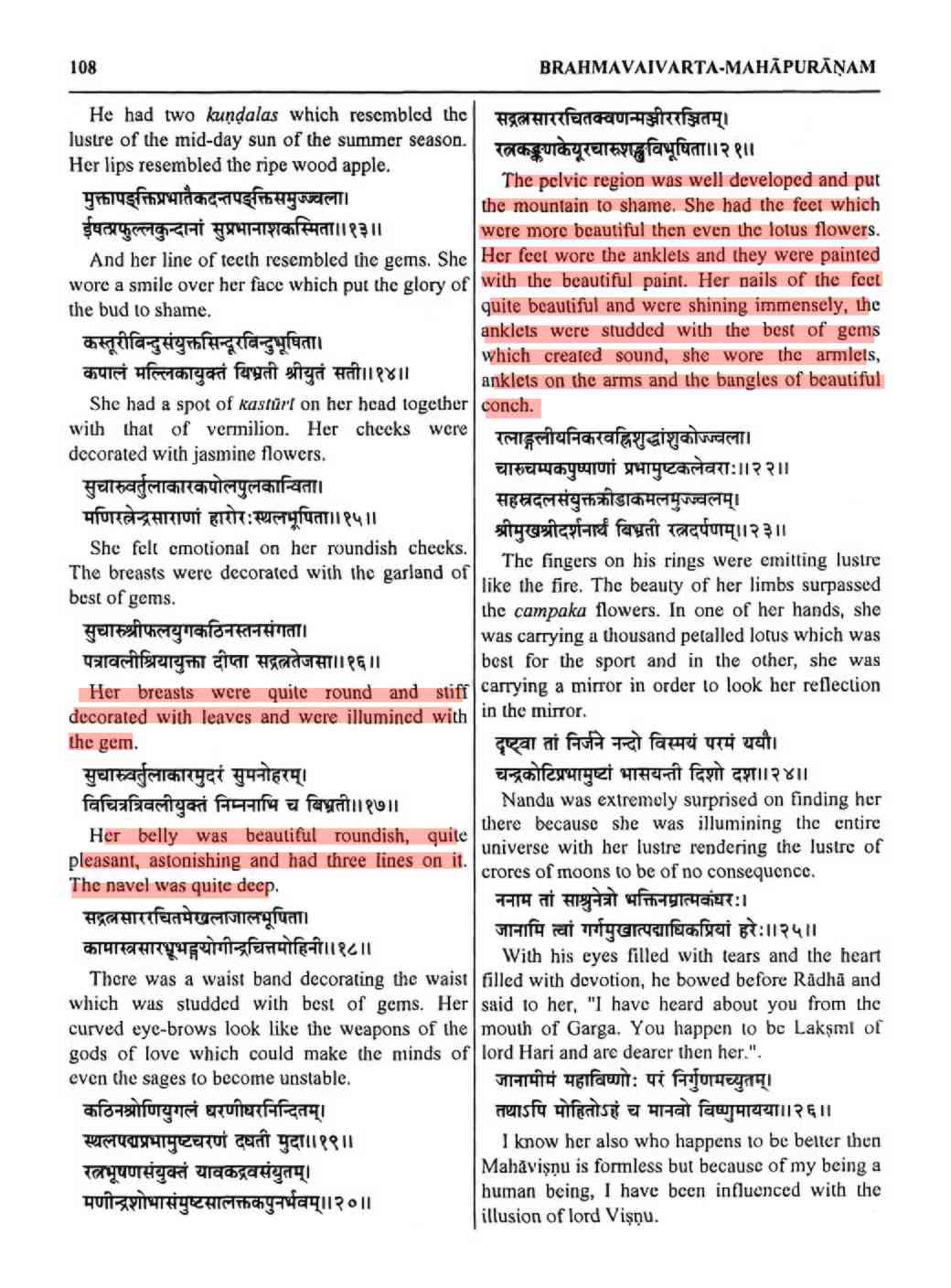
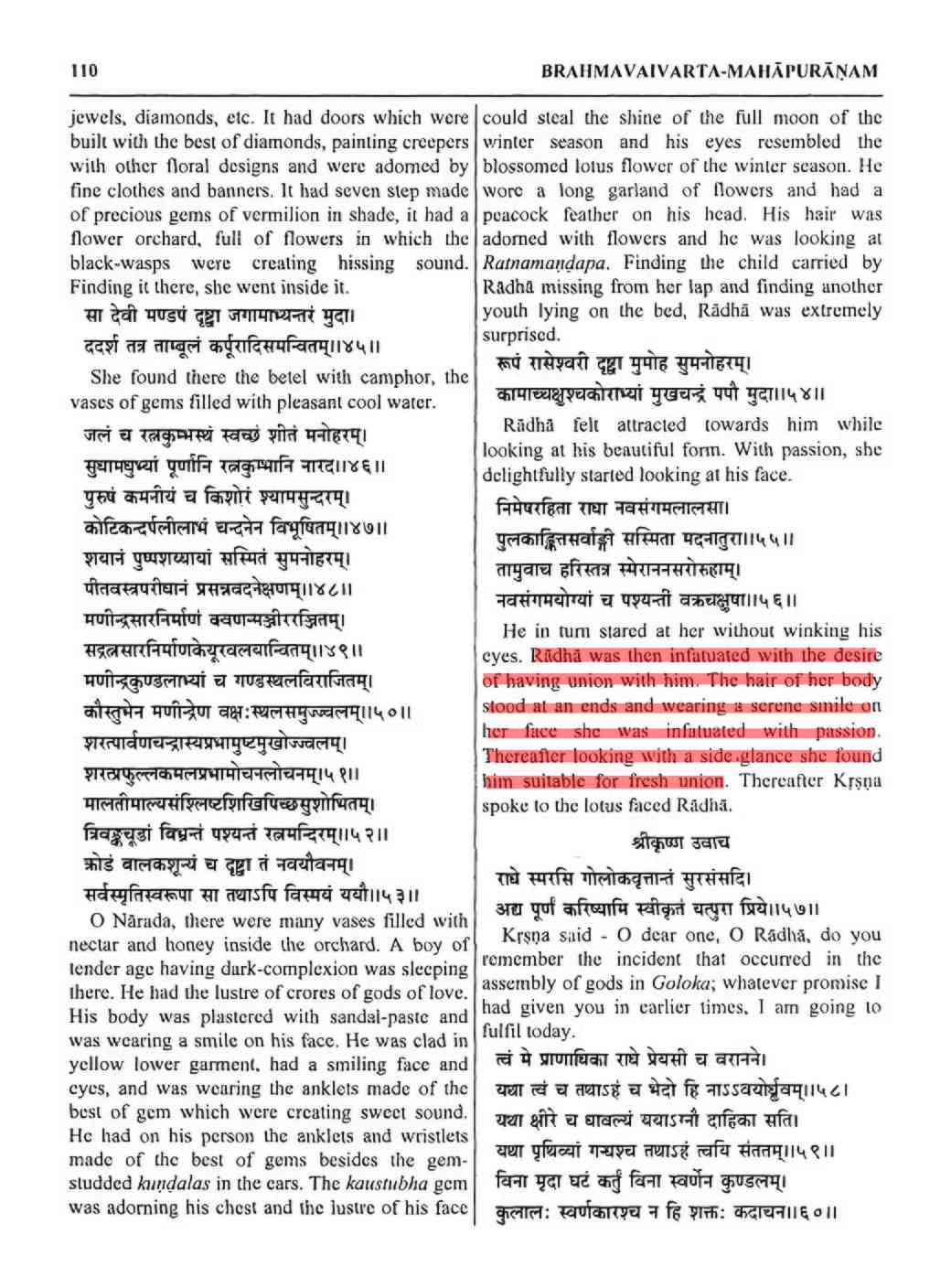
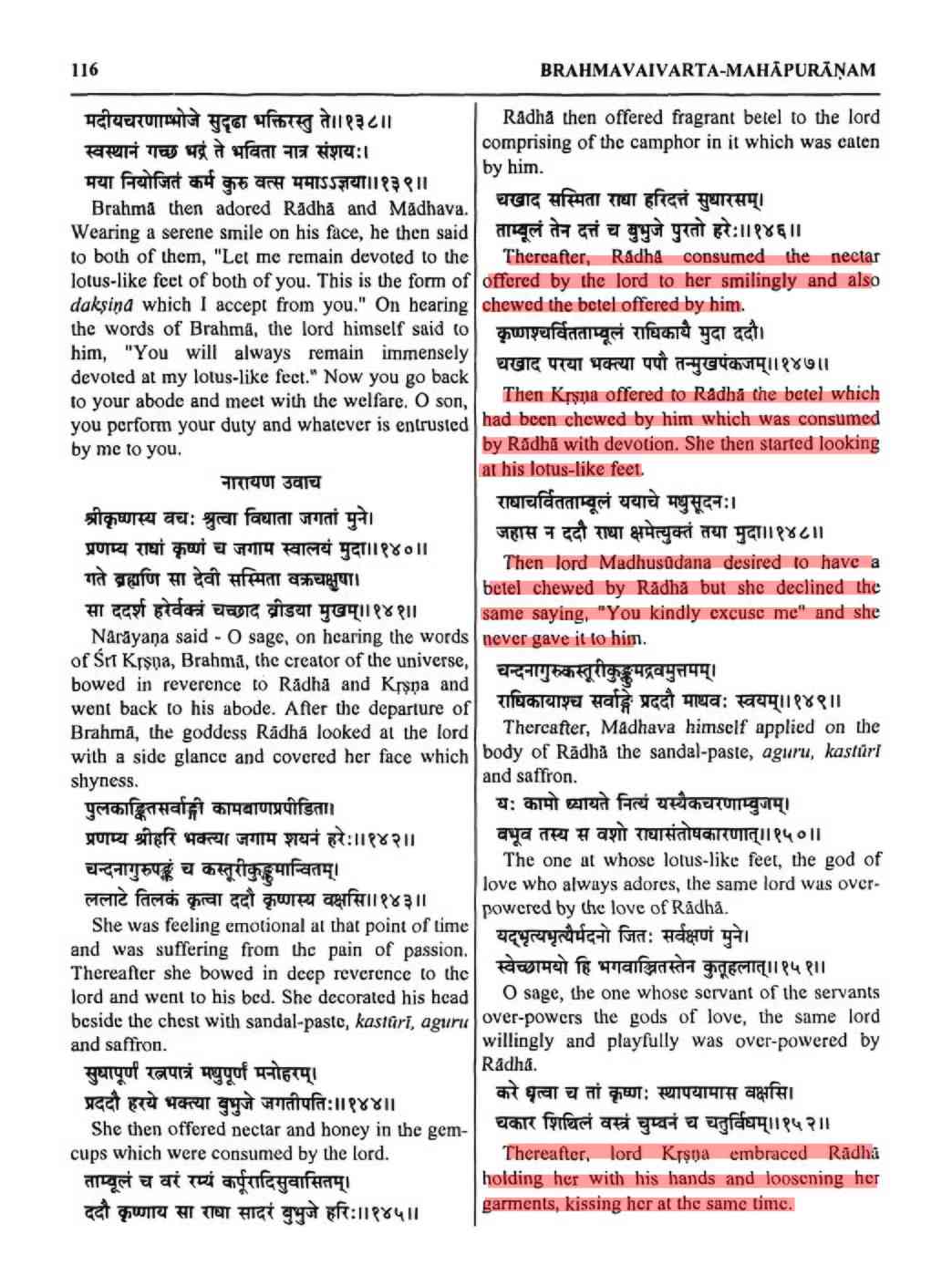
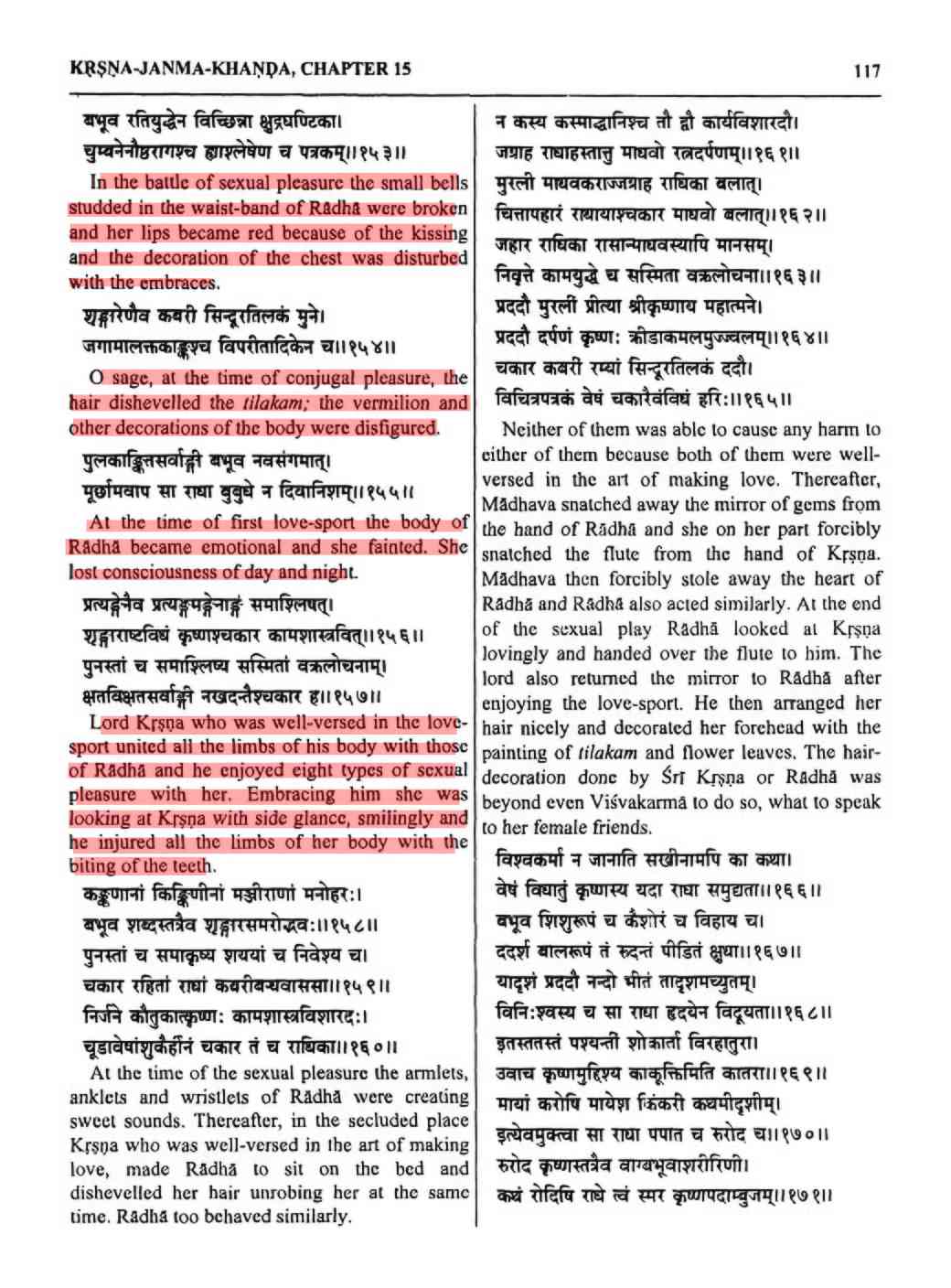
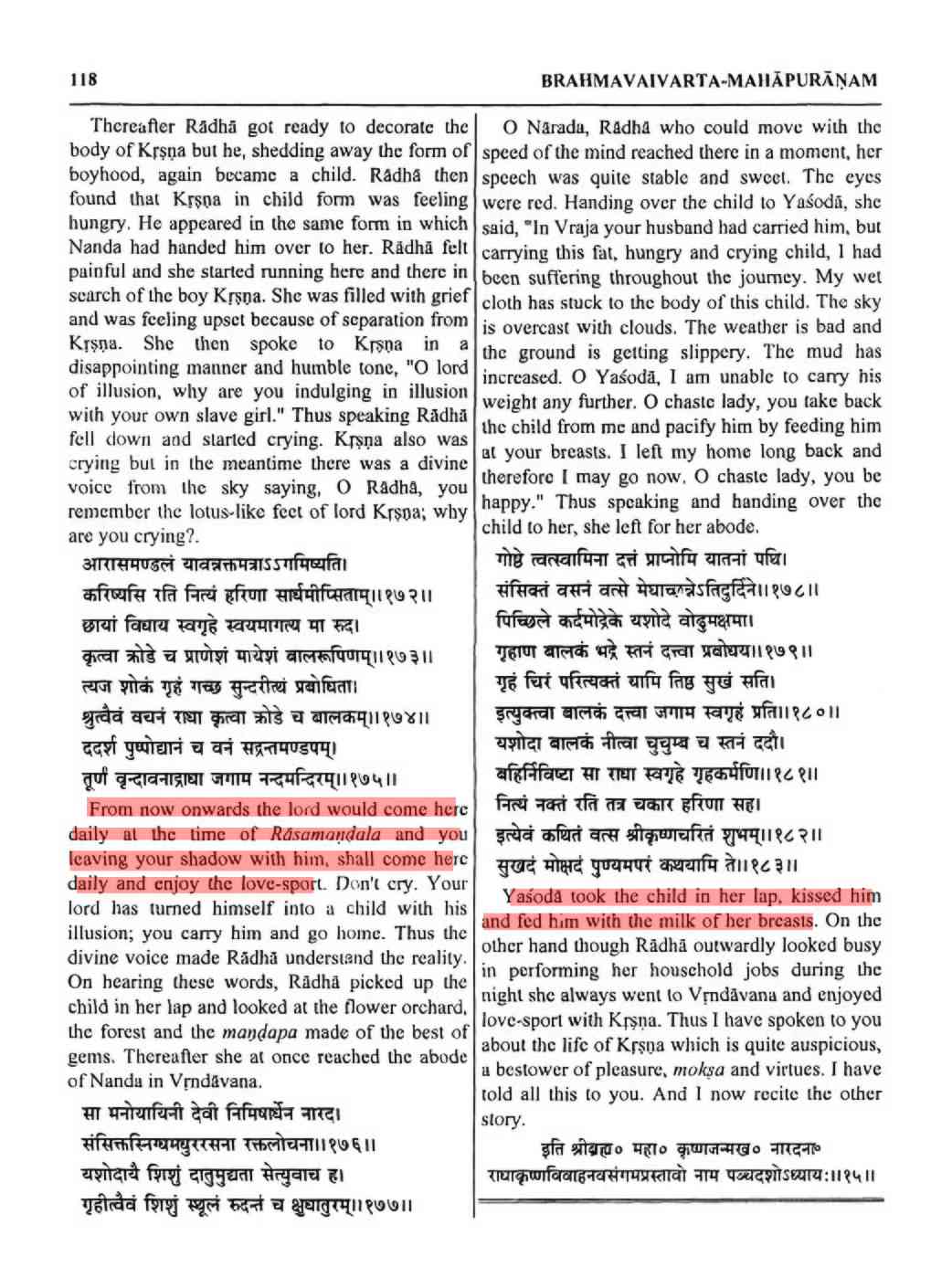
The incidents described in this section present a portrayal of Krishna that significantly diverges from the traditional attributes associated with a moral and transcendent deity. Rather than embodying restraint, righteousness, and divine detachment, Krishna is depicted engaging in behavior driven by desire, deception, and emotional indulgence—traits commonly associated with fallible human conduct. His repeated involvement with multiple cowherd maidens, the need for forgiveness after acts of infidelity, and his experience of shame upon being exposed all suggest moral accountability rather than divine infallibility. Such narratives challenge the theological claim of Krishna as an idealized godly figure and instead depict him as one who deviates from the expected standards of divine perfection. Consequently, these episodes raise critical questions about the consistency between Krishna’s portrayed actions and the core attributes traditionally ascribed to divinity, such as moral absolutism, self-control, and ethical exemplarship.
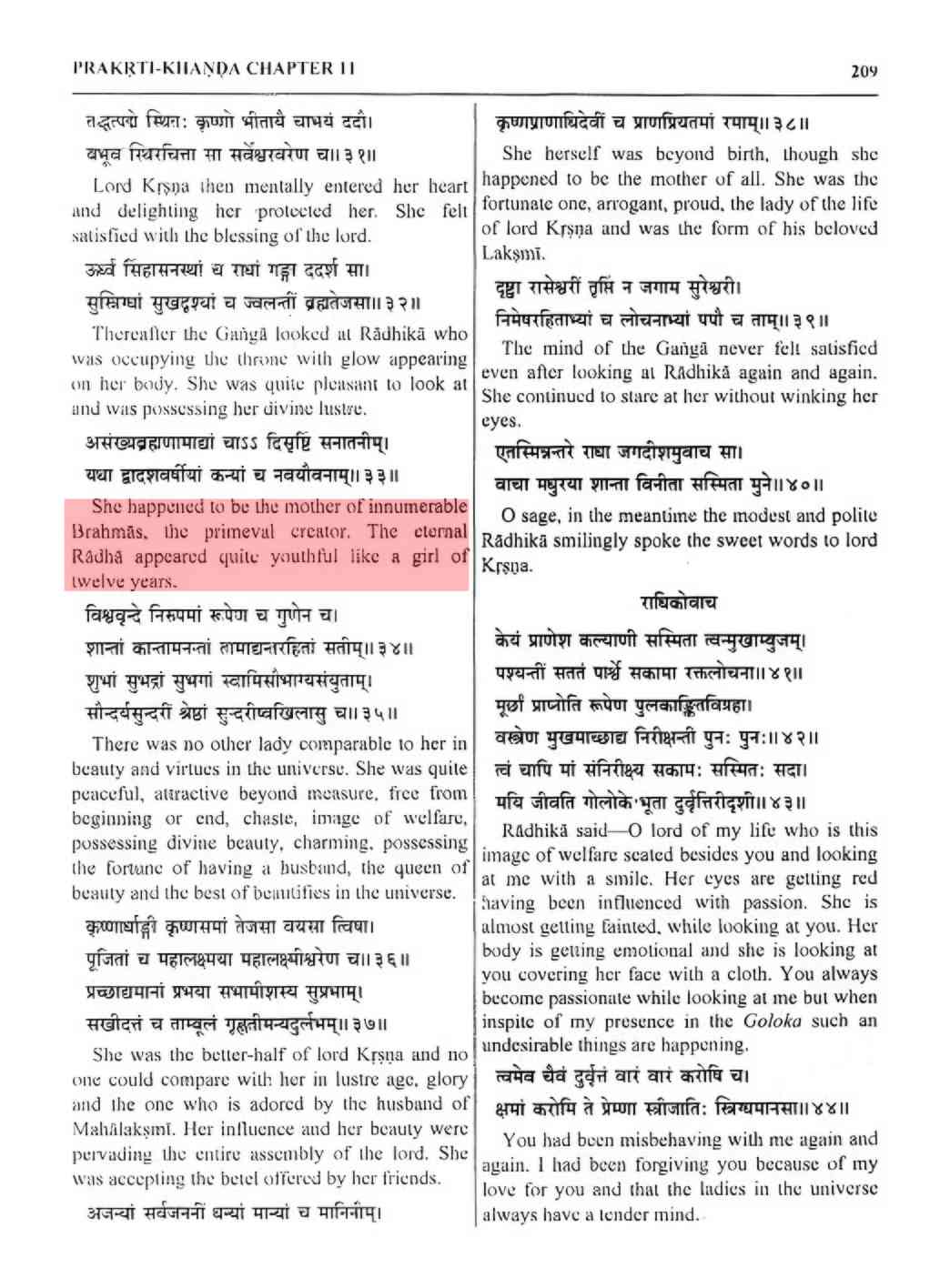
Virajā- A cow-herdess. Once Śrī Kṛṣņa duped Rādhā and took the cowherdess Virajā to the region of loveplays. Same thing occurred with gopi and prabha.
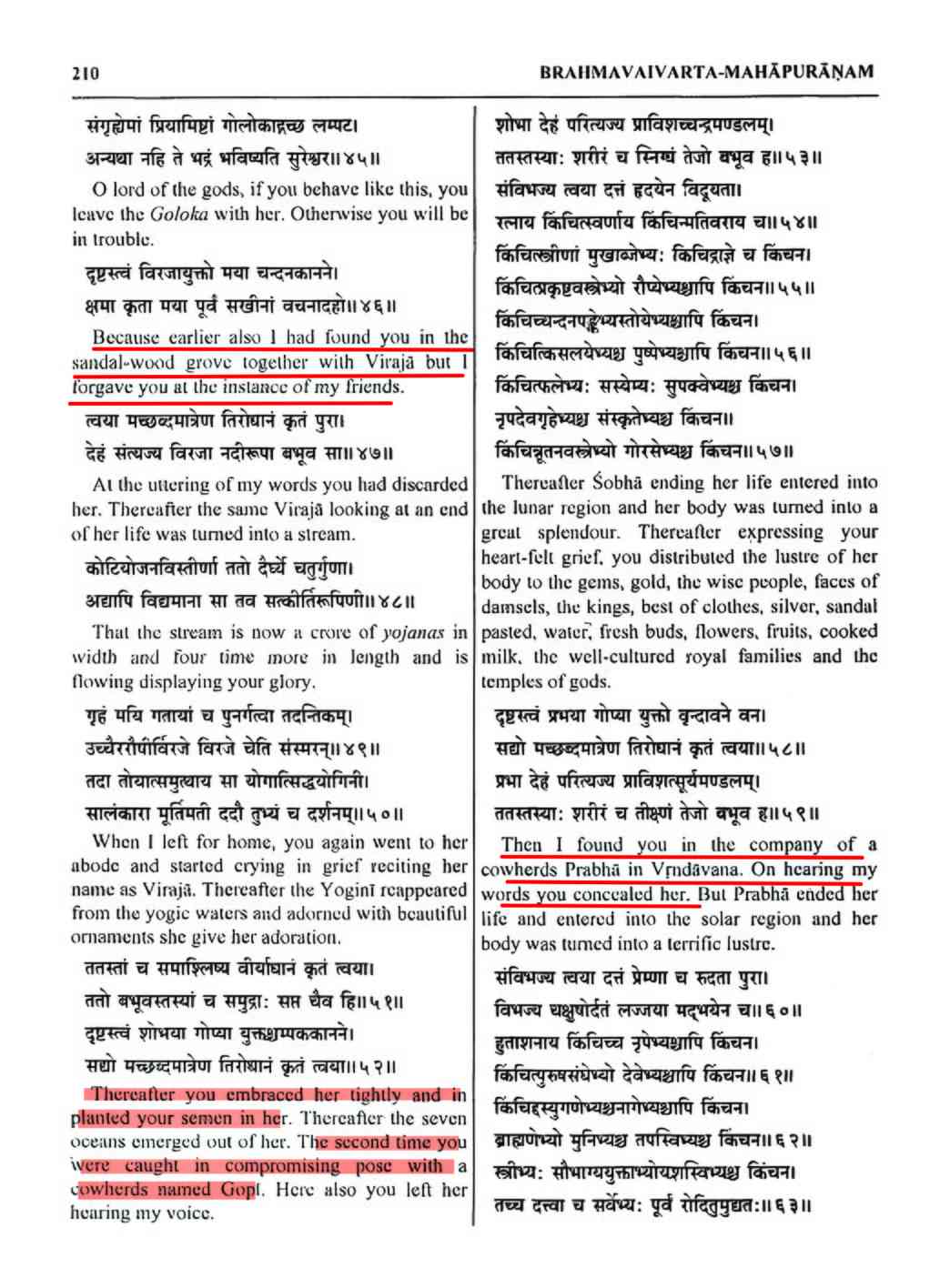
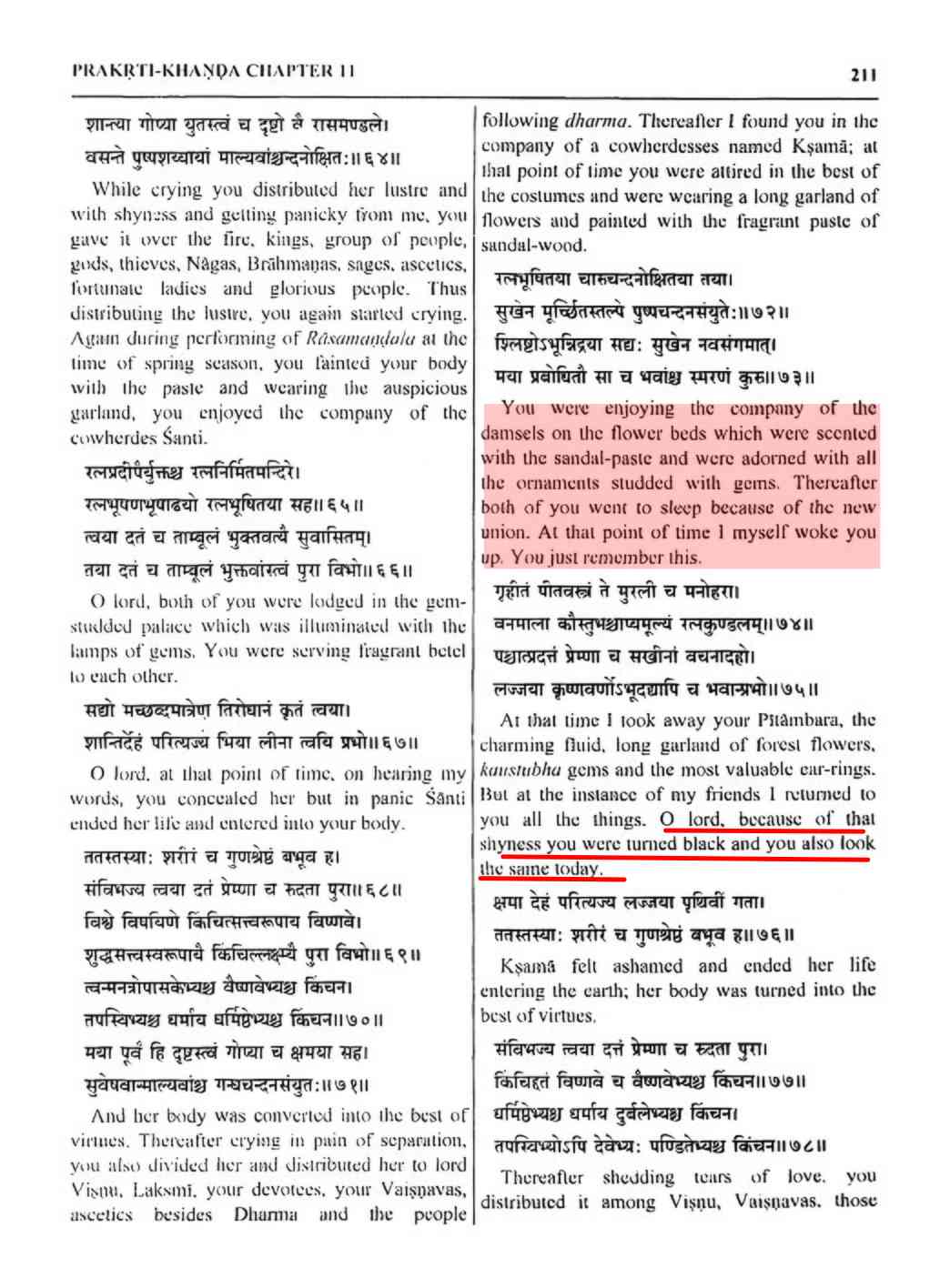
Reference of the above mentions:- Brahma vaivarta purana, Prakriti khand, chapter 11
In this section, the focus is on those narratives that depict Krishna engaging in acts explicitly aligned with kāmasūtra-oriented love-sports, including varied forms of sexual enjoyment with Rādhā, participation in prescribed erotic practices, mass water-sports with innumerable gopīs, and intense physical expressions of desire that allegedly caused the gopīs to faint after their first experience of love-play. Certain descriptions further emphasize bodily acts such as scratching and marking intimate regions, presenting a form of sensual indulgence rooted in physical passion. Such portrayals, when examined critically, appear to reflect human impulses of kāma rather than divine qualities of restraint, moral transcendence, or spiritual elevation. Consequently, these acts raise serious theological concerns, as they seem to deviate from the traditional attributes ascribed to God—namely purity, self-control, and detachment—thereby blurring the distinction between divine līlā and ordinary human erotic behavior.
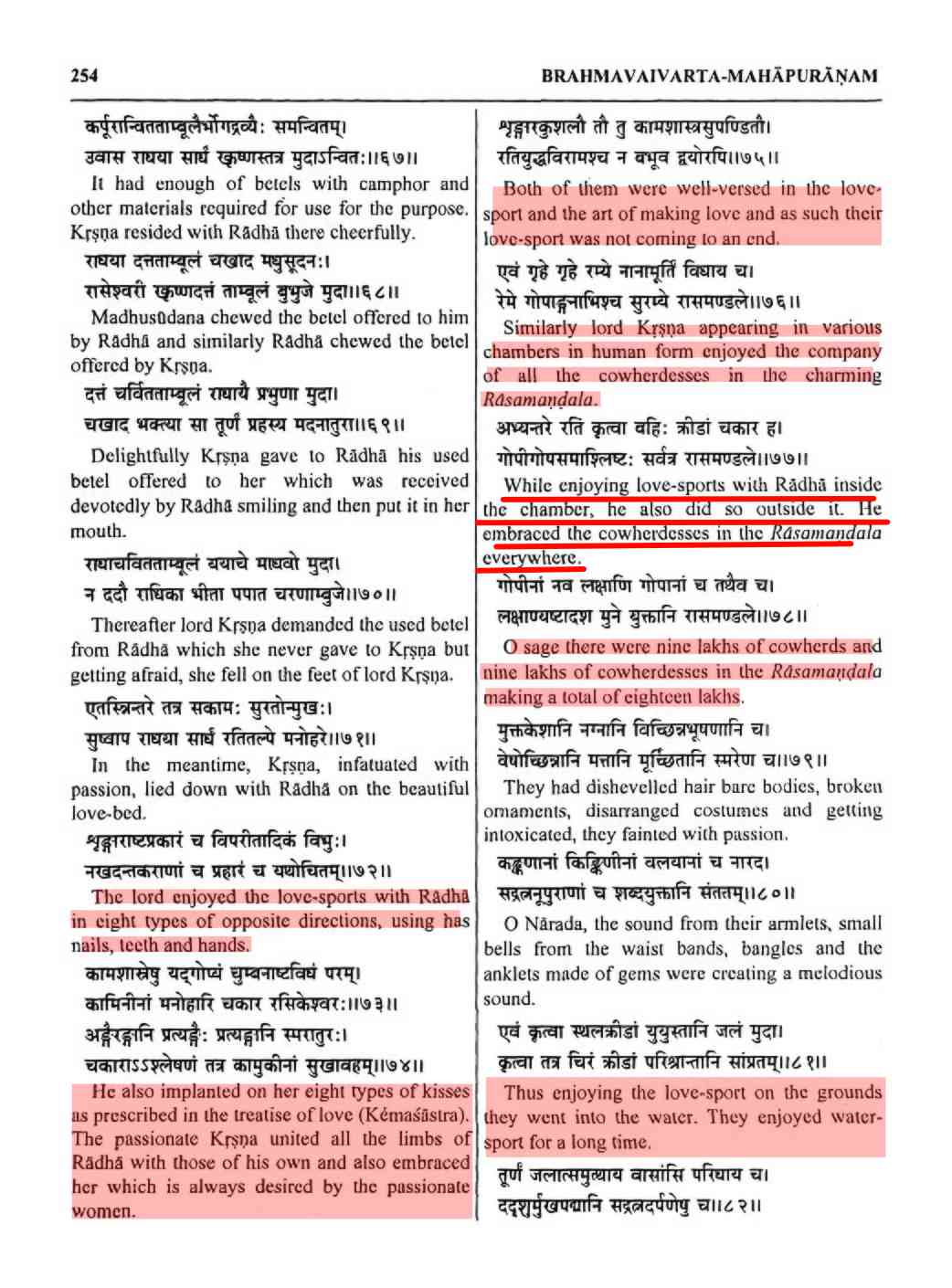
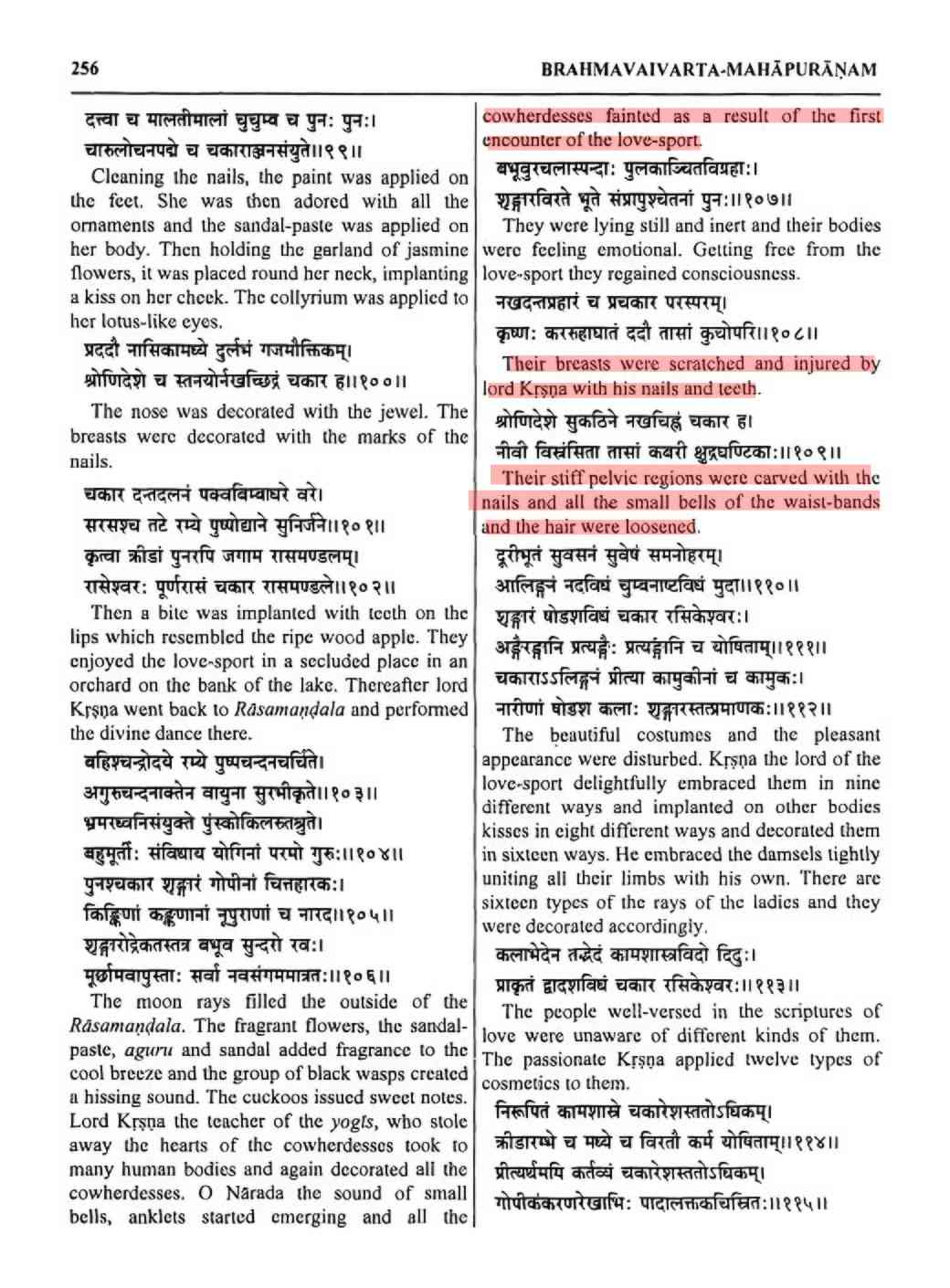
Reference of above mentions:- Brahma vaivarta purana, krishna janam khand, chapter 28
In this section, it is critically examined for its overtly erotic portrayal of Krishna with Kubja, narrated in explicit, physical, and non-symbolic terms. The text foregrounds sexual acts, bodily gratification, and insemination, reducing the divine figure to a participant in lustful conduct. Such depiction conflicts with core theological attributes traditionally associated with God—detachment, moral exemplarity, and spiritual elevation—thereby presenting Krishna in a distinctly human, desire-driven role that undermines the concept of divine purity and ethical idealism.
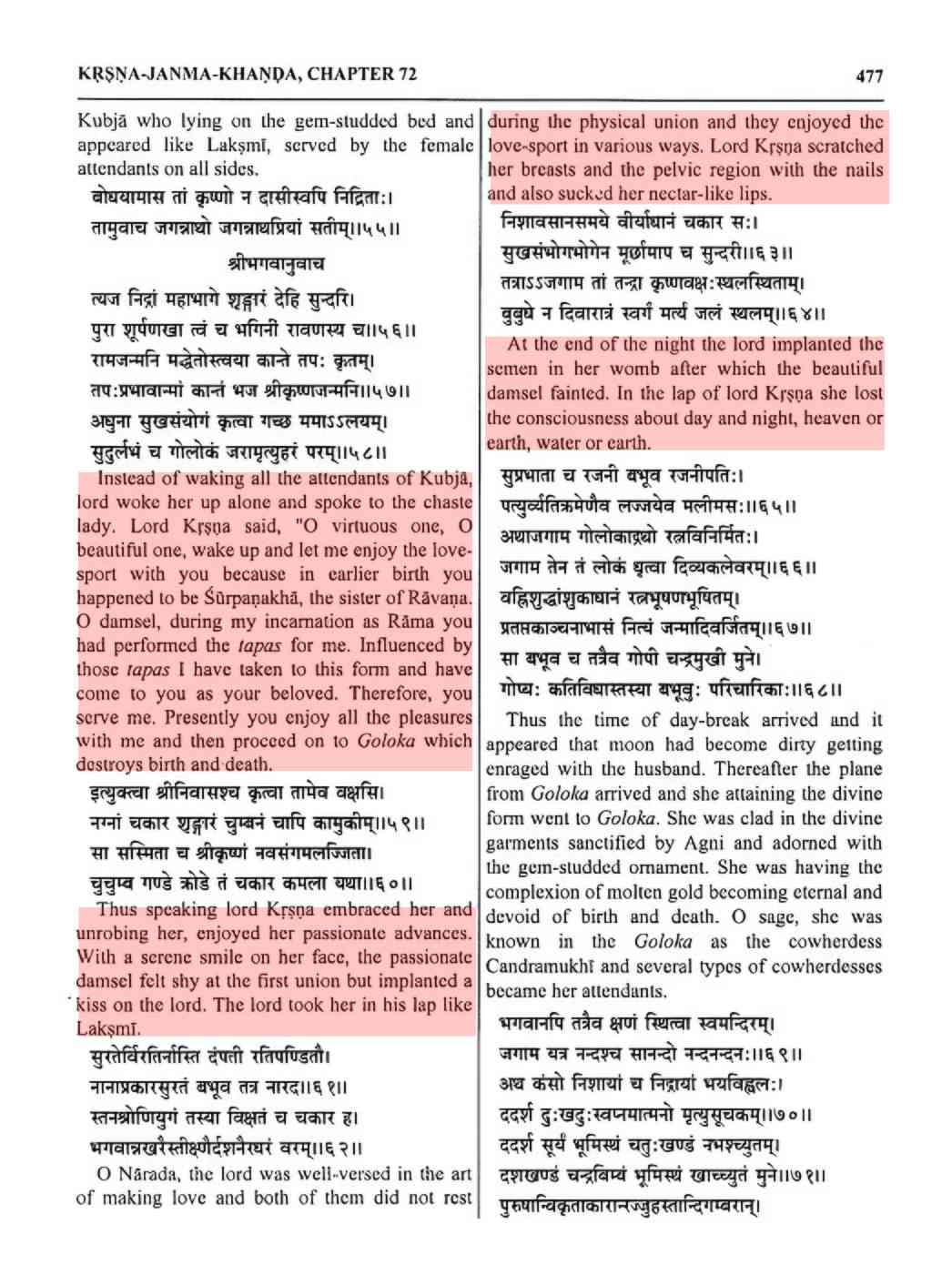
Reference of above mention:- Brahma vaivarta purana, krishna janam khand, chapter 72
In this section, the discussion critiques what is presented as a shameful and morally degrading act, framed as behavior no sensible or respectable human would commit, namely the allegation of Krishna’s public sexual impropriety. As contextual background, the text narrates the emergence of Rati from Kāma, the testing of Kāma’s five passion-inducing arrows, and the resulting loss of restraint among beings. It further notes that even Brahmā, despite being a great yogi, concealed the bodily consequence of arousal out of shame, and places Krishna in the same narrative framework.
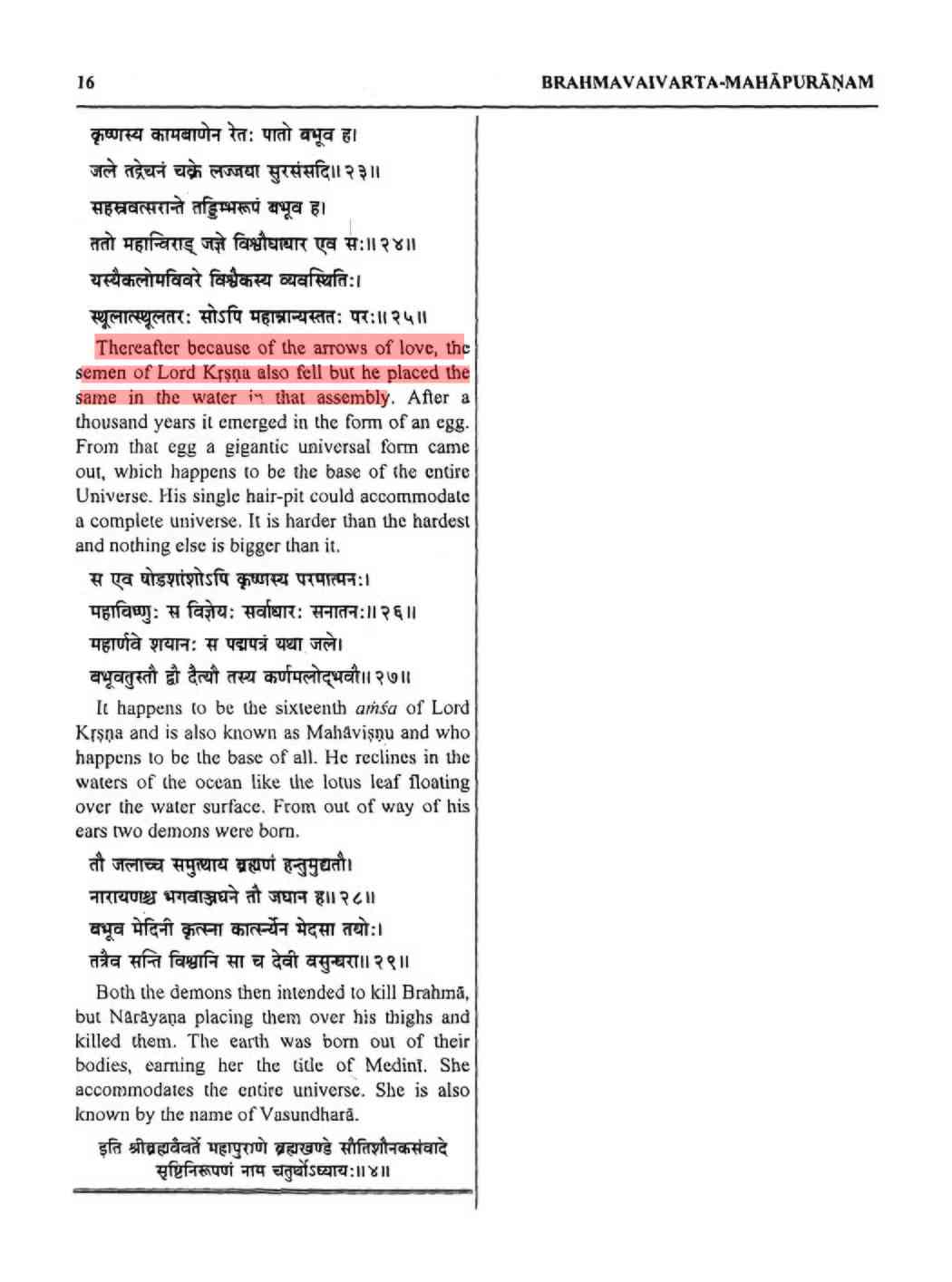
reference of above mention:- Brahma vaivarta purana, Brahma khand, chapter 4