Mount Qaf Surrounding the Earth
⭕ Point of Doubt:
Christians claim that the Qur’an contains myths or fables, citing a narration reported by some of the early scholars (salaf), which mentions a jade-green mountain (emerald mountain) that surrounds the Earth , known as Mount Qāf (جبل ق) .
⭕ Response:
- First:
The letter “Qaf (ق)” is one of the disjointed letters (الحروف المقطعة) found at the beginning of Surah Qaf. We have already discussed these letters in a previous post ✅
As for the story of Mount Qaf (جبل قاف) — that it is a great emerald mountain surrounding the Earth — this narration is not authentic. It is merely one of the Israelite narrations (إسرائيليات) that entered Islamic literature and were later repeated by some of the early scholars.
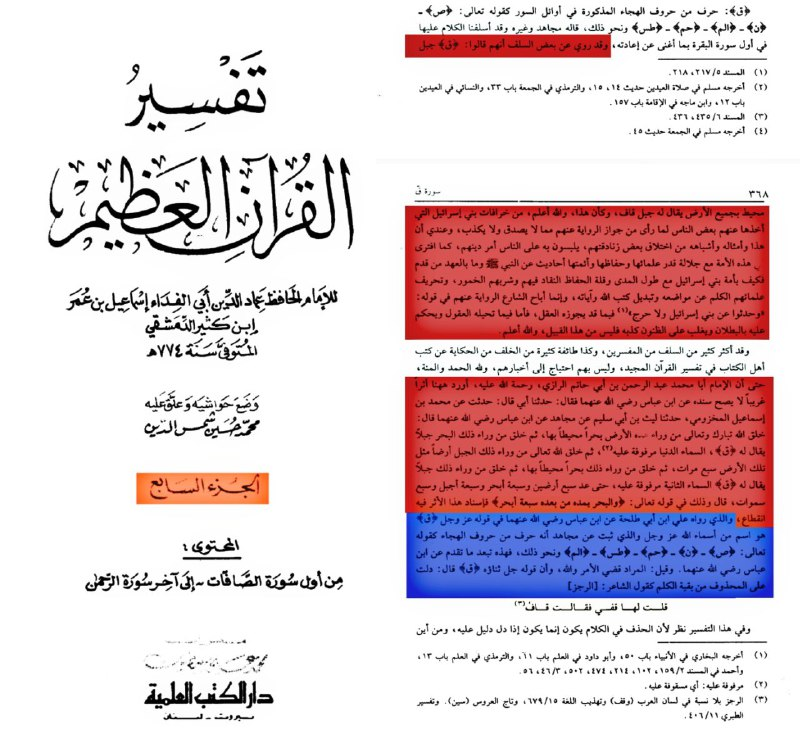
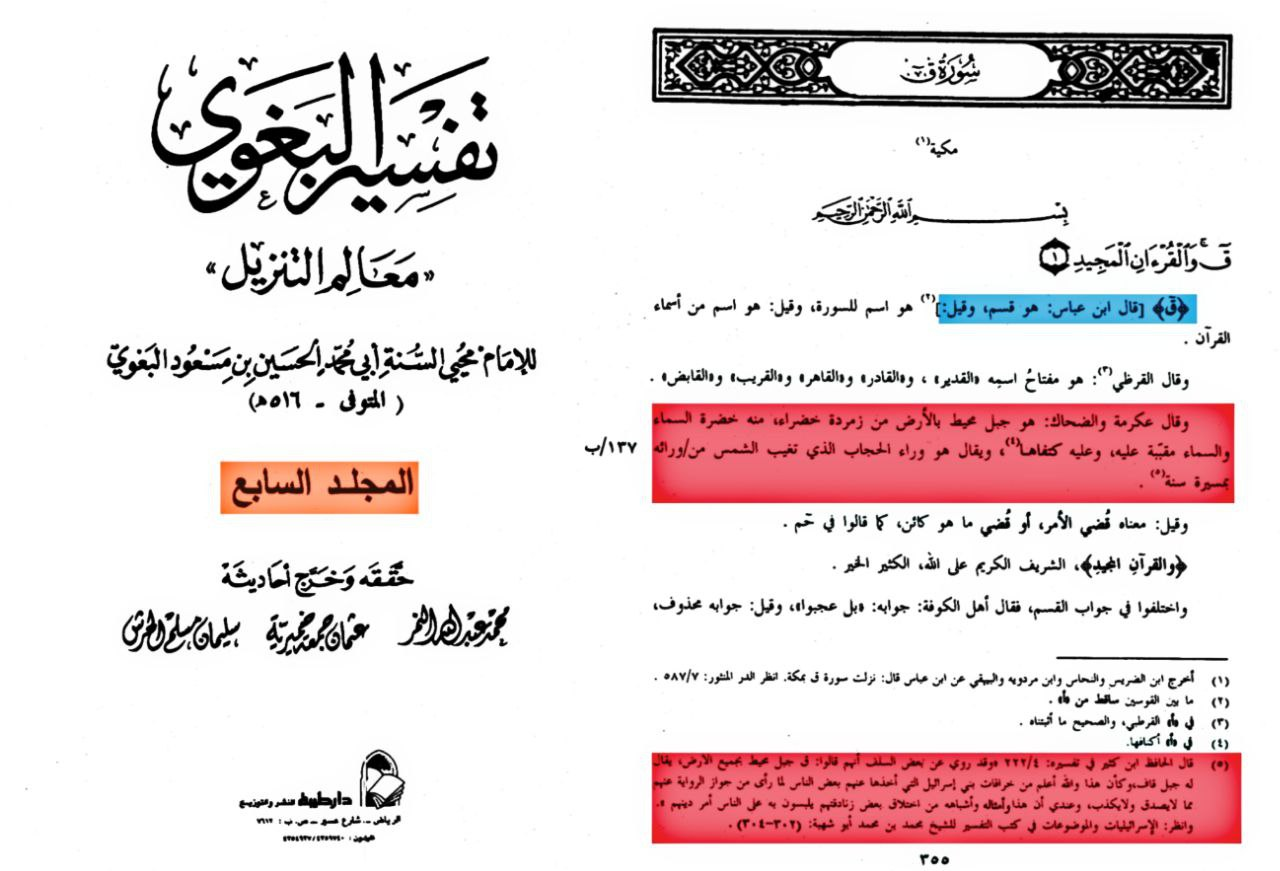
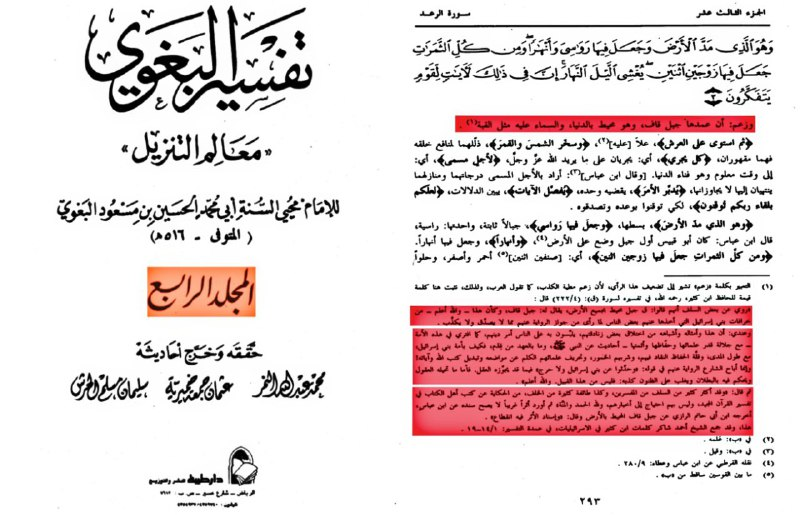
📌 Ibn Kathir (may Allah have mercy on him) said in Tafsir al-Qur’an al-‘Adhim:
“It has been narrated from some of the early scholars that they said:
‘(Qaf) refers to a mountain that surrounds the entire Earth, known as Mount Qaf.’This — and Allah knows best — is among the myths of the Children of Israel, which some people took from them, thinking that transmitting such stories is permissible as long as they are not outright lies.
In my opinion, this and similar tales are fabrications by some of the heretics who try to confuse people regarding their religion. Just as this Ummah — despite its great scholars, memorizers, and Imams — had lies falsely attributed to the Prophet ﷺ due to the length of time and transmission, how much more so would this happen with the people of Bani Israel, whose scholars altered the words of Allah, changed His Books and verses, drank alcohol, and lacked critical scholars to preserve their knowledge?
The Messenger of Allah (ﷺ) allowed us to narrate from them in matters that are reasonable and acceptable to the intellect, but when it comes to things that reason rejects as absurd and false, then they do not fall under that permission. And Allah knows best.”
- Second:
Some narrations have been attributed to Ibn Abbas (رضي الله عنهما) regarding this matter — specifically about Mount Qaf — but none of them are authentic.
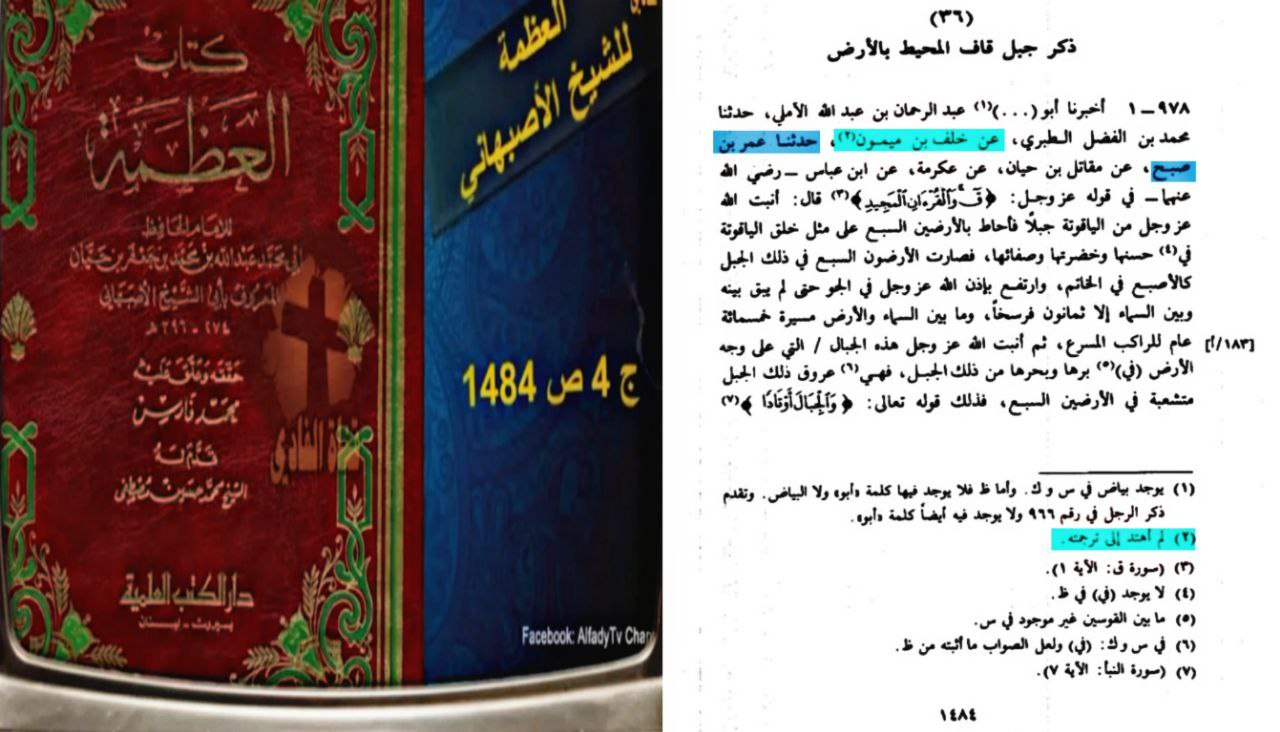
For example, we find this narration in Al-‘Iẓmah by Al-Asbahani:
“Abu (…) Abd al-Rahman ibn Abd Allah Al-Amili informed us, Muhammad ibn Al-Fadl Al-Tabari told us, from Khalaf ibn Maymun, from Umar ibn… from Muqatil ibn Hayyan, from Ikrimah, from Ibn Abbas (رضي الله عنهما), regarding the verse:
{ق وَالْقُرْآنِ الْمَجِيدِ}
He said:
‘Allah Almighty created a mountain from rubies, and surrounded the seven earths with it, shaped like a ruby in its beauty, greenness, and clarity…’ and so on in the narration.”
✅ However, this narration — like others of its kind — is considered weak or fabricated. It does not come through a reliable chain and is part of the Israelite-influenced stories (إسرائيليات) that some early narrators included without proper verification.
This narration is not authentic, and it contains two main issues:
- Abu (…) — This person is unknown, and so is Khalf ibn Maymun, as noted below the narration on the page:
“I could not find a biography for him.”
Scholars agree that narrations containing unknown individuals are not acceptable in matters of authenticity ✅
- Umar ibn Sabah (عمر بن صبح) — Full name: Umar ibn Sabah ibn Umaran al-Tamimi, who is known to be a liar and fabricator.
📌 Al-Bukhari said in Al-Tarikh al-Awsat:
“Yahya al-Yashkuri told us from Ali ibn Jarir, who said: I heard Umar ibn Sabah say:
‘I fabricated the sermon of the Prophet ﷺ.’”
And we all know the seriousness of fabricating upon the Messenger of Allah ﷺ ✅
📌 Abu Hatim al-Razi and Abu Ahmad ibn Ali said:
“Munkar al-hadith” (his narrations are rejected due to unreliability).
📌 Abu Hatim ibn Hibban said:
“He fabricates hadiths and attributes them to trustworthy narrators. His writings are not permissible to be used except with great caution.”
📌 Abu Al-Fath al-Azdi said:
“Kadhab” (he was a liar).
📌 Al-Daraqutni said:
“Matruk” (abandoned, not reliable).
- In conclusion, this narration is based on unreliable and discredited sources, and therefore must be rejected.