Qur’an Spelling Errors Refuted: Uthmanic Rasm, Early Arabic Orthography, and Van Putten’s Evidence
The End of the Myth of Spelling Errors in the Qur’an
This claim collapses once early Arabic orthography is studied historically. The Qur’anic spelling reflects an ancient and consistent Arabic writing tradition, not scribal mistakes.
Table of Contents
- The Main Claim
- Marijn Van Putten and Qur’anic Orthography
- Why Qur’anic Spelling Differs from Modern Arabic
- Examples of Qur’anic Orthography
- Ibn Khaldun on the History of Arab Writing
- Early Arabic Inscriptions and Papyri
- Muṣayṭir and Arab Dialects
- Why the Uthmanic Orthography Was Not Modernized
- Ahmad al-Jallād on Qur’anic Spelling
- External Reference
- Conclusion
The Main Claim
The End of the Myth of Spelling Errors in the Qur’an
Examples often mentioned include:
- Muṣayṭir
- Jannat
- Ibraham
- Ṣalāh
Marijn Van Putten and Qur’anic Orthography
In the book of Dutch researcher Marijn van Putten, a specialist in Semitic linguistics and the linguistic history of Arabic at Leiden University, he authored an entire book titled:
The content of the book essentially explores the question:
And is this due to scribal errors?
It supports the argument that Qur’anic spelling should be studied through the historical development of Arabic writing, not judged by later modern spelling rules.
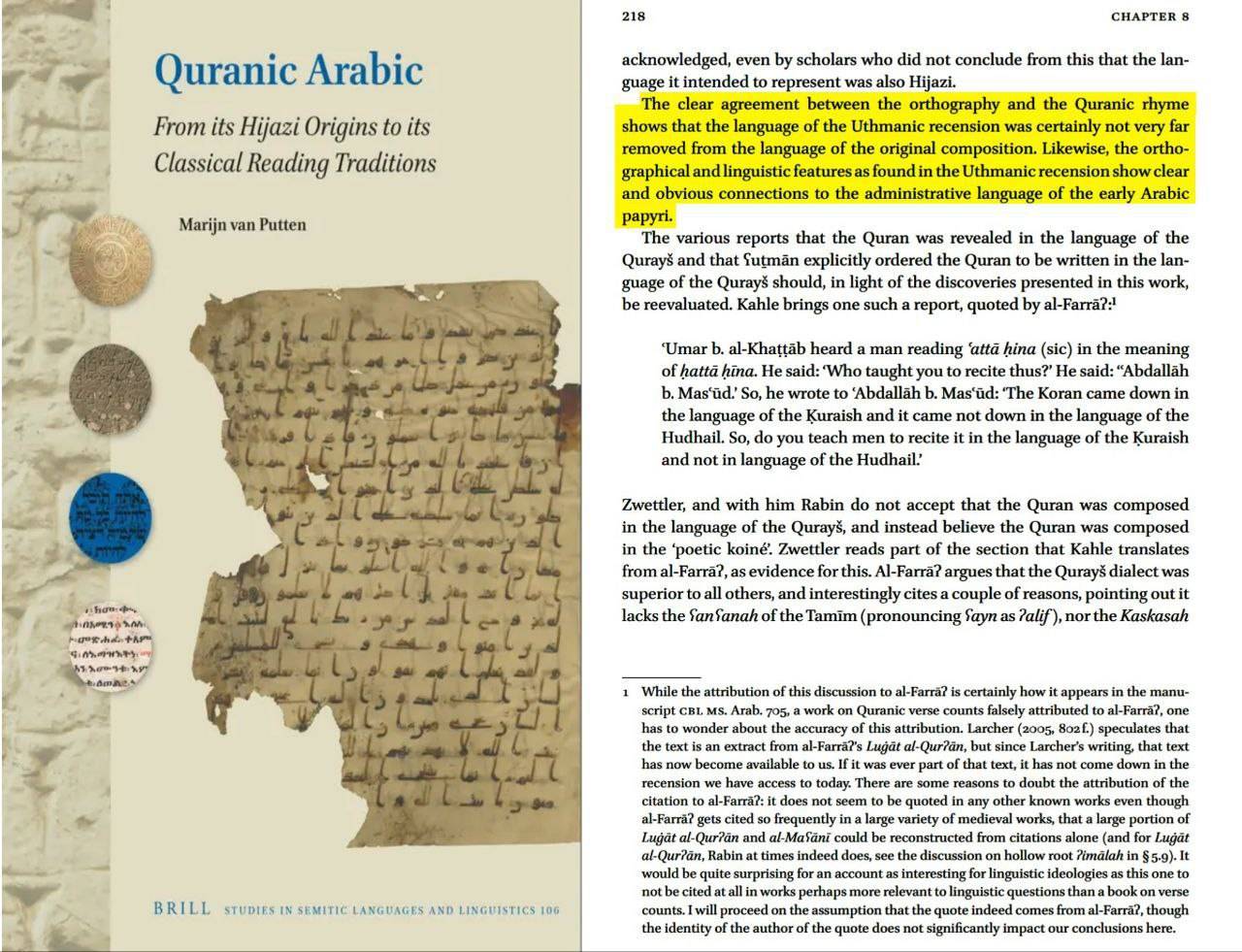
The doctor compared Qur’anic texts with inscriptions, papyri, and Arabic documents from that era. He concluded that the orthographic rules at the beginning of Islam matched the Qur’anic spelling style.
He even found a papyrus written in the same style, mentioning on page 218:
This weakens the claim that Qur’anic spelling differences are mistakes, because the same style appears outside Qur’anic manuscripts.
In fact, in the introduction on page 8, he writes:
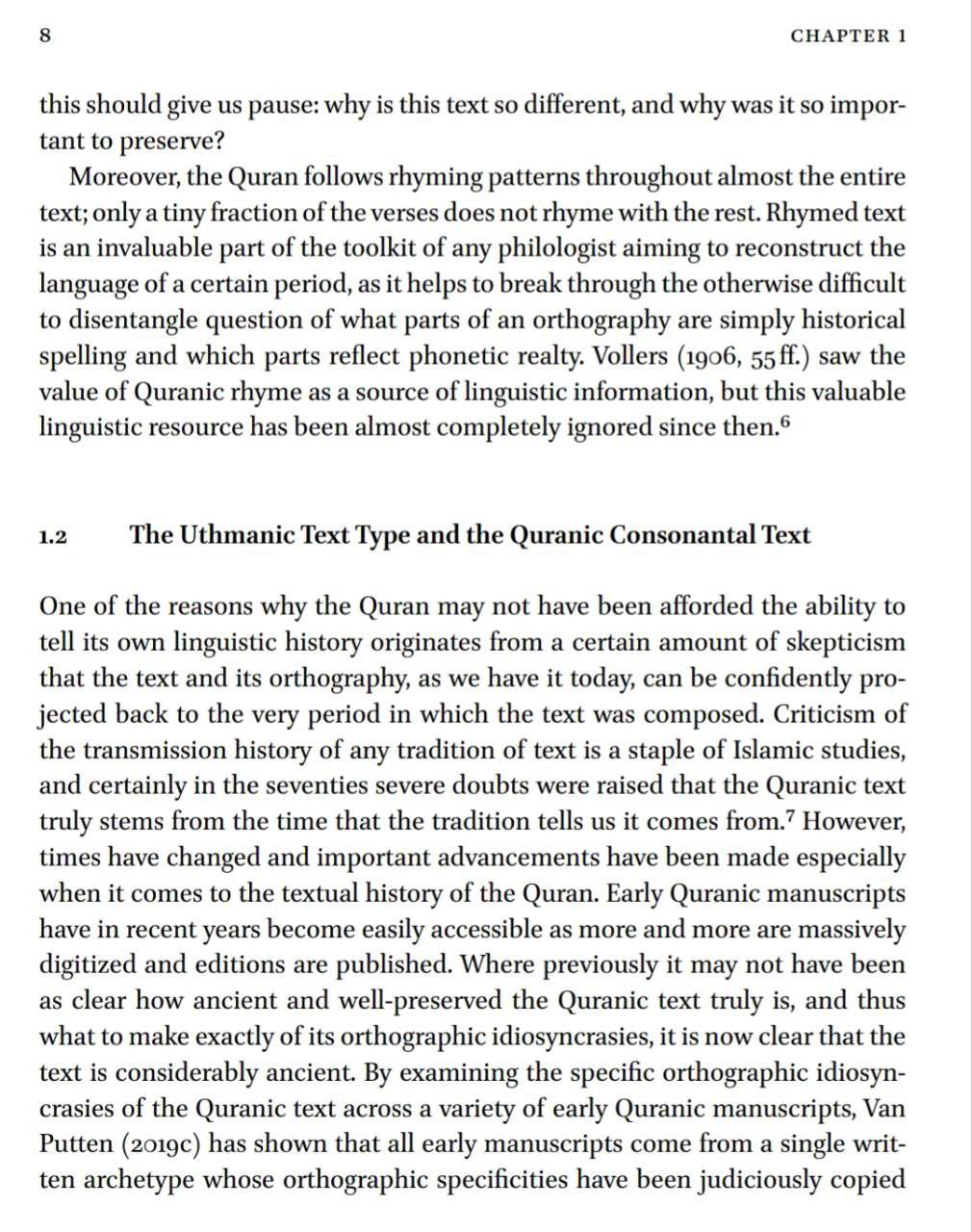
The spelling patterns were not random scribal errors but carefully transmitted features of the Uthmanic written text.
He further pointed out that this spelling style was not an individual effort or a mistake, but was transmitted intentionally within a consistent orthographic tradition of that time.
He used the phrase “judiciously copied”, which negates the idea that these spelling differences were scribal mistakes.
Why Qur’anic Spelling Differs from Modern Arabic
Modern Arabic spelling rules were standardized later. It is therefore wrong to judge the Qur’an’s ancient spelling by later spelling conventions.
It supports the explanation that many such spellings were normal within the early Arabic writing system.
Examples of Qur’anic Orthography
Ṣalāh / Ṣalāwa
Ṣalāh is the modern spelling.
Ḥayāh / Ḥayāwa
Ibrahim / Ibraham
Also, because the Levantine — Shāmī — recitation pronounces it as Ibrahām, the alif was omitted to indicate that it is read with an alif and yā’.
As Imam al-Sakhāwī said:
Niʿmah / Niʿmat
For example:
The point is that these forms are not spelling mistakes but remnants of an older orthographic convention.
So, many phrases could be written in multiple ways, but the canonical spelling was established before the codification of Arabic orthography.
Ibn Khaldun on the History of Arab Writing
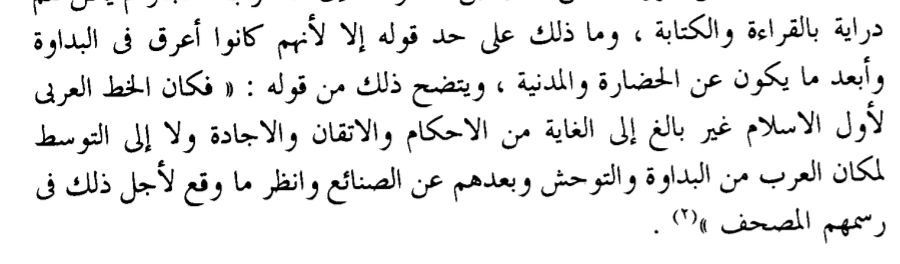
This is confirmed by Ibn Khaldun when speaking about the history of Arab writing, saying:
He is explaining that early Arabic writing had its own orthographic stage before later technical refinement and standardization.
Early Arabic Inscriptions and Papyri
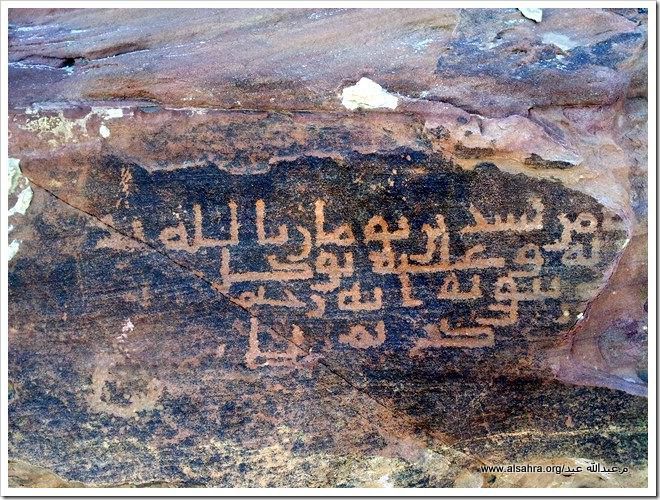
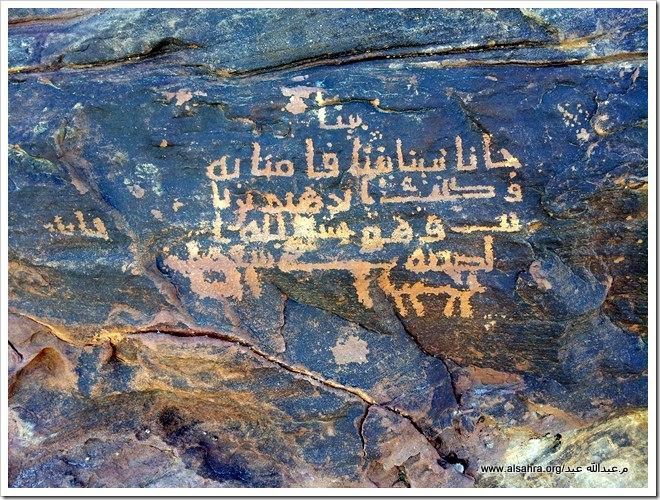
People used to write contracts and agreements in the same orthography as the Qur’an before writing systems evolved later.
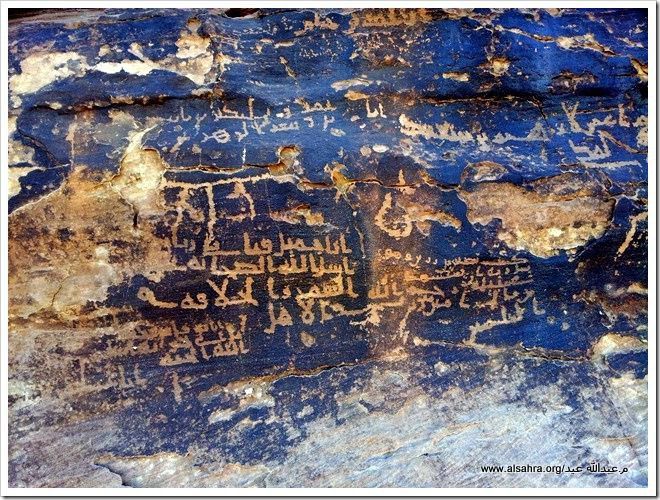
For example, the Muʿāwiyah Dam inscription, dated 58 AH / 678 CE, which Van Putten commented on:
It is simply how Arabic was written in that historical period.
Muṣayṭir and Arab Dialects
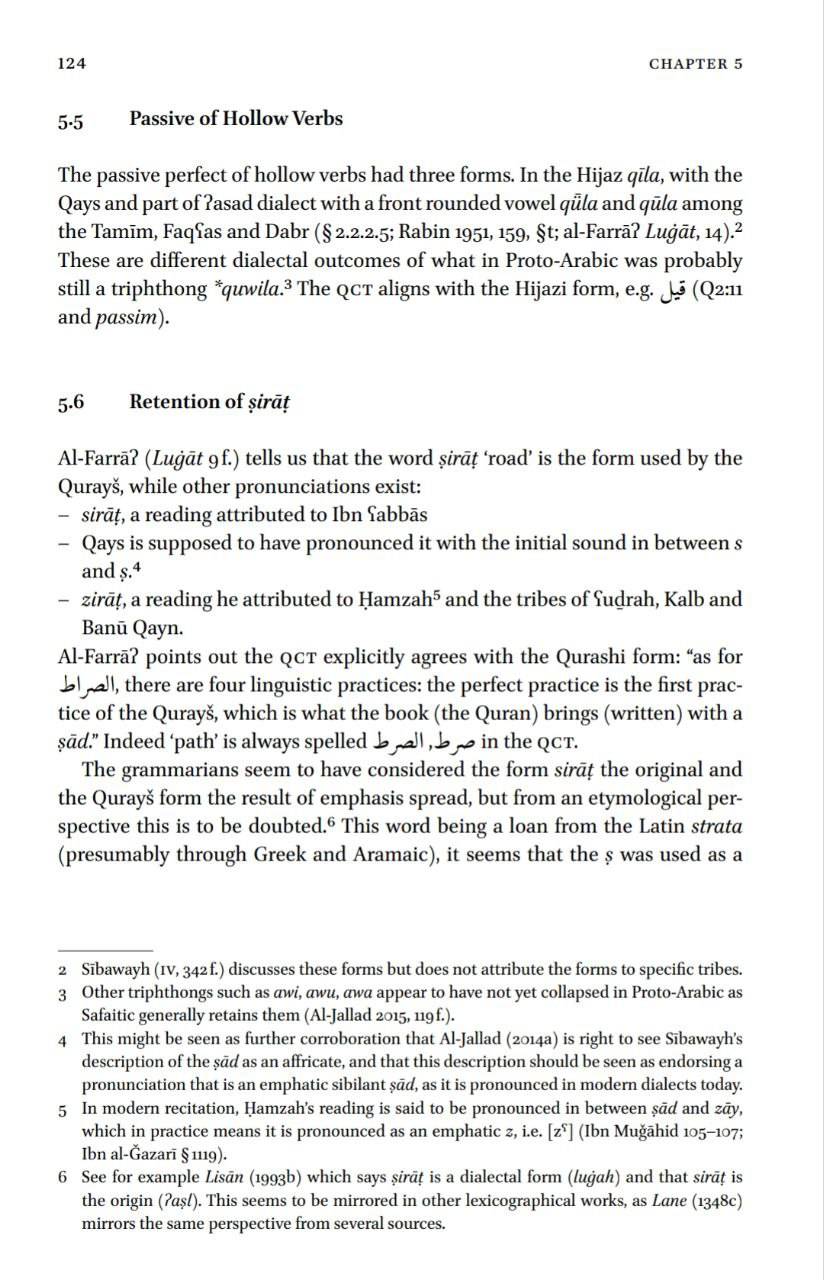
Regarding the word Muṣayṭir, on page 156, Van Putten says:
Every sīn — س — followed by a ṭā’ — ط — could be transformed into ṣād — ص — due to a phonetic rule called istiʿlāʾ — elevation.
It is used to show that some Qur’anic spellings reflect respected Arab dialectal usage, not errors.
Calling it a “mistake” is not scholarship. It is ignorance of historical Arabic.
Why the Uthmanic Orthography Was Not Modernized
After new orthographic rules were added and the Arabic script evolved, people started asking:
So they asked Imam Mālik, as al-Suyūṭī narrated in al-Itqān, Vol. 2, p. 443:
“Should the Qur’an be written according to the new spelling that people have developed?”
He replied:
“No; it should be written as it was originally written.”
In another place he said:
He replied:
“No.”
Narrated by al-Dānī in al-Muqniʿ, who said no scholars differed with this.
It supports the point that classical scholars treated the written form of the Qur’an as something to be preserved, not modernized.
Similarly, during the time of Imam Ahmad ibn Hanbal, when asked about adopting the orthography introduced by grammarians, he said:
The point is that the canonical Qur’anic written form was intentionally preserved.
This is backwards. The Uthmanic rasm was preserved precisely because it is the canonical written form of the Qur’an.
Ahmad al-Jallād on Qur’anic Spelling
You’ll find many linguistic studies confirming this.
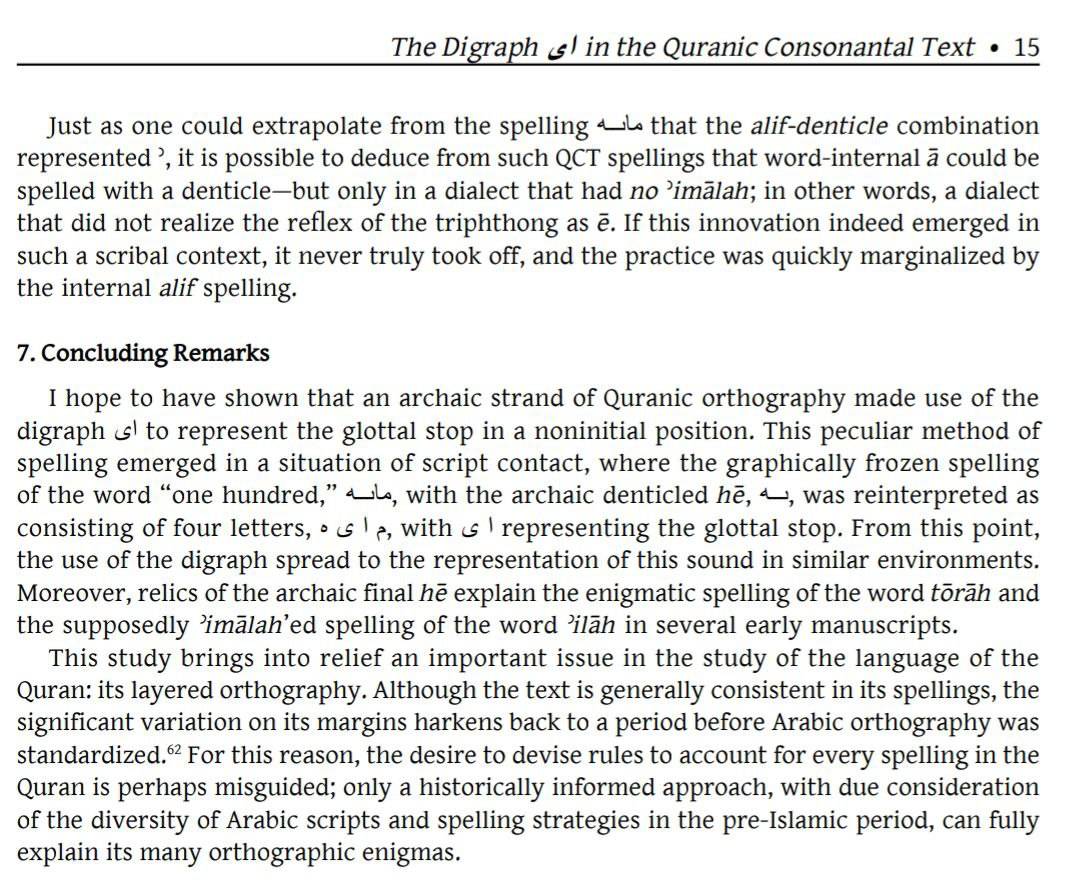
For example, in Ahmad al-Jallād’s study, page 15, he says:
Trying to explain every Qur’anic spelling using fixed modern spelling rules is mistaken — only a historical understanding of pre-Islamic orthographic diversity can explain it.”
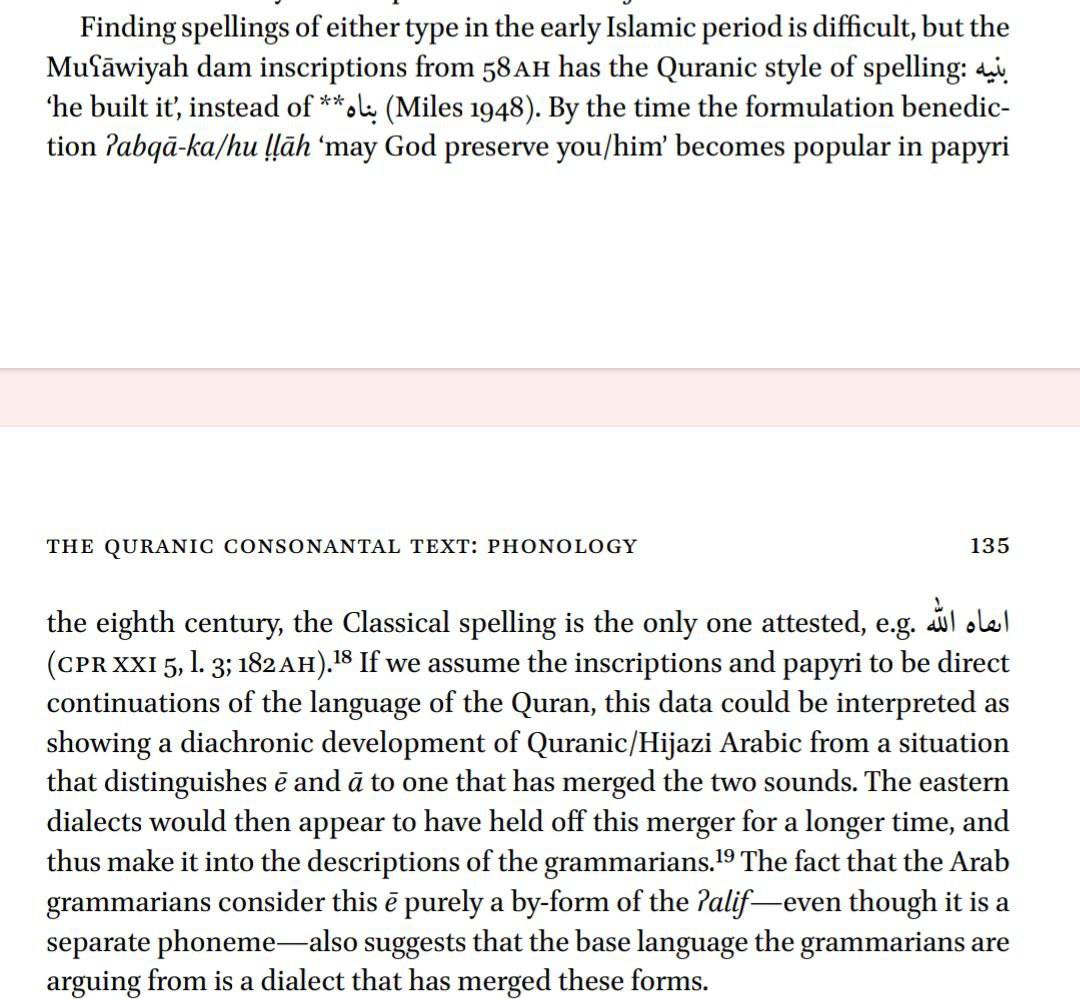
It reinforces the argument that modern spelling rules cannot be imposed backwards onto the Qur’an.
External Reference
{Embed}
the desert team
نقوش كوفية رائعة في شمال حسمى - فريق ا…
سبق أن كتبنا عن النقوش العربية المبكرة في منطقة حسمى على هذا الرابط . اليوم ننشر صورا زودنا بها الأخ عبدالله عيد حيث عثر على موقع يحتوي نقوشا قيمة قام بتوثيقها بطريقة ممتازة وسمح لنا بنشرها م…
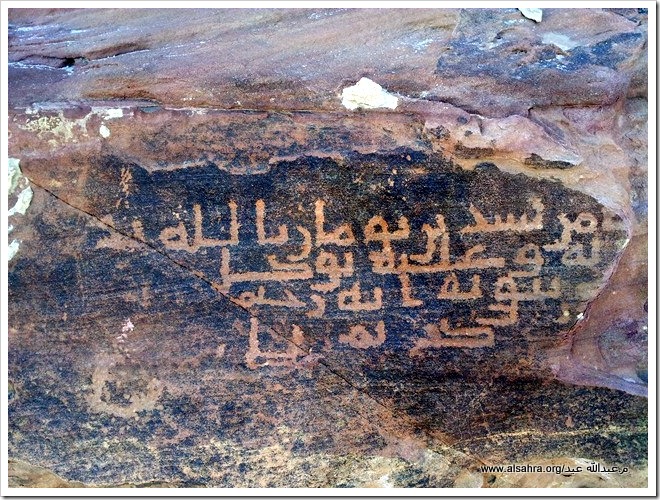
It is used to show that early Arabic inscriptions often reflect spelling conventions different from modern standardized Arabic, supporting the broader point that early Arabic orthography had its own historical rules.
Conclusion
Research into early Qur’anic manuscripts, papyri, inscriptions, and Semitic linguistics shows that Qur’anic spelling reflects an ancient and consistent Arabic orthographic tradition.
They are examples of early Arabic spelling, dialectal usage, and preserved Uthmanic rasm.
Modern Arabic spelling is the later development. The Qur’an preserves the earlier written tradition.