Repetition in the Quran: Weakness or Eloquence? A Complete Refutation
7 min read 1435 words
Refuting the Claim That Repetition in the Quran Weakens Its Eloquence
Table of Contents
- The Suspicion
- The Short Answer
- 1. What Does Repetition Mean
- 2. Definition of Repetition and Its Rhetorical Purposes
- 3. Repetition Was Known Among the Arabs
- 4. Repetition in the Quran Is Not Random
- 5. Examples of Repetition in the Quran
- 6. Repeated Words Verses and Their Purposes
- 7. Repeated Quranic Stories and Their Purposes
- 8. Benefits of Repetition in the Quran
- 9. A Response to Christian Critics
- 10. Testimony of an Orientalist
- 11. Final Quote from Mustafa Sadiq al-Rafii
- Conclusion
The Suspicion
A suspicion repeated by skeptics is that the repetition of some words, verses, and stories in the Holy Quran weakens its eloquence and rhetoric. This has been answered repeatedly — but it must be answered again.
The Short Answer
Repetition is not automatically a weakness. In Arabic rhetoric, repetition is a known literary and rhetorical device. It is used for emphasis, warning, clarification, reminder, emotional impact, strengthening proof, and making the meaning settle firmly in the heart. The Quran does not repeat randomly. Its repetition is purposeful, precise, and connected to the context of each passage.
1. What Does Repetition Mean
Repetition in Arabic comes from the root كَرَّ / كرر, which carries the meaning of returning to something or repeating it again and again.
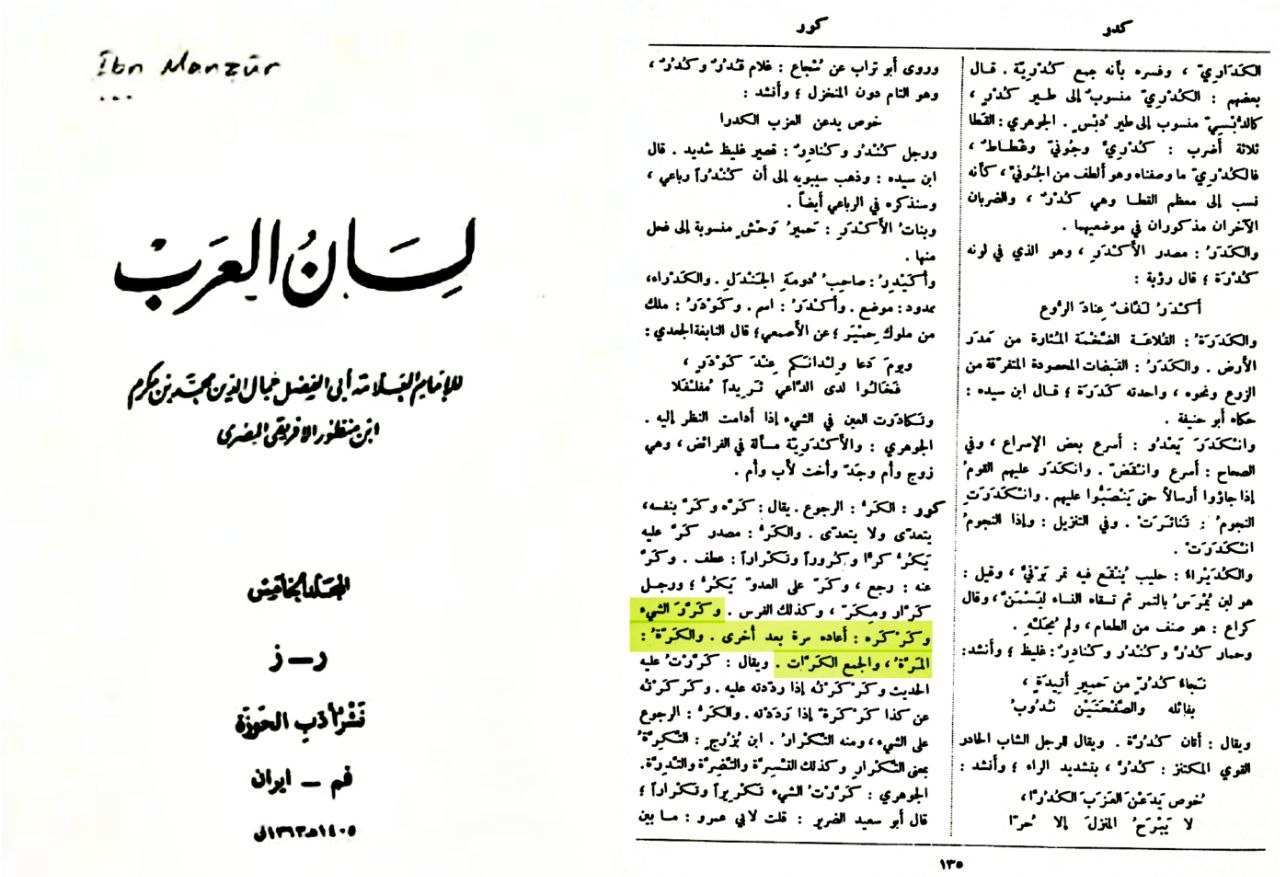
This scan explains the Arabic root كَرَّ / كرر — meaning to return to something or repeat it again and again. The highlighted part shows that repeating something means bringing it back one time after another.
2. Definition of Repetition and Its Rhetorical Purposes
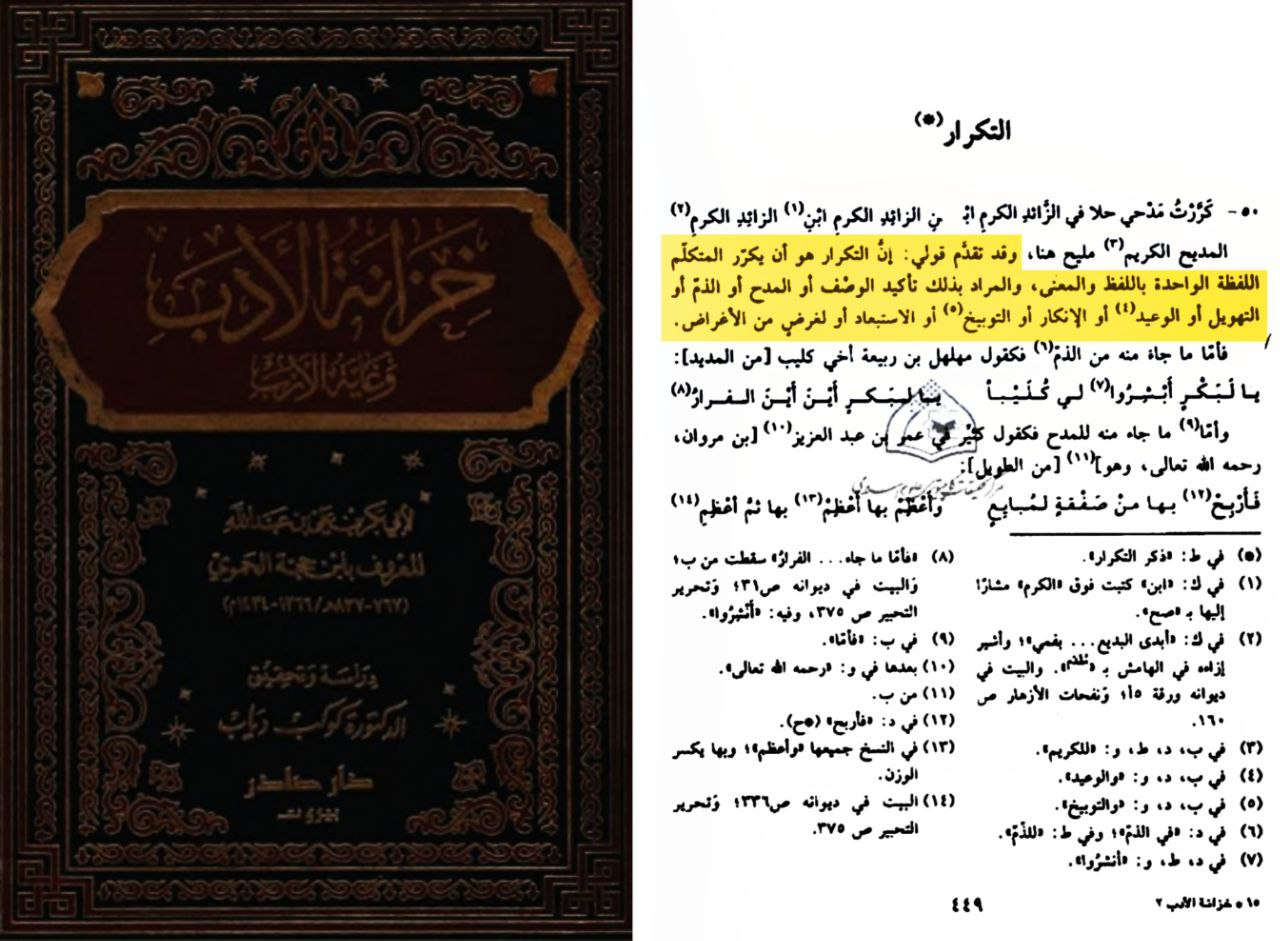
This scan defines repetition as repeating wording or meaning for a rhetorical purpose. It explains that repetition may be used for emphasis, praise, blame, warning, threat, intimidation, or strengthening the intended meaning. Repetition is not considered a defect by default — it depends entirely on whether it has purpose and benefit.
3. Repetition Was Known Among the Arabs
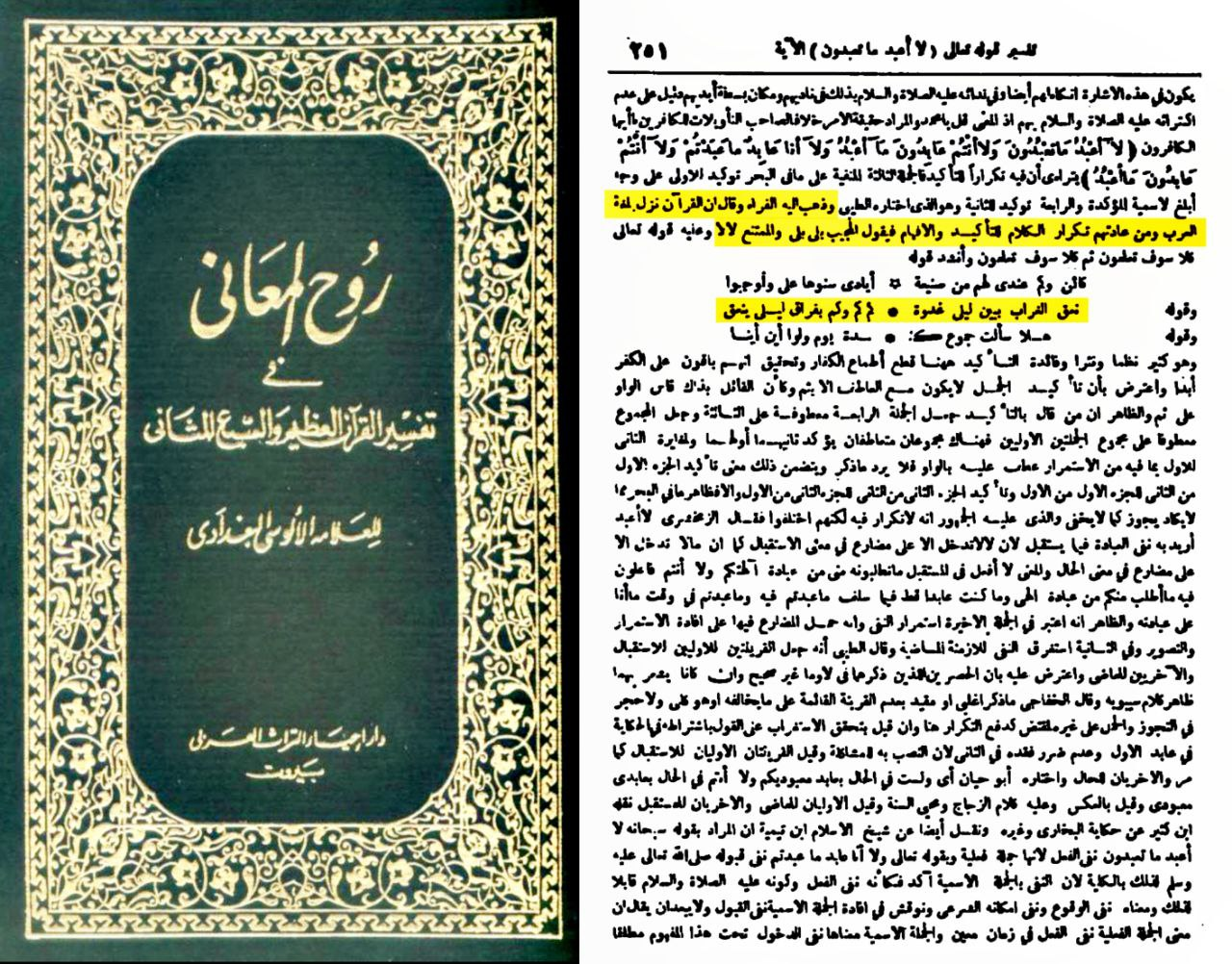
Repetition existed among the Arabs and was used by them for emphasis and understanding. The Quran was revealed in their language, so the use of repetition is entirely natural in principle. There is no problem with it except in the minds of those who do not understand Arabic eloquence.
This scan discusses repetition in the Quran — especially the repeated verse in Surah Al-Rahman: “So which of the favours of your Lord will you both deny?” The repetition is not a weakness. It repeatedly forces the listener to confront the blessings of Allah and the ingratitude of denying them. Its purpose is emphasis, reminder, and rhetorical force.
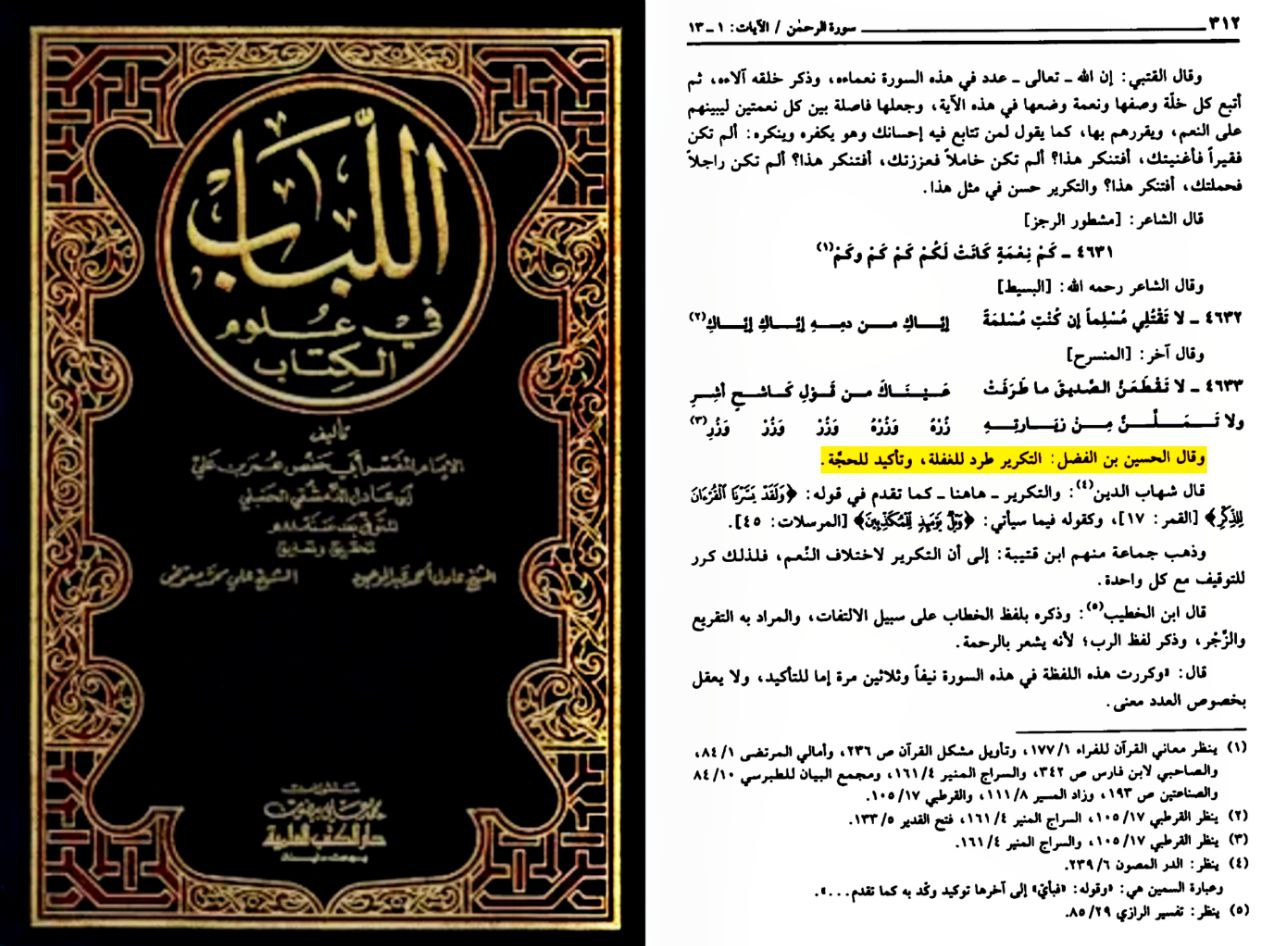
This scan quotes the principle that repetition is used to repel heedlessness and confirm the proof. Repetition wakes up the careless listener and makes the argument stronger — which is precisely why repeated Quranic reminders carry such force.
4. Repetition in the Quran Is Not Random
The Quran does not repeat words, verses, or stories without wisdom. Every repetition has a purpose connected to the context, audience, warning, reminder, or lesson being delivered. A story may appear in one place to warn disbelievers, in another place to comfort the Prophet ﷺ, and in another place to strengthen the believers. The event may be the same, but the rhetorical purpose is not always the same.
5. Examples of Repetition in the Quran
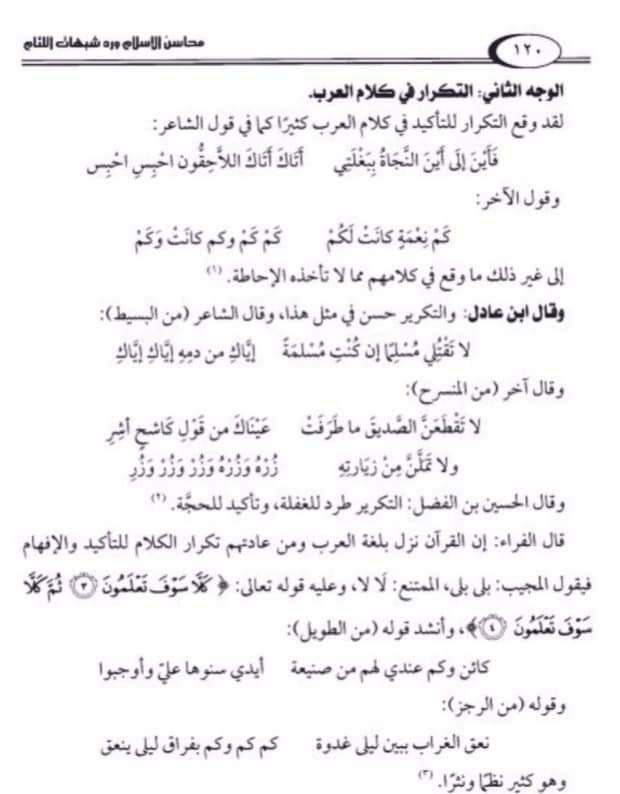
This scan presents examples of repetition in Arabic speech and in the Quran. One Quranic example is: “No! You will soon know. Then no! You will soon know.” The repeated wording is not useless duplication — it increases warning, seriousness, and emotional pressure on the listener.
6. Repeated Words Verses and Their Purposes
Some words and verses of the Quran are repeated, but this repetition carries meaning. It may serve emphasis, warning, confirmation, strengthening the proof, reminding the listener, making the meaning settle firmly in the heart, or connecting the verse to the theme of the surah.
Weak repetition is when someone repeats because they have nothing else to say. Quranic repetition is different — it repeats because the repeated meaning is necessary, powerful, and contextually placed.
7. Repeated Quranic Stories and Their Purposes
Some Quranic stories are repeated, but not in a careless or mechanical way. The Quran may repeat the story of a prophet while changing the angle, emphasis, wording, and selected details according to the purpose of each surah.
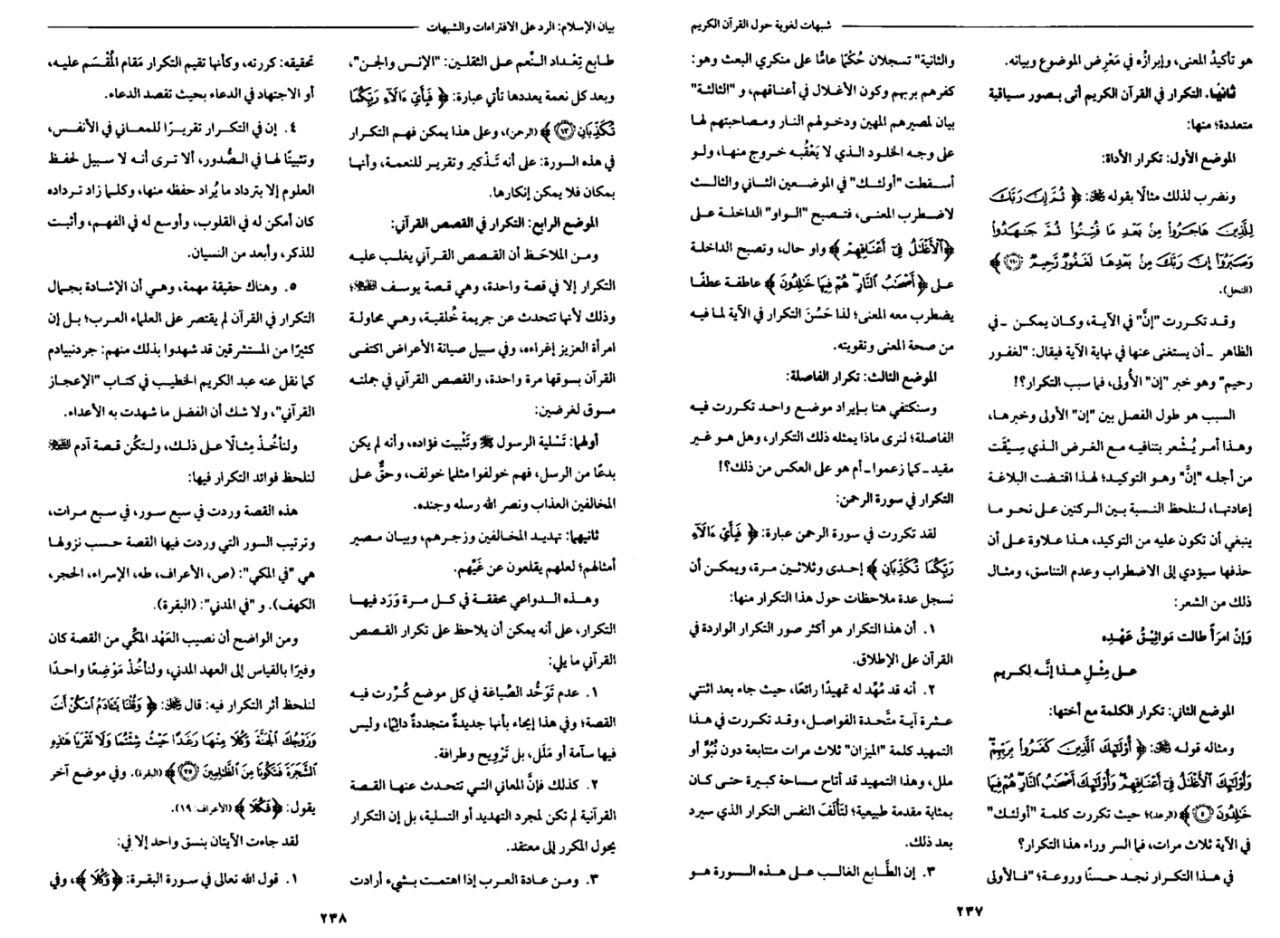
This scan explains different types of repetition in the Quran — including repetition of particles and tools of speech, words, phrases, sentences, and stories. This shows that repetition is a recognized Quranic style, not an accident or flaw.
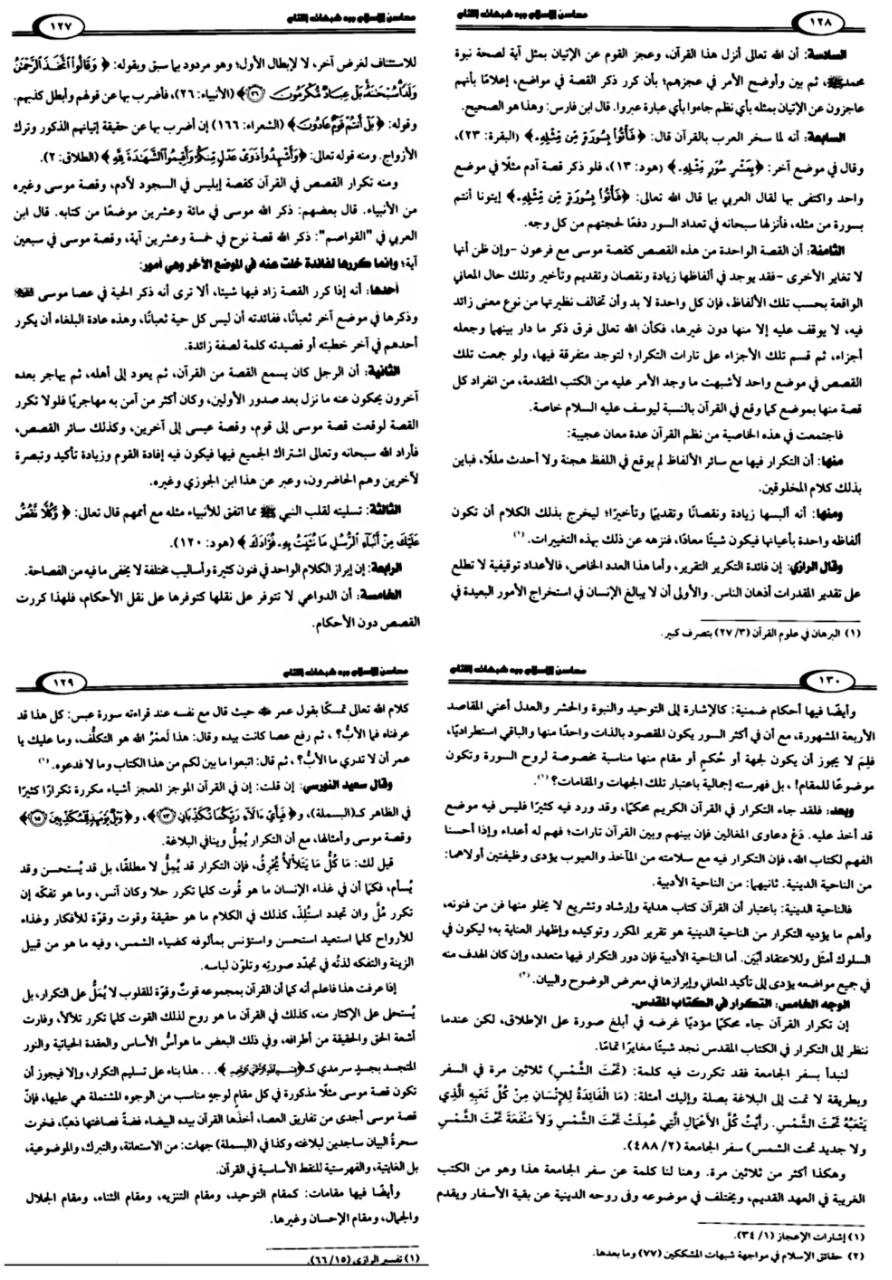
This scan discusses repeated Quranic stories and explains that when a story is repeated, it is not repeated in the same way for no reason. Each occurrence serves the theme of its own surah — one passage may focus on warning, another on patience, another on Allah’s rescue of the believers, another on the destruction of tyrants, and another on comforting the Prophet ﷺ.
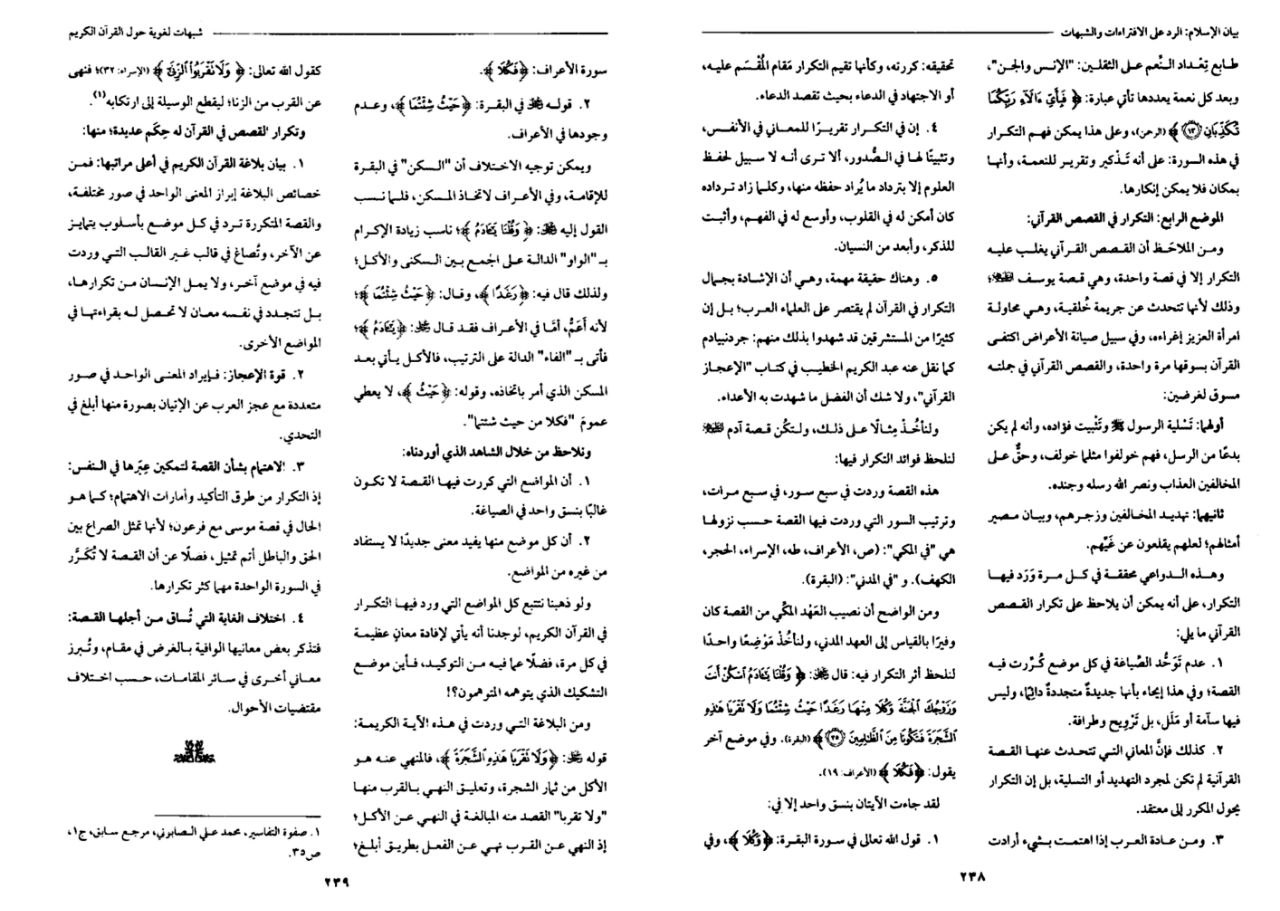
This scan continues the discussion of repeated Quranic stories and explains that repetition shows the Quran’s eloquence through different styles, presents the same lesson from different angles, adds details in one place not mentioned in another, strengthens the lesson in the heart, and matches each story to the theme of the surrounding verses. Repeated Quranic stories are placed with precision, not copied mechanically.
8. Benefits of Repetition in the Quran
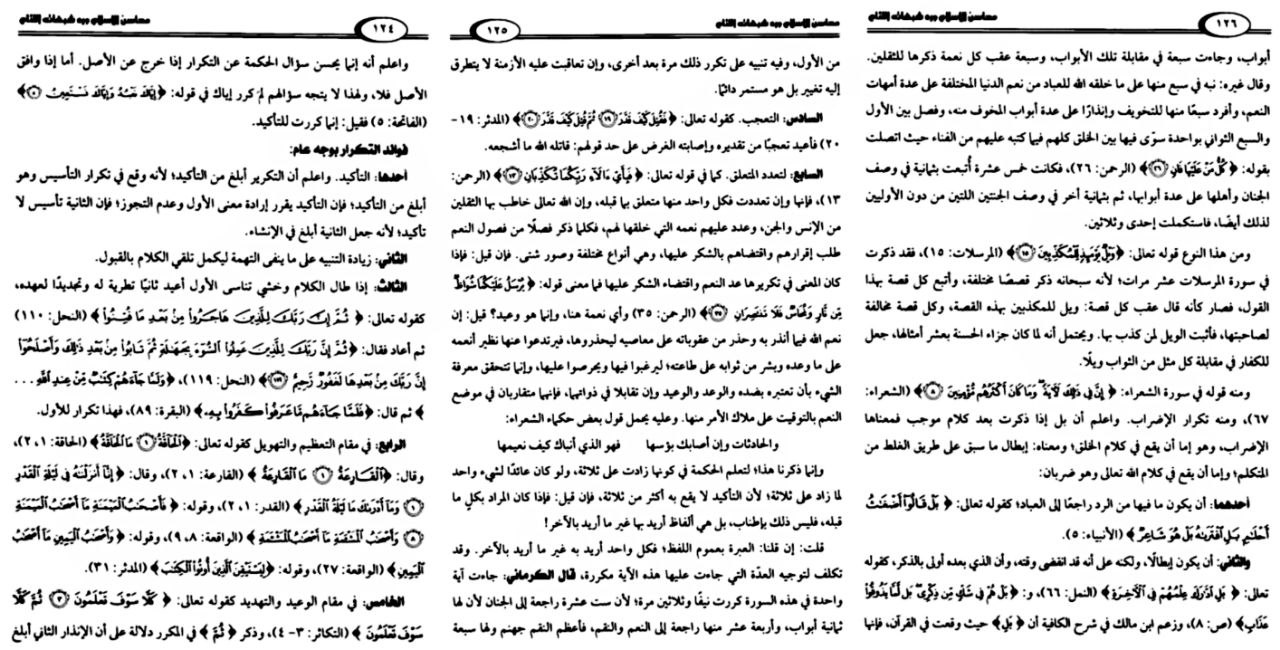
This scan lists the benefits of repetition in the Quran. Repetition gives stronger emphasis than ordinary confirmation, increases alertness, removes heedlessness, strengthens warning, makes the listener receive the message more seriously, and makes the meaning firmly established in the soul. Quranic examples are cited where repetition intensifies warning and seriousness. In summary, Quranic repetition emphasizes truth, wakes the heedless, strengthens the proof, warns the arrogant, comforts the believers, teaches through repeated exposure, and makes the message unforgettable.
9. A Response to Christian Critics
If a Christian raises this doubt, then repetition is also present in his own book — therefore he cannot honestly claim that repetition itself is a flaw.
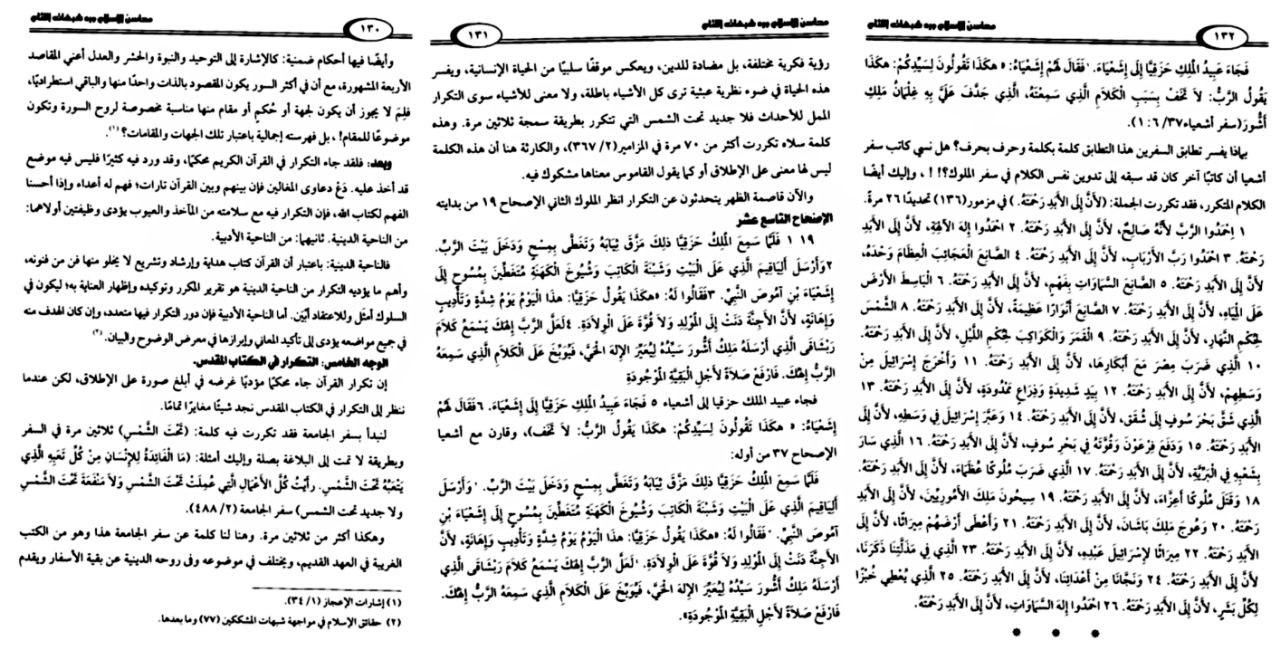
This scan responds to Christian critics who object to repetition in the Quran by showing that repetition is also found extensively in the Bible — including repeated phrases such as “For His mercy endures forever.” If repetition itself is a flaw, then the objection applies equally to the Bible.
A fair critic must judge repetition by its purpose and rhetorical value, not by its mere existence.
10. Testimony of an Orientalist
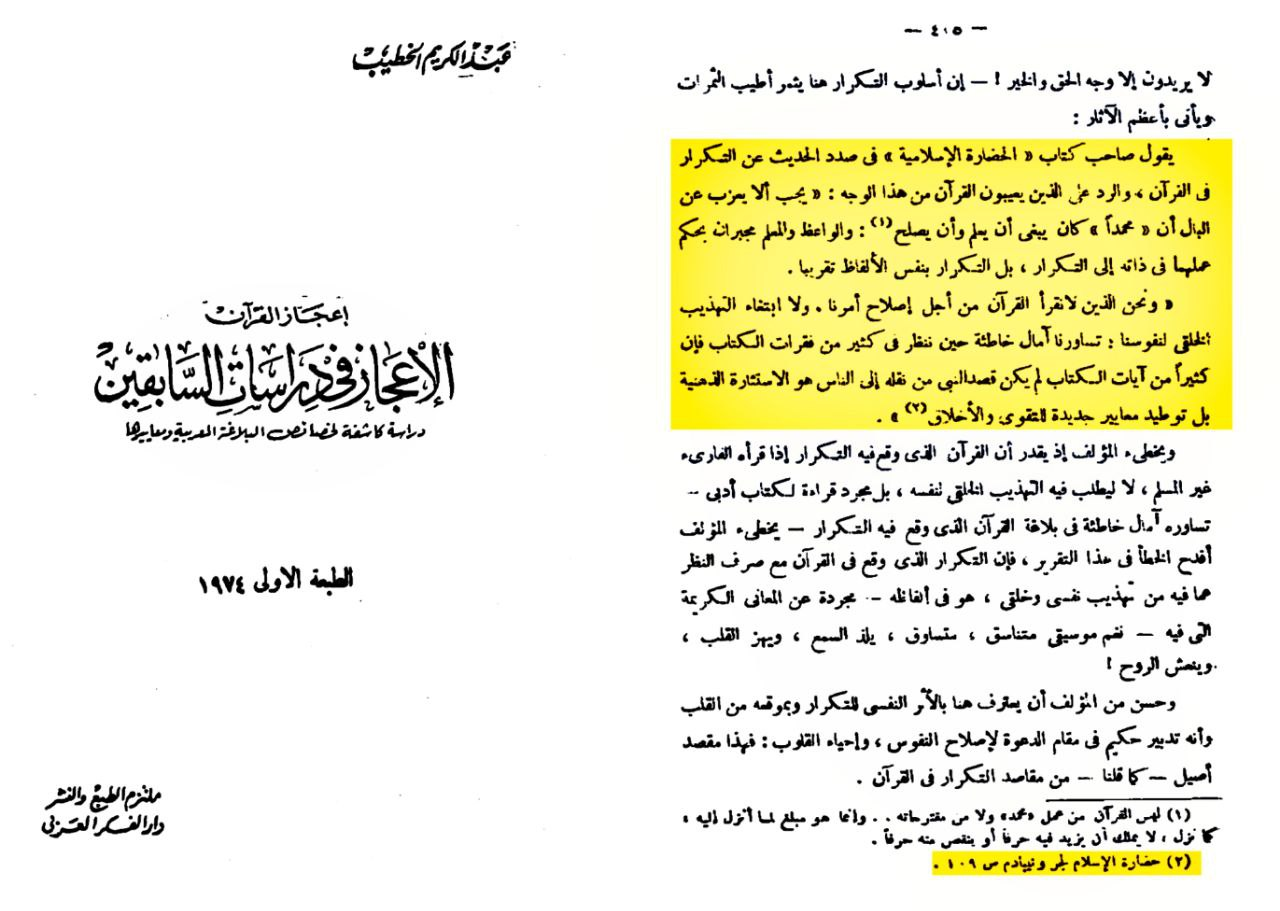
This scan presents the testimony of a non-Muslim writer regarding repetition in the Quran. The highlighted text explains that Quranic repetition should not be viewed as pointless duplication. Rather, the Quran was addressing people who needed moral reform, correction, warning, and repeated reminders — and the purpose of repetition was to build new moral and intellectual standards in society.
11. Final Quote from Mustafa Sadiq al-Rafii
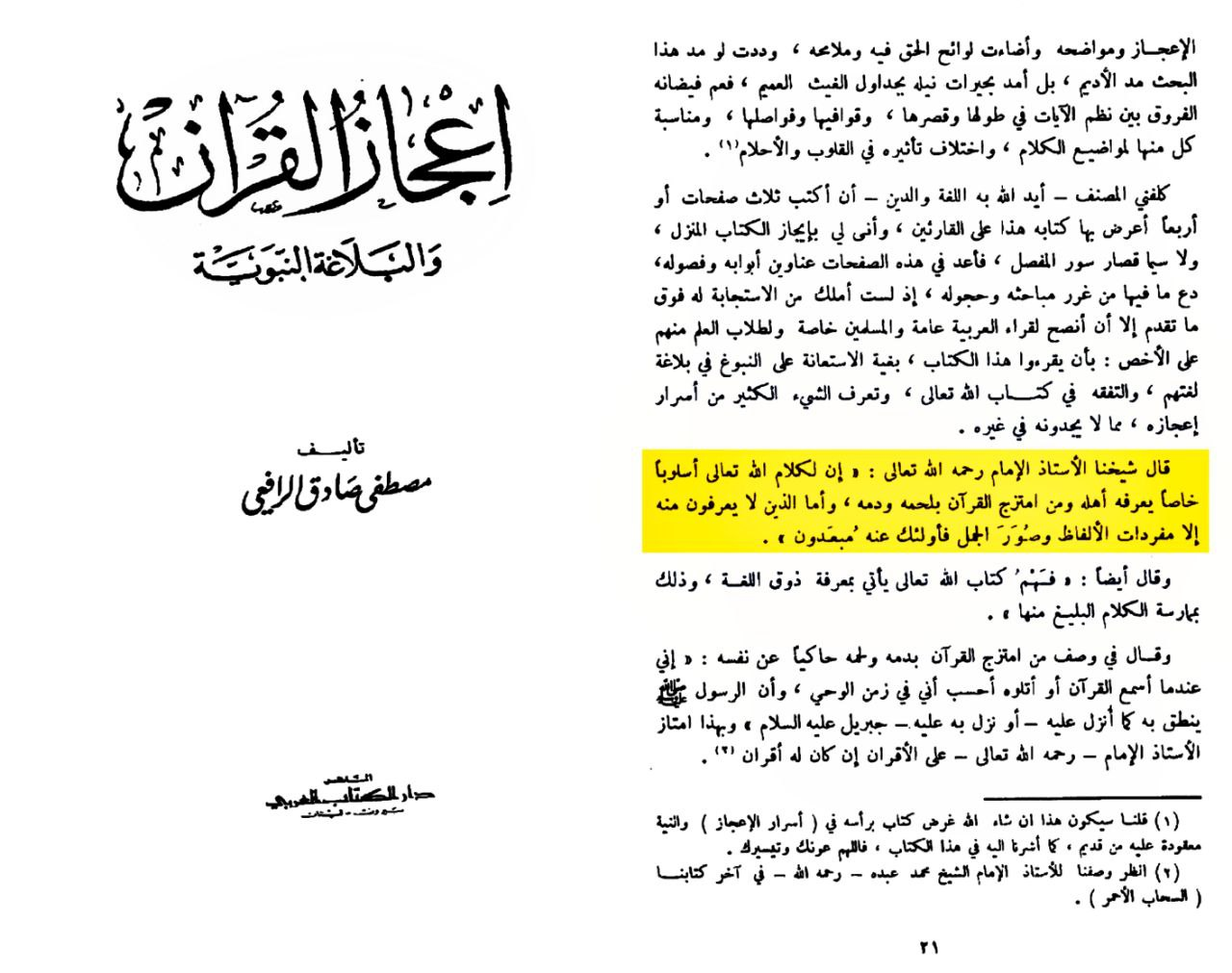
This scan is from I’jaz al-Quran wa al-Balaghah al-Nabawiyyah by Mustafa Sadiq al-Rafii. The highlighted quotation states: “The speech of Allah Almighty has a special style known by its people and by those whose flesh and blood have mixed with the Quran. As for those who only know its individual words and the outward forms of its sentences, they are far removed from it.”
Someone who only counts repeated words without understanding Quranic style, context, rhythm, and spiritual force has not truly understood the Quran. The Quran is not merely studied as disconnected words and sentences — it is recited, heard, memorised, prayed with, reflected upon, and lived with.
Conclusion
The claim that repetition in the Quran weakens its eloquence is false. Repetition is a known device in Arabic rhetoric, used by the Arabs for emphasis, warning, clarification, and strengthening meaning. The Quran uses repetition with wisdom — to emphasize truth, warn the heedless, strengthen the proof, comfort the believers, teach through repetition, connect each passage to its context, and make the message settle in the heart. Repetition in the Quran is not a defect. It is part of its rhetorical power. The problem is not with the Quran — the problem is with those who count repeated words but fail to understand why they were repeated.