The Man of Bakkah in Psalm 84: Ancient Manuscripts, Hebrew Linguistics & the Prophet ﷺ
Psalm 84 — The Prophecy of Bakkah: Evidence That It Points to Mecca and the Prophet Muhammad ﷺ
Table of Contents
- Overview
- Section 1: Psalm 84 Across Ancient Translations
- Section 2: Historic Manuscript Evidence
- Section 3: Linguistic and Historical Evidence
- Section 4: The Name Al-Abtahi and the Hebrew Connection
- Section 5: The House of God — Five Descriptions in Psalm 84
- Section 6: The Open Challenge
- Summary of Evidence
- Sources and References
Overview
Psalm 84 describes in remarkable detail a blessed place called Bakkah and a man born there who establishes a new law. When examined across ancient Arabic, Coptic, and Syriac manuscript traditions — alongside linguistic, historical, and theological evidence — every attribute in this Psalm points unmistakably to Mecca and to the Prophet Muhammad ﷺ.
The Van Dyck Arabic Bible translation (the most widely used Arabic Bible) omits the person entirely — yet every older translation preserved him. This article documents the textual evidence, the manuscript tradition, and the convergence of proofs.
Section 1: Psalm 84 Across Ancient Translations
The Van Dyck translation contains no reference to the person mentioned in Psalm 84 — the man born in the Valley of Bakkah who establishes a new law — even though every older translation explicitly preserves him. The question is:why was he removed?
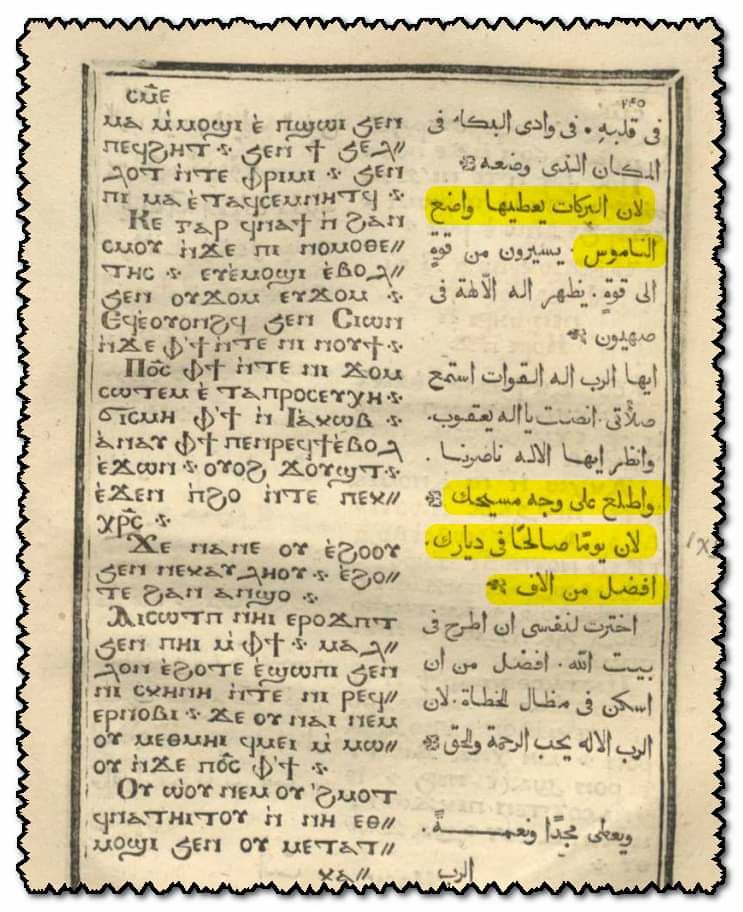
1. The Coptic-Arabic Translation of the Psalms
“Blessed is the man who trusts in You, O Lord; the Lawgiver grants blessings to his followers.”
This bilingual Coptic-Arabic manuscript preserves three key phrases: “For the Lawgiver grants them blessings,” “Look upon the face of Your Anointed,” and “For one day in Your courts is better than thousands.”
2. Translation of the Holy Psalms from the Septuagint Text (1954)
“Blessed is the man whom You help; who has resolved to go up into the Valley of Baca; he ascends to a place he knows well and intends; in this place the Judge, God, gives him a blessing.”
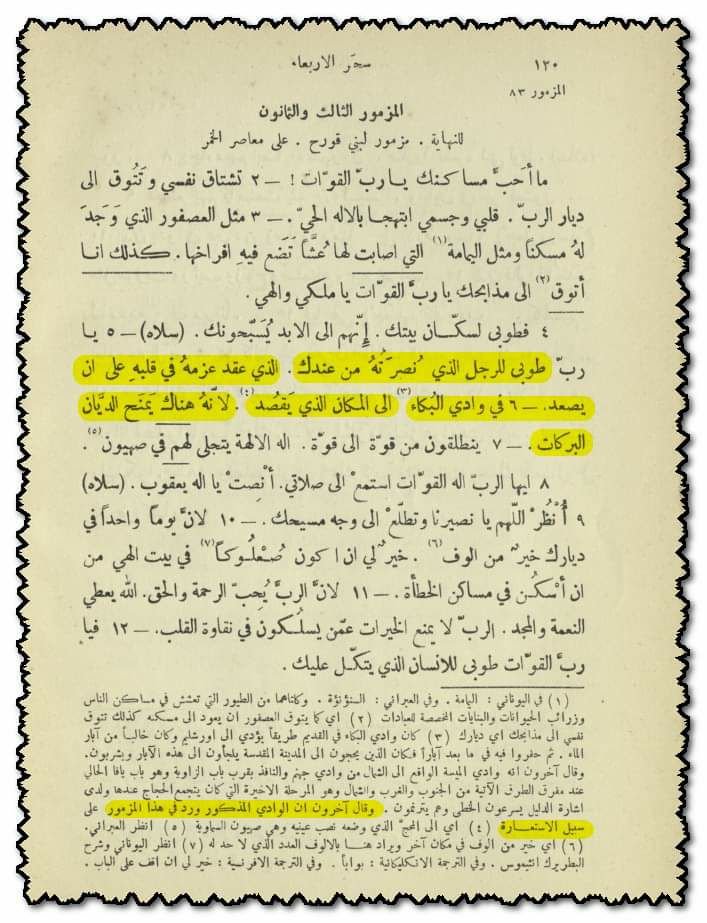
3. The Jesuit Fathers’ Bible Translation (1897)
“They pass through the Valley of Weeping and make it a place of springs. For the Lawgiver showers them with His blessings.”
4. The Old Testament Translation (1811)
“Blessed is the man whom You have delivered from Yourself, who has set the laws of God in his heart. He was born in the depths of Bakkah, and his dwelling place was there; there he establishes the new Law.”
5. David Thomas’s Version of the Psalms
“Blessed is the man who trusts in You, whom You have delivered from Yourself. You, O God, have placed him in Bakkah; in Bakkah he establishes the Law.”
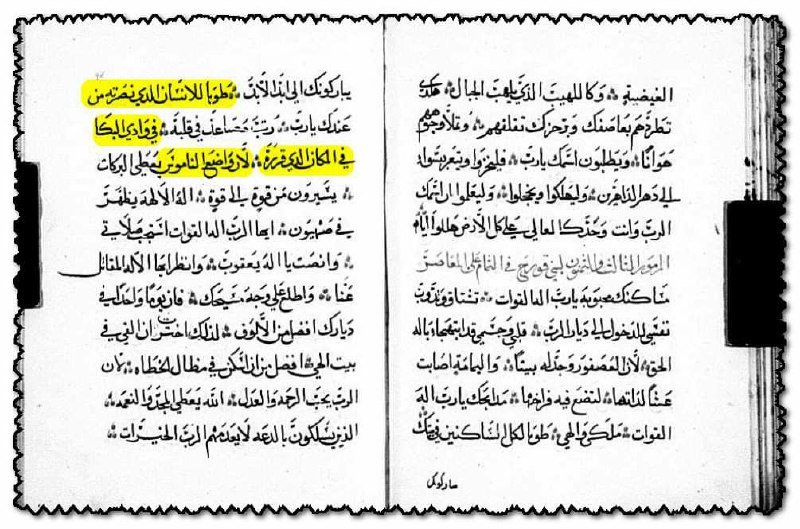
6. Ibn al-Assal’s Version of the Psalms
“Blessed is the man whom You have delivered from Yourself, who has set Your laws in his heart. He was born in Bakkah, and it was his dwelling place; he gives the Law and the blessings there.”
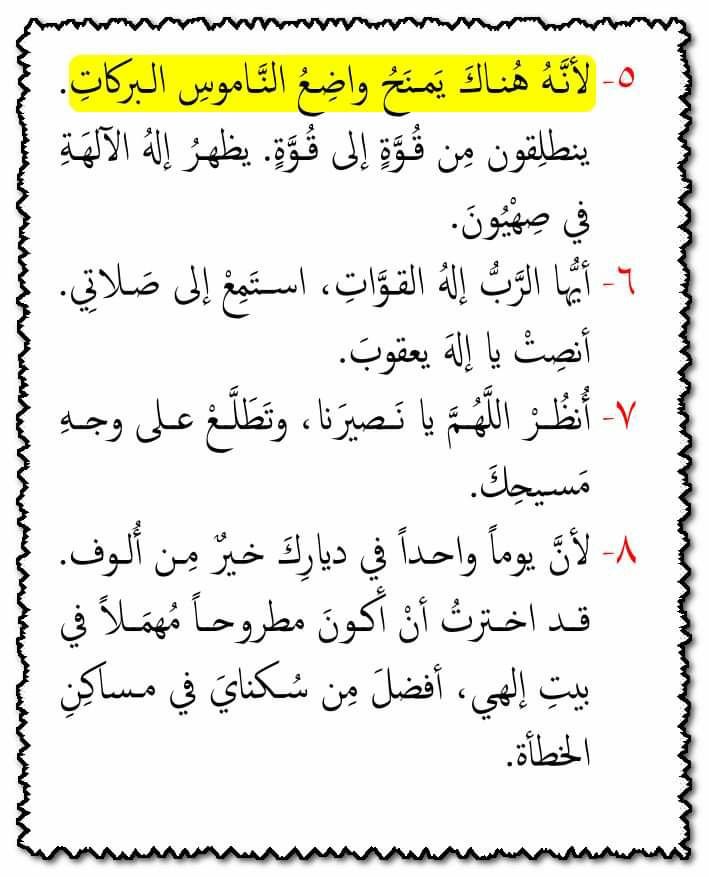
7. Psalm 83/84 — Arabic Printed Edition
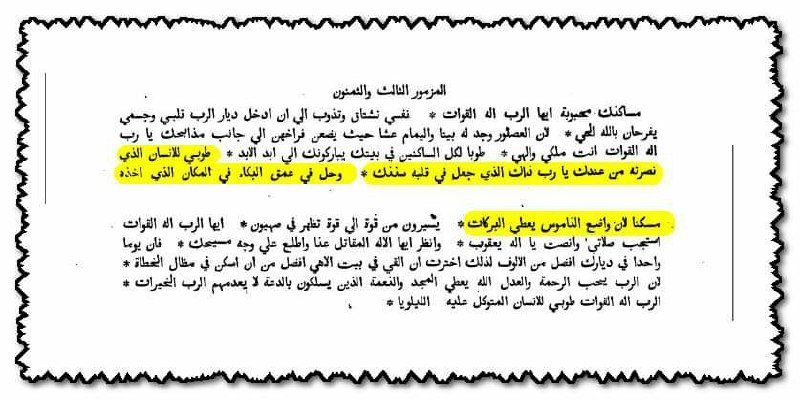
Every ancient translation linksBakkah with three consistent elements: a specific man born and dwelling there, the giving of a new Law, and the granting of blessings. All three attributes apply to one person in history — the Prophet Muhammad ﷺ, born in Mecca, who brought the Shariah, and through whom God blessed the world.
Section 2: Historic Manuscript Evidence
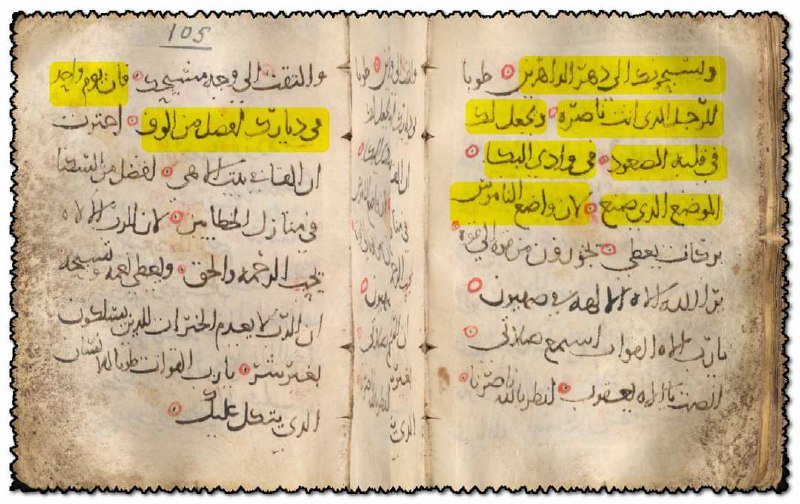
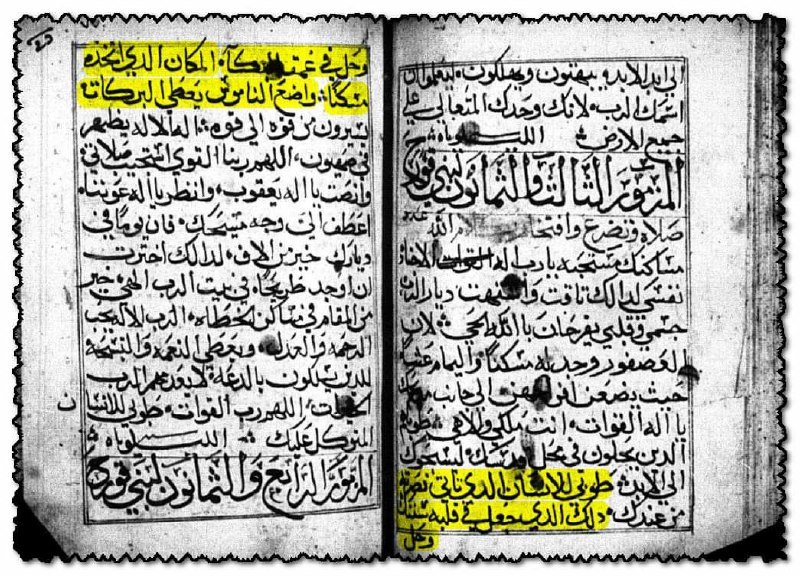
Manuscript A — Psalm 84 (Aged Parchment)
This ancient manuscript preservesPsalm 84 with Baca retained as a proper name rather than translated away. The highlighted passage states that blessed is the man whose strength is in God and whose heart is set on the roads leading to His House. It says those who pass through the Valley of Baca make it a place of blessing, and go from strength to strength until they appear before God.
Manuscript B
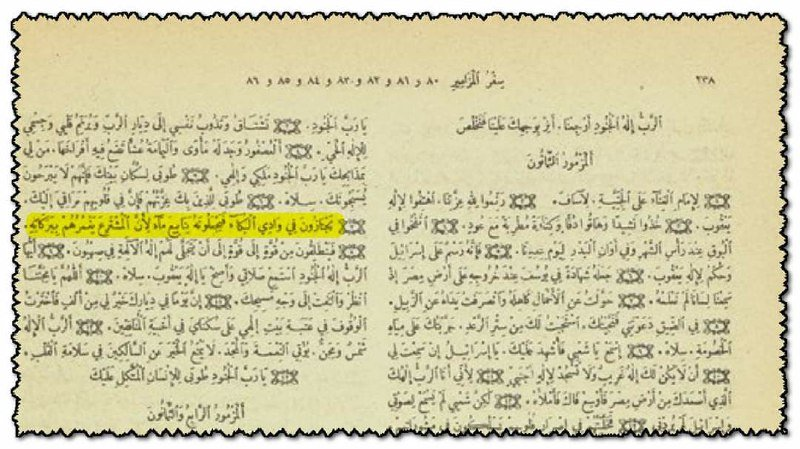
This ancient manuscript preservesPsalm 84:6 with Baca retained as a proper name. The highlighted passage states that those passing through the Valley of Baca make it a place of springs, and that early rain covers it with blessings. The text presents Baca as a blessed valley associated with divine favour, not merely a metaphor of sorrow.
Manuscript C — Arabic Printed Version
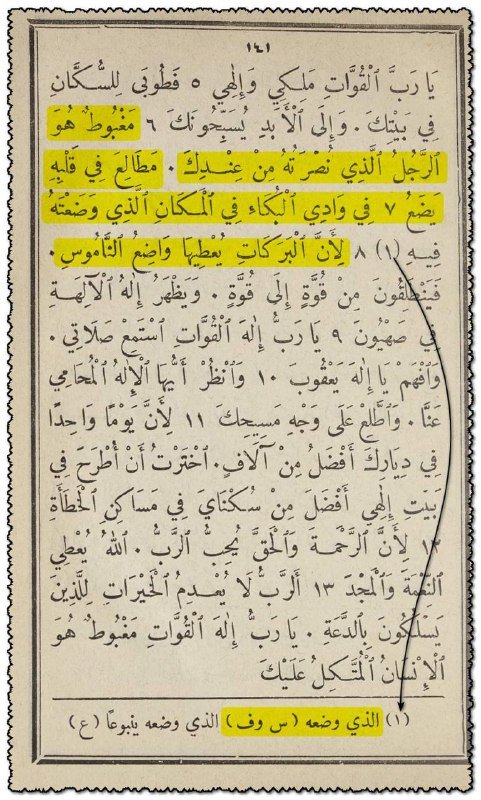
This ancient manuscript preservesPsalm 84 with Baca explicitly retained. The highlighted passage states that blessed is the man whose strength is in God, whose heart contains the paths to the sacred sanctuary, and who passes through the Valley of Baca, making it a place of springs, while blessings cover it with rain. It adds that they go from strength to strength until appearing before God.
The footnote attached to this passage doesnot comment on the identity of Baca, nor does it offer a theological interpretation. It is a textual variant note referring to Psalm 84:6, indicating that different manuscript witnesses preserve a slight variation in wording around the phrase about making or placing it as springs or a fountain. The note concerns scribal transmission and alternate readings, not the meaning of Baca itself.
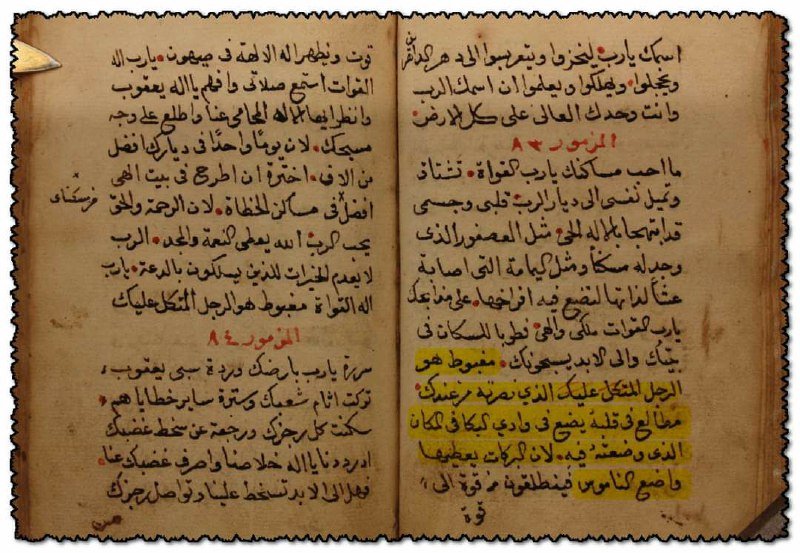
Manuscript D — Colored Coptic-Arabic Bilingual
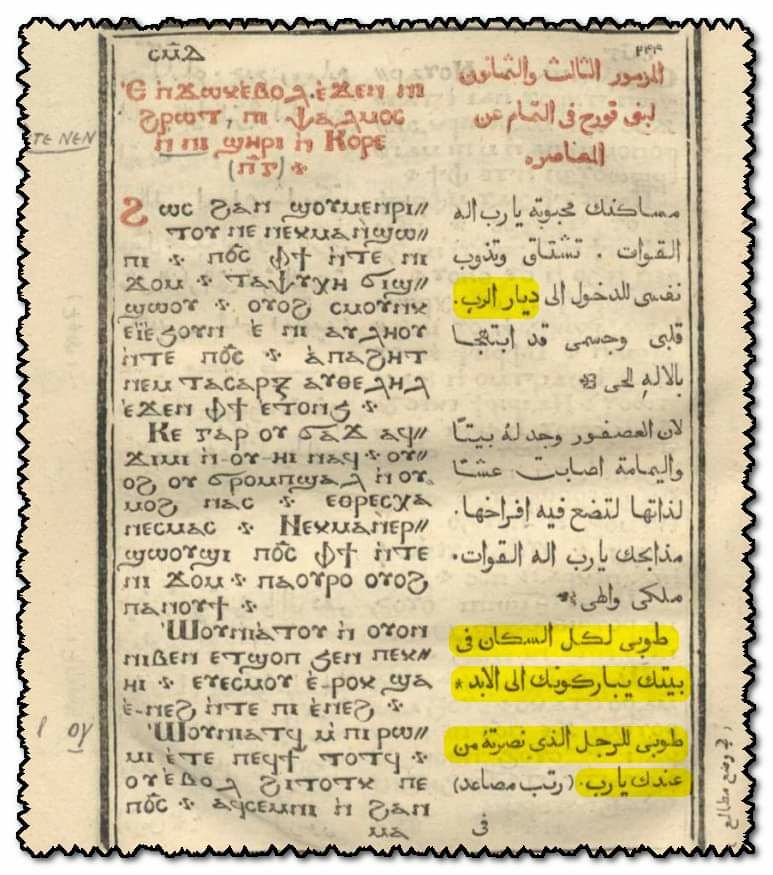
This manuscript page preservesPsalm 84:1–5, emphasizing longing for the House of God. The highlighted lines state that the soul longs to enter the courts of the Lord, and proclaim: blessed are those who dwell in Your house; they will praise You forever. It also preserves the line: blessed is the man whose strength is in You, in whose heart are the ascents (pilgrimage roads / rising paths). The passage centres on themes of dwelling near God, pilgrimage, and blessedness for those whose hearts are fixed on the sacred path.
Section 3: Linguistic and Historical Evidence
Evidence 1 — The Testimony of Mujahid (d. 104 AH)
Mujahid ibn Jabr — one of the greatest early Qur’anic commentators and a student of Ibn Abbas — narrated what he found written in the Psalms:
“I am God of Bakkah. I placed it between these two mountains. I fashioned the sun and the moon, surrounded it with seven upright angels, and made the provision of its people come from three routes — for the people of Mecca are only approached from three roads: the upper valley, the lower valley, and Kuda’. And I blessed its people in meat and water.” — Narrated from Mujahid via Khusayf ibn Abd al-Rahman
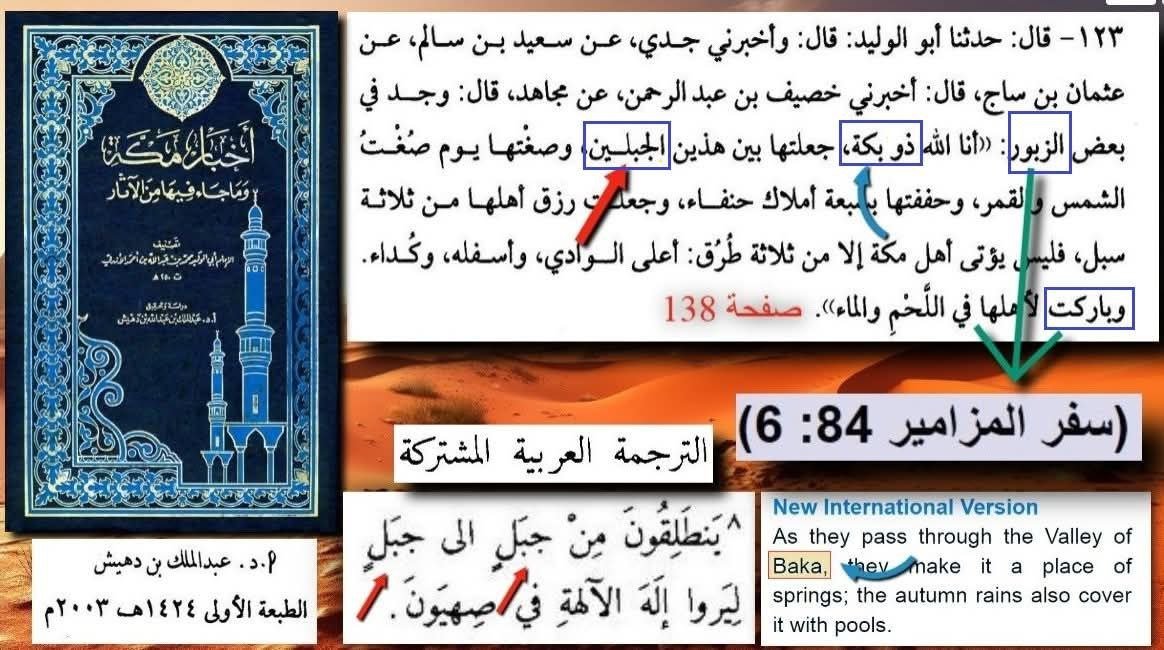
This narration from thefirst century of Islam shows that early Muslims already knew the Psalm 84 prophecy about Bakkah — and understood it to refer to Mecca. This is before any possibility of later interpolation or Islamic influence on the biblical text.
Evidence 2 — Psalm 84:10 and the Prophetic Hadith
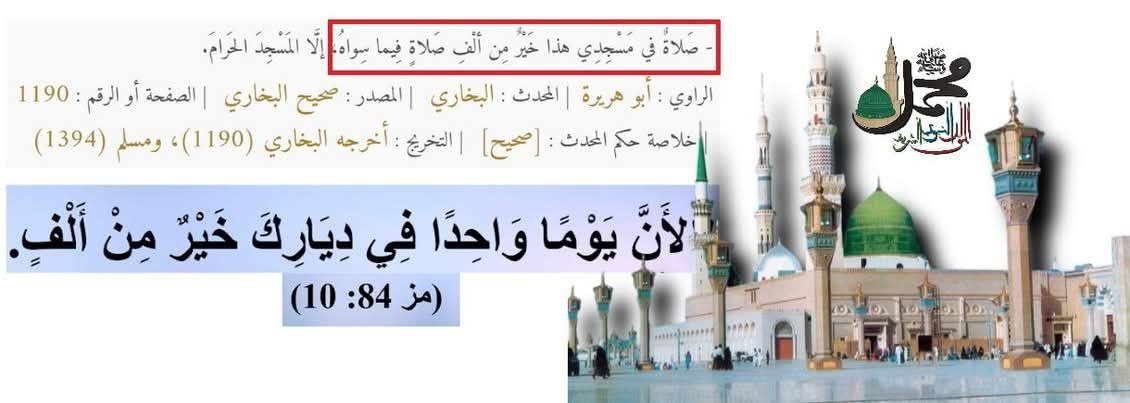
| Psalm 84:10 | Prophetic Hadith |
|---|---|
| ”For one day in Your courts is better than a thousand" | "A prayer in my mosque is better than a thousand prayers elsewhere, except the Sacred Mosque” — Bukhari (1190), Muslim (1394) |
The Psalm was written centuries before Islam. Yet it uses theexact ratio — one versus a thousand — that the Prophet ﷺ later used to describe the reward of praying in his mosque. This is not coincidence.
Evidence 3 — Kirkpatrick’s Commentary: Even Western Scholars Admit It
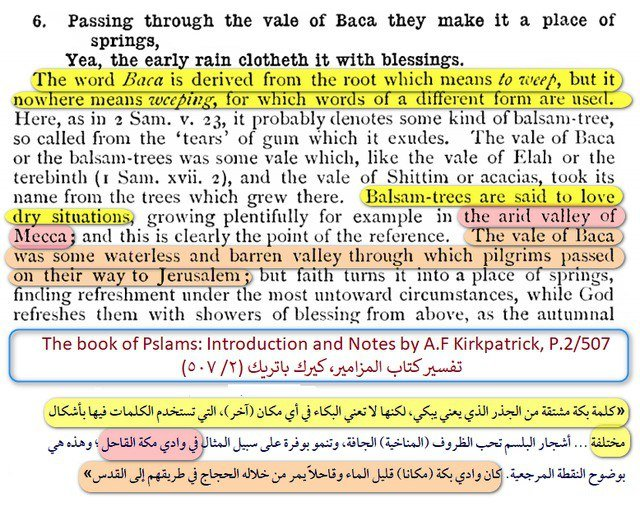
The wordBaca is derived from the root meaning “to weep,” but it nowhere means weeping in the Bible — words of a different form are used for that. “Balsam-trees are said to love dry situations, growing plentifully for example in the arid valley of Mecca.” The vale of Baca was “some waterless and barren valley through which pilgrims passed.”
The leading Western commentator on the Psalms admits three things: “Baca” doesnot mean weeping anywhere else in the Bible; the balsam tree it refers to grows specifically in the valley of Mecca; and the valley was dry, barren, and traversed by pilgrims. He does not say Riyadh. He does not say Jeddah. He says: Mecca.
Section 4: The Name Al-Abtahi and the Hebrew Connection
Who Is “Al-Abtahi”?
Among the names of the Prophet Muhammad ﷺ is Al-Abtahi — derived from Al-Abtah, the pebbled watercourse of the valley between Mecca and Mina (beginning at al-Muhassab). The poet Hassan ibn Thabit (may God be pleased with him) used this title in praise of the Prophet ﷺ:
“The most honorable in lineage when traced, and the most noble of ancestors — the Abtahi who prevails.”
The Hebrew Link: Al-Abtahi ↔ בוטח
In Psalm 84, the Hebrew title appearing in the verse reads:
| Masoretic Text | Jerusalem Talmud Reading |
|---|---|
אדם בטח בך | אדם בוטח בך |
| Adam Betach Bek | Adam Butach Bek |
| (without the waw ו) | (with the waw ו) |
1. Shared Semitic Root — The Arabic name Al-Abtahi (الأبطحي) and the Hebrew Butach (בוטח) share the same Semitic trilateral root — directly connecting the Prophet’s own name to the title preserved in the Psalm.
2. Gematria Match — The numerical value of the full Hebrew phrase אדם בוטח בך (Adam Butach Bek) in the Talmudic reading equals 92 — identical to the gematria value of the name “Muhammad” (محمد) in Hebrew script.
3. The Deliberate Suppression — The Masoretes omitted the letter waw (ו) — changing the reading from Butach (active participle: “the one who trusts/relies”) to Betach (a static noun form). This single omission destroys the gematria match to Muhammad ﷺ. May God deal with them accordingly.
Jewish Scholars Recognized the Prophecy
Al-Abbas was on a trade journey to Yemen in a caravan with Abu Sufyan ibn Harb. News arrived that Muhammad ﷺ was standing inAbtah, Mecca, declaring himself the Messenger of God. A learned Jewish scholar came to Al-Abbas and asked: “I adjure you by God — did your nephew have any youthful indiscretions?” Al-Abbas replied: “No, by God. He never lied, never betrayed anyone, and his name among the Quraysh was nothing but ‘The Trustworthy (Al-Amin).’” The scholar leapt to his feet, leaving his cloak behind, and cried out: “You have slaughtered the Jews! You have killed the Jews!” When they returned home, Abu Sufyan said to Al-Abbas: “O Abu al-Fadl — the Jews are terrified of your nephew.” Al-Abbas replied: “I have seen it with my own eyes. Perhaps now you will believe in him.” Abu Sufyan said: “I will not believe until I see the horses ascending from Kuda’.” — On the day of the Conquest of Mecca, that is exactly what happened.
Because the prophetic signs he knew from his own scriptures —born in Abtah/Bakkah, truthful, never betraying, called “Al-Amin” — had just been confirmed to him in person. The prophecy he had read in the Psalms was fulfilled.
Section 5: The House of God — Five Descriptions in Psalm 84
| Description in Psalm 84 | Fulfillment in Mecca |
|---|---|
| 1. Named Bakkah | ”Indeed, the first House established for mankind was that at Bakkah” — Qur’an 3:96 |
| 2. Situated between two mountains | The mountains of Safa and Marwa |
| 3. A spring of water nearby | The Well of Zamzam |
| 4. In a barren, uncultivated valley | ”in a valley without cultivation” — Qur’an 14:37 |
| 5. One day of worship there is better than a thousand | ”A prayer in my mosque is better than a thousand prayers elsewhere” — Bukhari & Muslim |
Section 6: The Open Challenge
The questions remain open: Who was born and lived in Mecca? → Muhammad ﷺ. Who brought a new Law? → Muhammad ﷺ. Who was granted victory by God in Mecca? → Muhammad ﷺ at the Conquest of Mecca. Why was this person removed from the Van Dyck translation? And who else in all of history simultaneously fits all six descriptions?
Summary of Evidence
| Type of Evidence | What It Shows |
|---|---|
| 6 Ancient Translations | All preserve the “man of Bakkah” who gives a new Law |
| Mujahid’s Narration (1st century AH) | Muslims knew this prophecy from the earliest era of Islam |
| Kirkpatrick’s Commentary | The leading Western Psalms scholar locates “Baca” in the valley of Mecca |
| Hadith & Psalm 84:10 Parallel | Identical 1-to-1000 ratio, centuries apart |
| Al-Abtahi ↔ Hebrew בוטח | Same Semitic root; shared by the Prophet’s name and the Psalm’s title |
| Gematria: Adam Butach Bek = 92 | Equals the Hebrew gematria of “Muhammad” |
| Masoretic Suppression of the Waw | The letter that preserves the gematria match was deliberately removed |
| Jewish Scholar’s Testimony | A learned Jew immediately recognised the prophecy fulfilled in the Prophet ﷺ |
| Qur’an 3:96 + 14:37 | Independently confirm Bakkah’s location and characteristics |
Sources and References
- Subul al-Huda wa’l-Rashad fi Sirat Khayr al-‘Ibad — Muhammad ibn Yusuf al-Salihi al-Shami
- Akhbar Makkah wa ma Ja’a fiha min al-Athar — Abd al-Malik ibn Duhaish (1st ed., 1424 AH / 2003 CE), p. 138
- The Book of Psalms: Introduction and Notes — A.F. Kirkpatrick, Vol. 2, p. 507
- Sahih al-Bukhari No. 1190 | Sahih Muslim No. 1394
- Arabic Common Translation of the Bible — Psalms 84
- Jerusalem Talmud — reading
בוטחwith the waw - The Coptic-Arabic Psalms Manuscript (bilingual tradition)
- Ibn al-Assal’s Arabic Psalms Translation
This article is part of the OpenIslam Wiki — Prophecies of the Prophet ﷺ in Scripture series.