There is much controversy surrounding the question: how did ʿUthmān ibn ʿAffān collect the Holy Quran, and why did he burn the remaining copies? The account in Al-ʿAwāṣim min al-Qawāṣim is sufficient to explain how this happened.
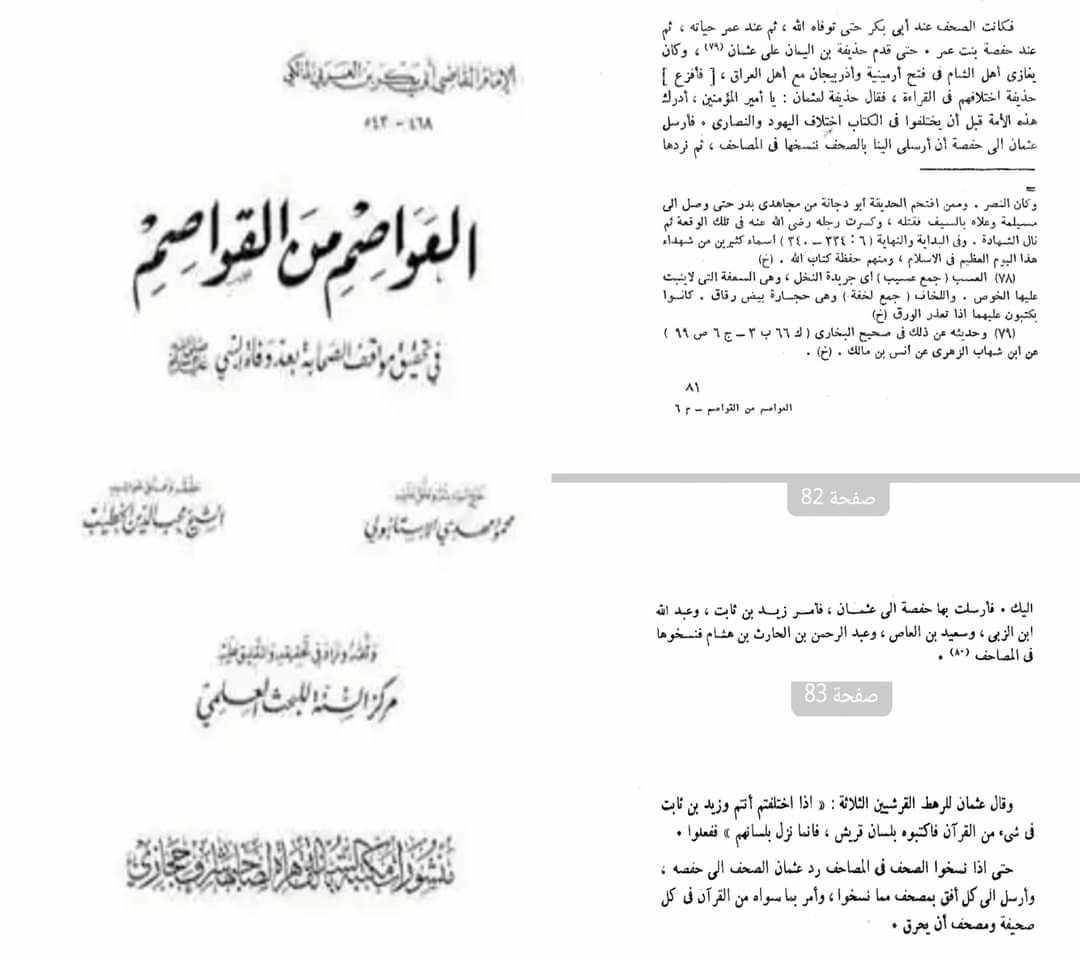
This scan quotes the famous report about Ḥudhayfah ibn al-Yamān رضي الله عنه becoming alarmed after seeing Muslims from different regions reciting differently during military campaigns. He feared that the Ummah would fall into disagreement over scripture as the Jews and Christians had done. ʿUthmān رضي الله عنه then requested the written sheets preserved with Ḥafṣah رضي الله عنها, formed a committee including Zayd ibn Thābit, and ordered verified copies of the Quran to be written and distributed. After the official copies were made, he ordered other written materials to be removed so that the Ummah would not split over unofficial personal copies, dialectal notes, or incomplete writings.
The burning was not destruction of revelation. It was the removal of unofficial written materials after the verified Quranic text had already been copied and distributed — and most importantly, so that one authoritative dialect would be followed.
Ibn al-Arabis Explanation Before the Report
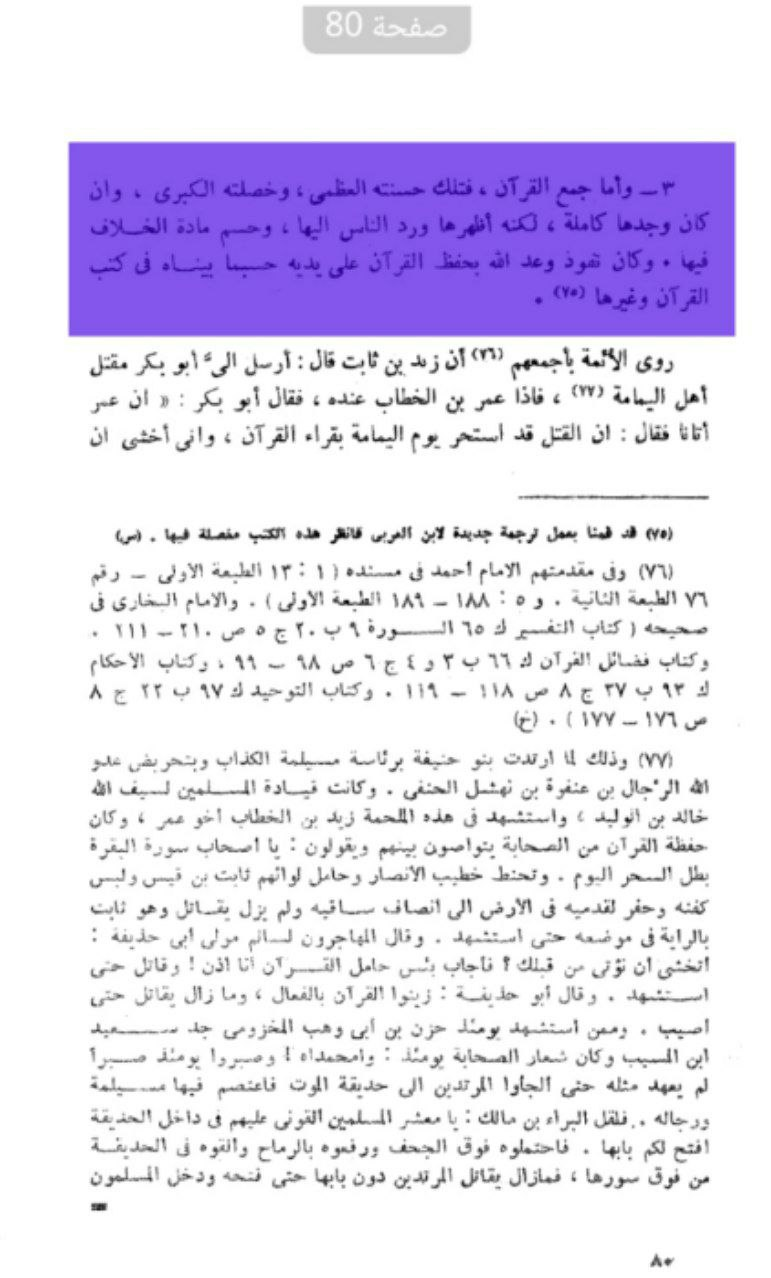
Ibn al-ʿArabī said before mentioning the narration, on the previous page:
This page explains that the Quran had already been collected before ʿUthmān’s action. Ibn al-ʿArabī distinguishes between earlier preservation and the later Uthmanic standardization. The issue was not that the Quran was lost or newly created — rather, ʿUthmān made the written form publicly uniform and authoritative so disputes would not spread among Muslims.
Abu Bakr’s collection preserved the Quran in written form after the death of many reciters. ʿUthmān’s standardization distributed official copies and unified the Ummah upon one authorized written recension. These are two distinct stages of preservation, each serving its own purpose.
The Companions Reaction to Uthmans Decision
Except for Ibn Masʿūd رضي الله عنه — who later retracted his objection and agreed with ʿUthmān’s copy of the Quran — none of the Companions opposed what Dhul-Nūrayn did, as he had originally consulted them about the matter.
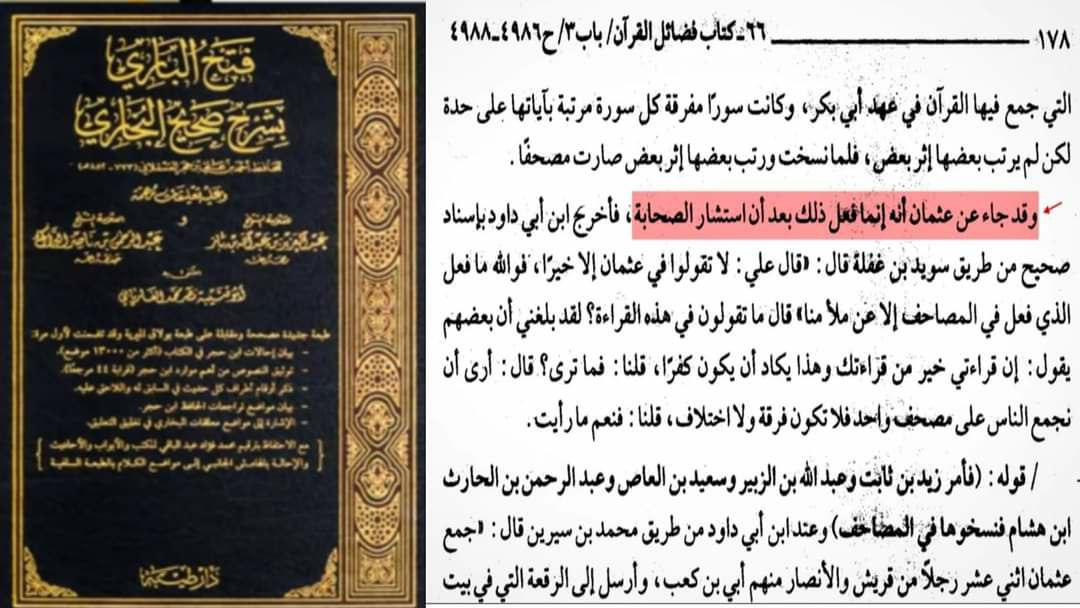
This scan from Fatḥ al-Bārī mentions that ʿUthmān’s action was done after consulting the Companions. It quotes the statement attributed to ʿAlī رضي الله عنه: “Do not say anything about ʿUthmān except good, because he did not act regarding the muṣḥafs except after consultation.” The scan shows that ʿUthmān asked the Companions about uniting the people upon one official muṣḥaf so that division would not occur.
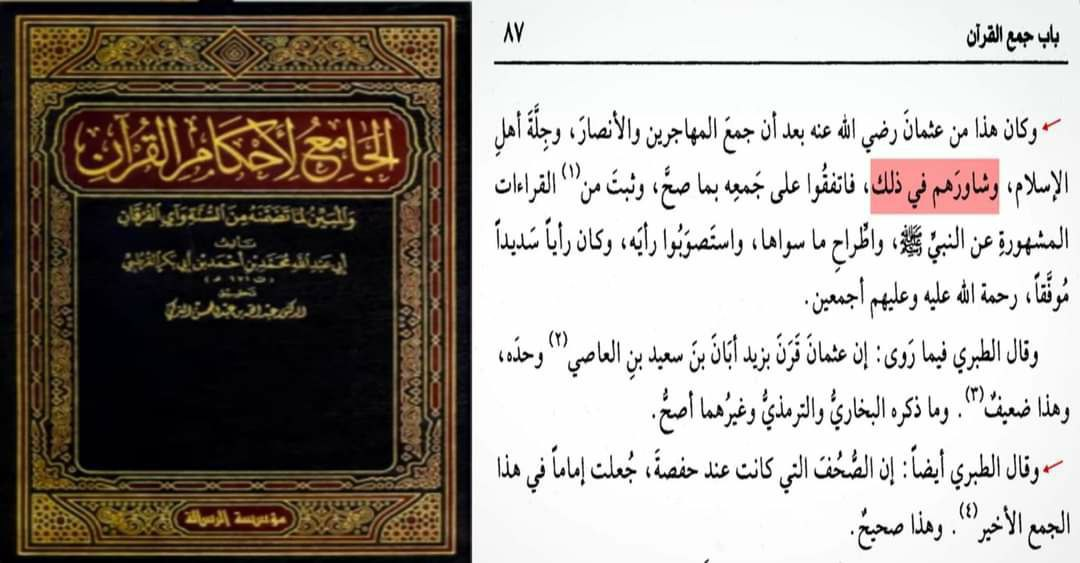
This scan from al-Jāmiʿ li-Aḥkām al-Qurʾān explains that ʿUthmān consulted the Muhājirūn, the Anṣār, and the leaders of the Muslim community — and they agreed with him regarding the collection and standardization. The sheets preserved with Ḥafṣah رضي الله عنها were made the basis for the final written standard.
The standardization was not a personal political act by ʿUthmān. It was a communal decision made with the knowledge and agreement of the senior Companions.
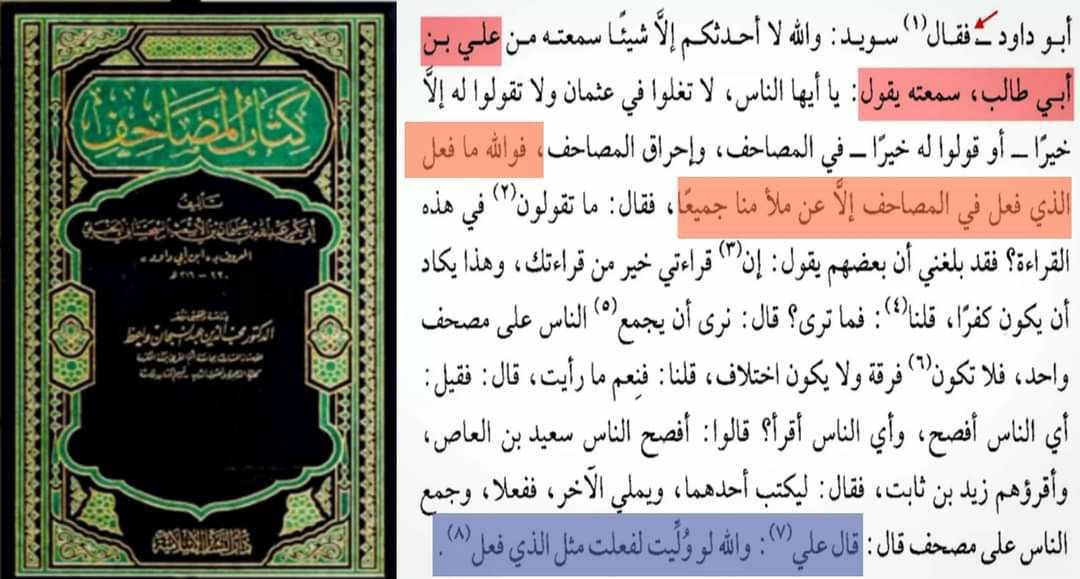
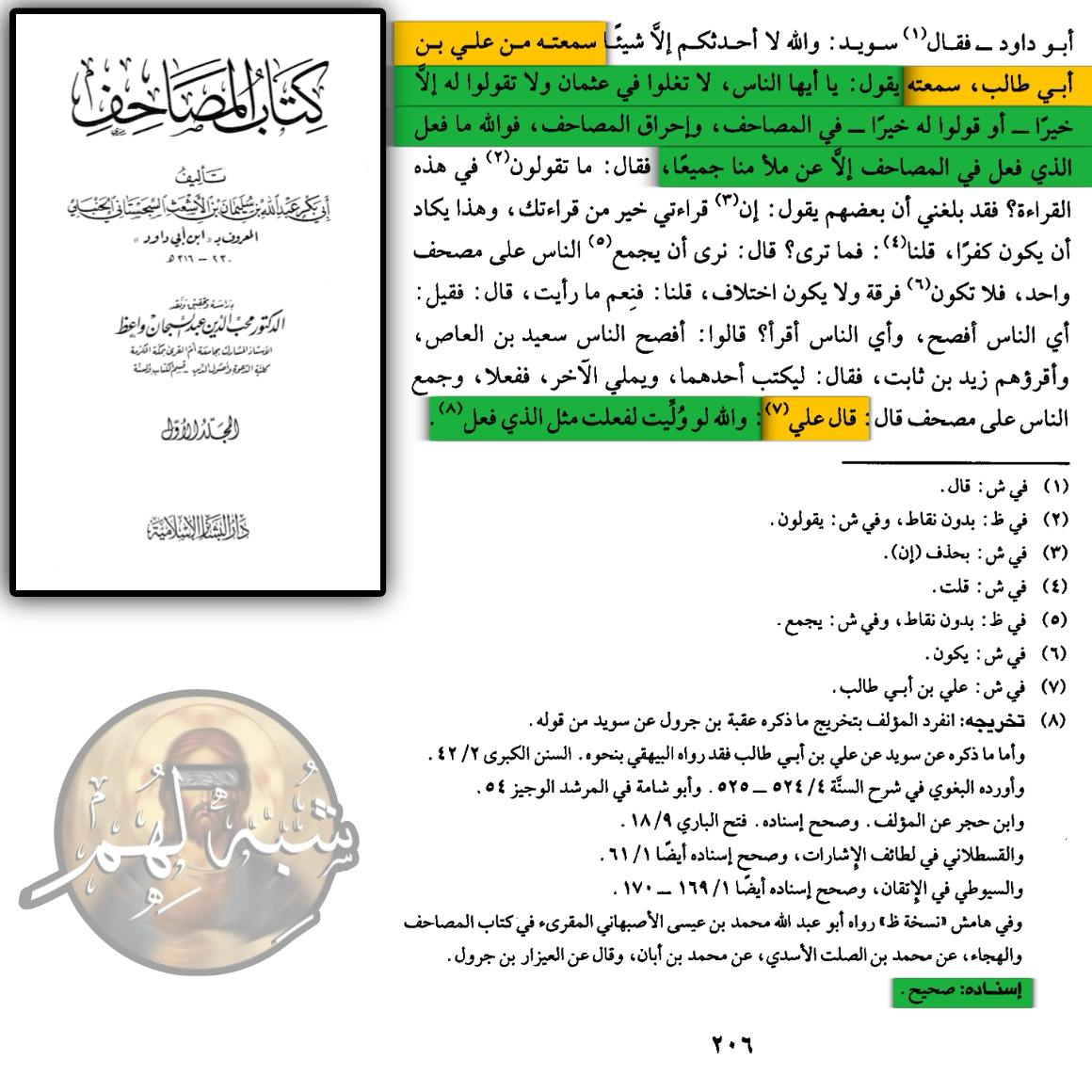
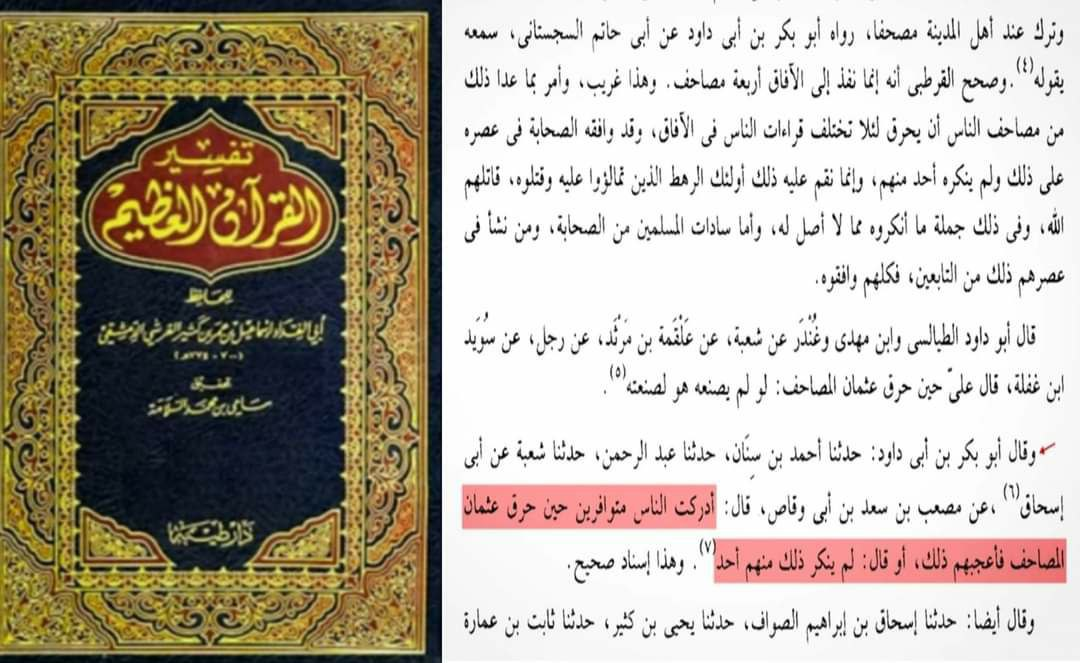
This scan from Kitāb al-Maṣāḥif preserves the testimony of ʿAlī ibn Abī Ṭālib رضي الله عنه. ʿAlī states that ʿUthmān only acted regarding the muṣḥafs after agreement from the Companions — and that if he had been in ʿUthmān’s position, he would have done the same. This is extremely significant because it directly refutes the claim that ʿUthmān acted alone or that the senior Companions rejected his decision.
ʿAlī رضي الله عنه is effectively defending ʿUthmān’s action and confirming that the burning and removal of other copies was done to preserve unity — not to corrupt scripture.
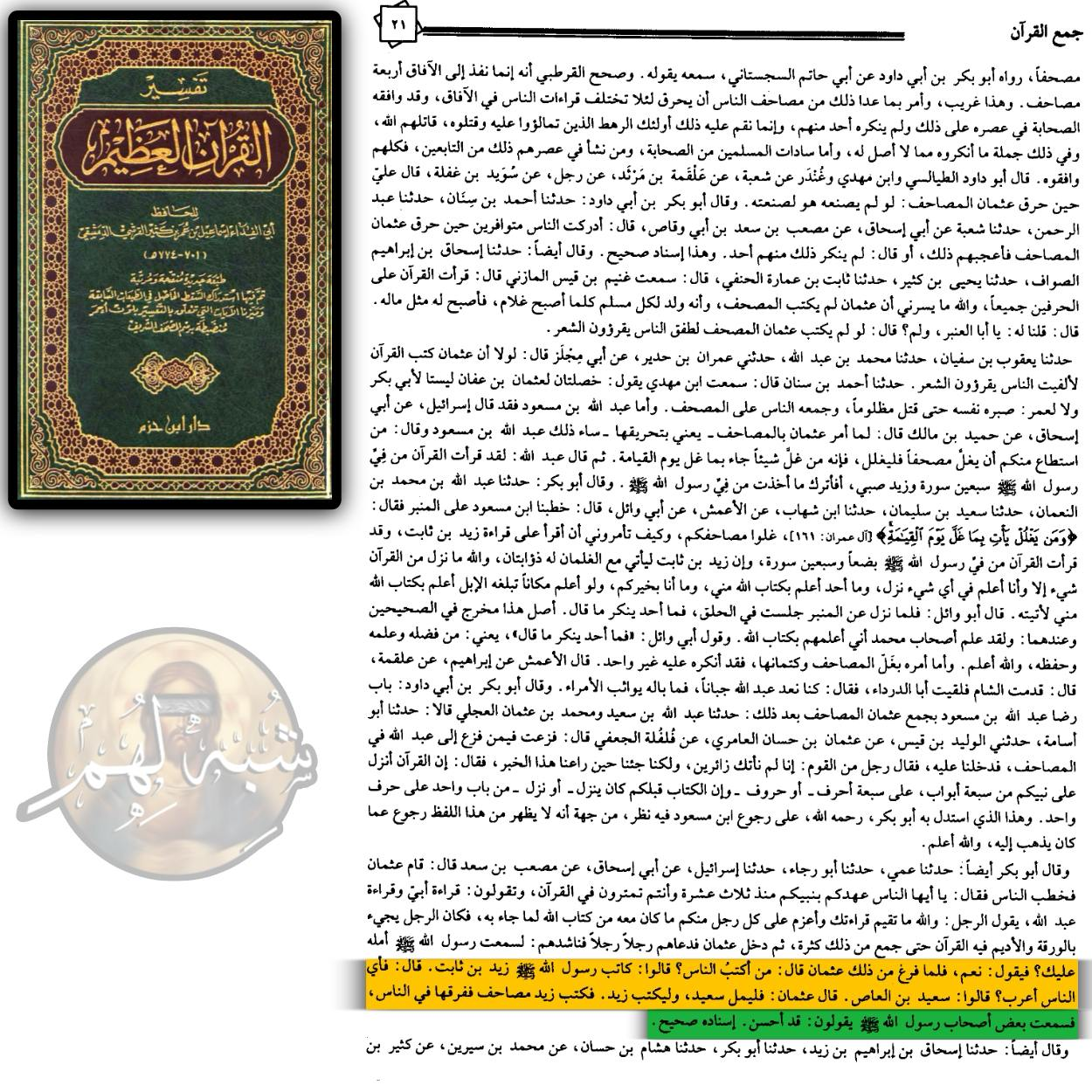
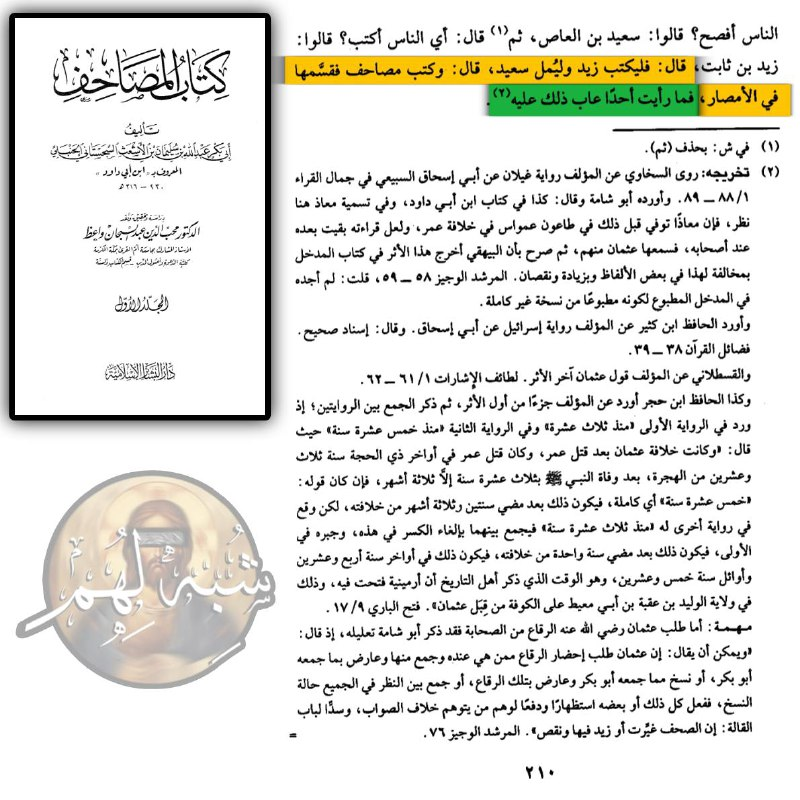
This scan states that ʿUthmān sent official copies of the Quran to major regions and ordered other personal copies to be burned so that people would not continue disputing over readings and written forms. It also reports that the Companions approved of this action and did not reject it. The scan again cites the meaning that if ʿUthmān had not done it, ʿAlī رضي الله عنه would have done the same.
The claim that “ʿUthmān burned Qurans because he changed the Quran” is historically dishonest. The actual issue was standardization against dispute — not alteration of revelation.
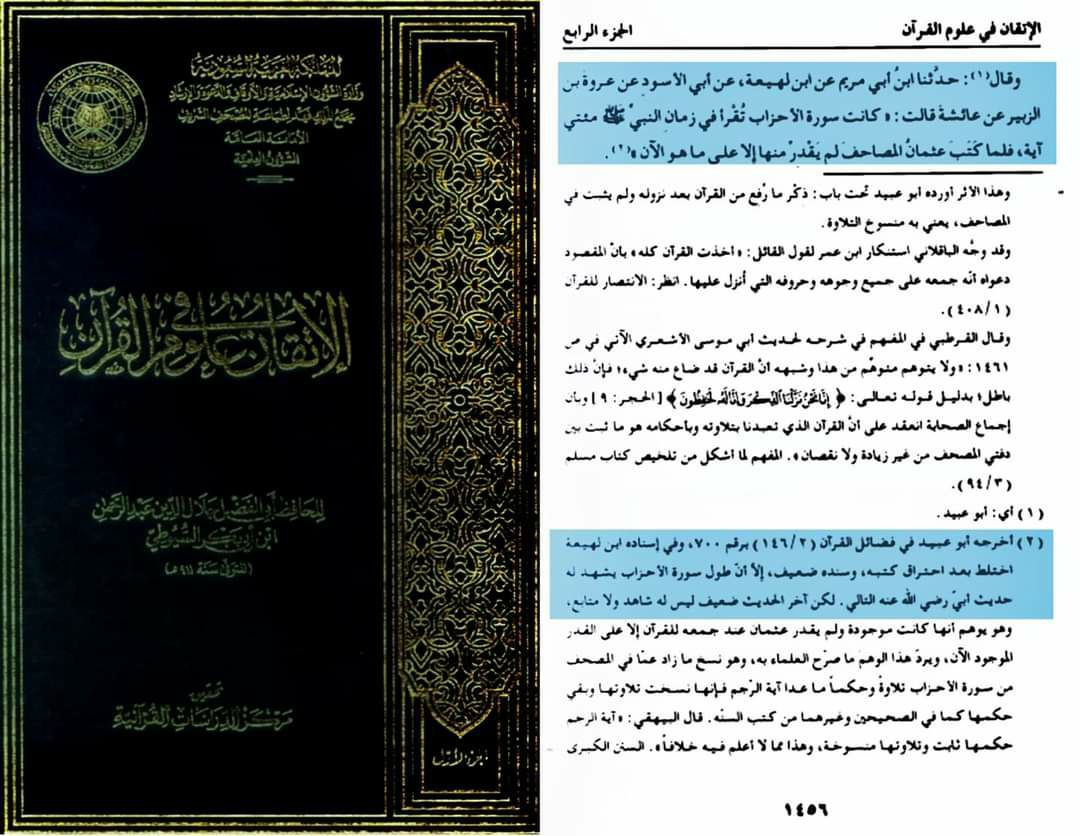
This scan discusses the claim related to Sūrat al-Aḥzāb and reports that some material known earlier was not written in the final Uthmanic muṣḥaf. The response given by the scholars is that this refers to material whose recitation had been abrogated — not verses that were lost from the Quran. The final Quran is what remained established by mass transmission and official written preservation.
Reports about earlier recited material must be understood through the science of naskh al-tilāwah — abrogation of recitation — not through the false claim that Quranic verses were lost.
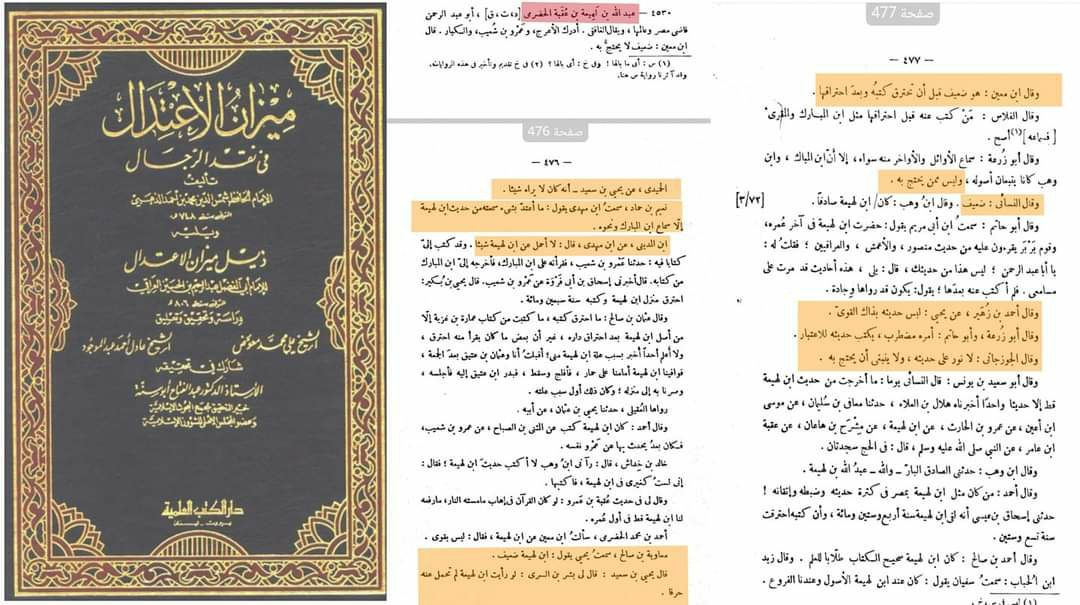
This scan discusses criticism of certain narrators, especially in relation to reports transmitted through weak routes. The highlighted portions point to statements of hadith critics concerning weakness, lack of precision, or problematic transmission. This matters because some objections against the Uthmanic collection rely on reports that are not strong enough to override the well-known mass-transmitted history of the Quran’s preservation.
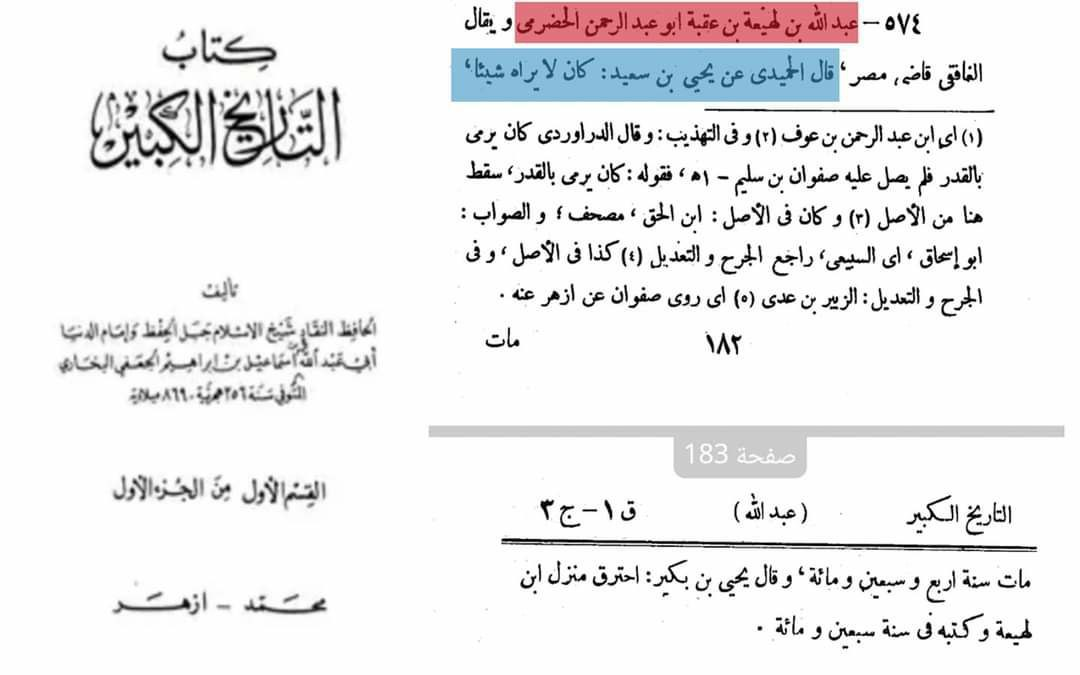
This scan from biographical criticism discusses ʿAbdullāh ibn Lahīʿah and the burning of his books. It is used to show that reports through such routes require caution, because the narrator’s reliability and precision were criticized by hadith scholars. Weak reports cannot be used to claim that the Quran was changed, lost, or corrupted.
Do not build a major claim about Quranic corruption on isolated weak reports. That is not serious scholarship. The Uthmanic recension is supported by stronger, broader, and better-attested evidence.
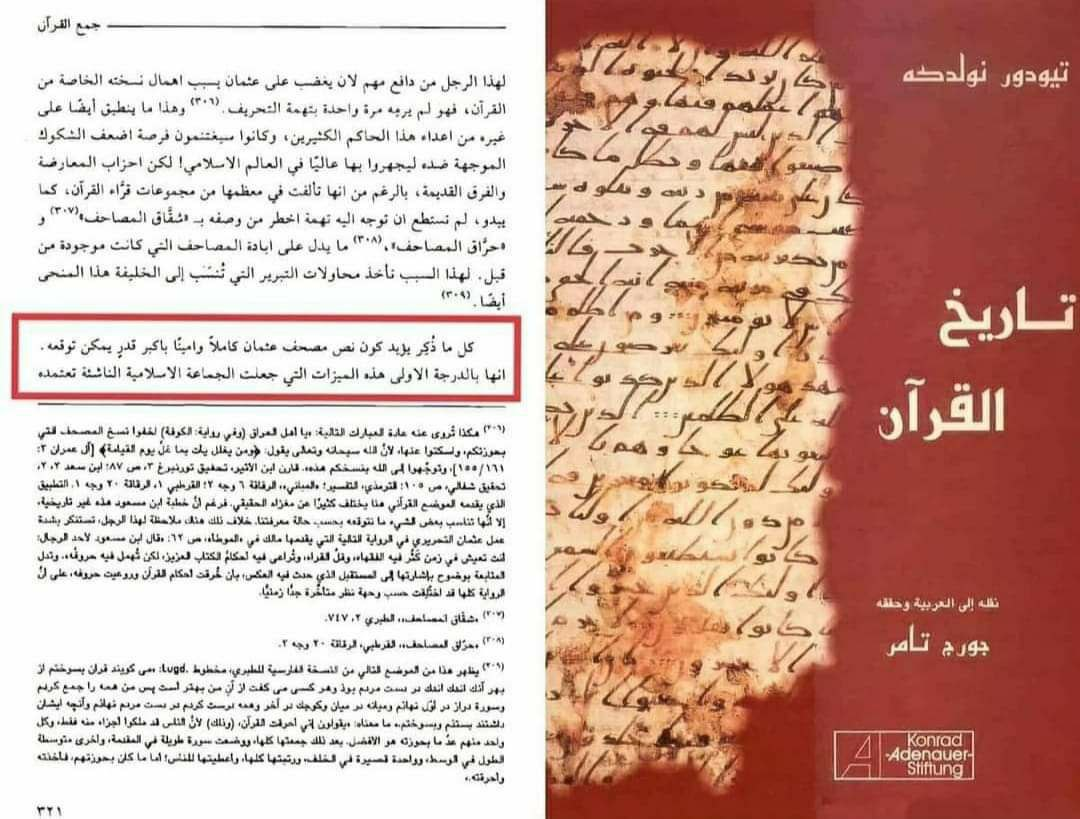
This scan cites an Orientalist discussion on the history of the Quran. The highlighted passage acknowledges that ʿUthmān’s muṣḥaf was complete, faithful to its source, and gained official recognition in the Muslim community from the beginning. This is significant because even non-Muslim academic discussions do not support the crude polemical claim that ʿUthmān fabricated or corrupted the Quran. This does not mean Orientalists are authorities over Islamic belief — rather, it shows that even outside Islamic scholarship, the simplistic anti-Islamic accusation does not stand easily.
Final Conclusion
ʿUthmān ibn ʿAffān رضي الله عنه did not invent, alter, or suppress the Quran. He standardized the written muṣḥaf upon the verified collection preserved with Ḥafṣah رضي الله عنها and distributed official copies to the Muslim regions. Other personal written materials were removed because they could contain personal notes, dialectal forms, incomplete writings, or non-standard arrangements that might lead to public dispute. The burning of other copies was an act of preservation, not corruption — it protected the Ummah from division and preserved the Quran upon an agreed, verified, and publicly transmitted standard.
The Companions knew what ʿUthmān did. He consulted them. They agreed with him. ʿAlī رضي الله عنه defended him. The Ummah accepted the muṣḥaf. Therefore, the accusation that ʿUthmān corrupted the Quran collapses entirely against the historical record.
...ed as strong evidence against ʿUthmān رضي الله عنه or against the preservation of the Qur'an. Bottom Line The narration is weak in chain, and the wording is being overread. It does not prove what...